

Every study we’ve looked at
Each Monday we search for new research on every exercise. Here is all of it, in plain words: what we use, what we’re still checking, and what we didn’t use, and why.
Showing 101–150 of 363
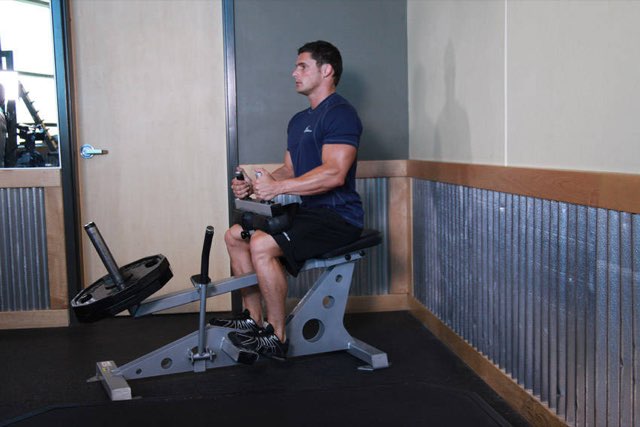
Seated Calf Raise: Longer Sets, Short Rests Made Calves Stiffer
What it means for you: Expect your calves to feel tighter right after long sets with short rests, and let them settle for a few minutes.
Original title: Acute changes in gastrocnemius muscle stiffness following different work-rest calf-raise protocols and percussive therapy: A randomized crossover experimental study · Medicine · Tue Sep 1 2026 · On PubMed · Read our summary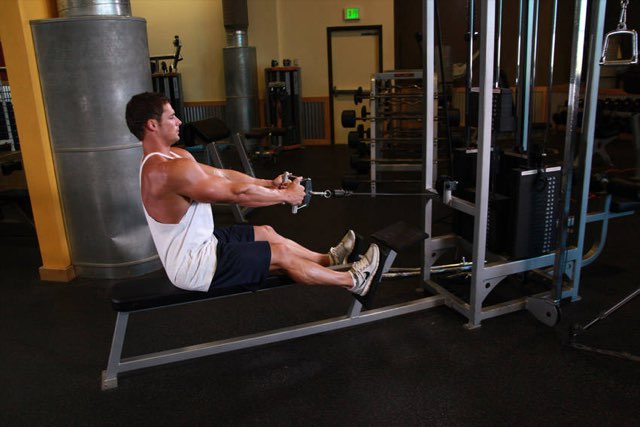
Electromyographic Analysis of Latissimus Dorsi Activation During Common Resistance Training Exercises: A Narrative Review
What it means for you: Try a narrower grip on your Seated Cable Row if you want your lats (the wide muscles down your back) to work harder during each pull.
Journal of Functional Morphology and Kinesiology · Wed Aug 12 2026 · On PubMed · Read our summary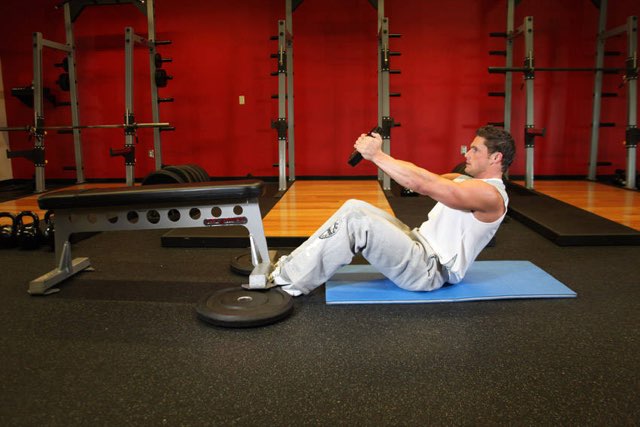
Differential activation of the thoracic multifidus and longissimus thoracis during trunk rotation
What it means for you: Twist both ways while seated and keep the movement smooth, because your back muscles work differently in each direction.
Spine · Fri Apr 1 2005 · On PubMed · Read our summaryThe electromyographic activity of thoracic paraspinal muscles identified as abnormal with palpation
What it means for you: Pay attention to any spot along your upper or middle back that feels tender when you twist, and ease off if it bothers you.
Journal of Manipulative and Physiological Therapeutics · Sat Jul 1 2006 · On PubMed · Read our summary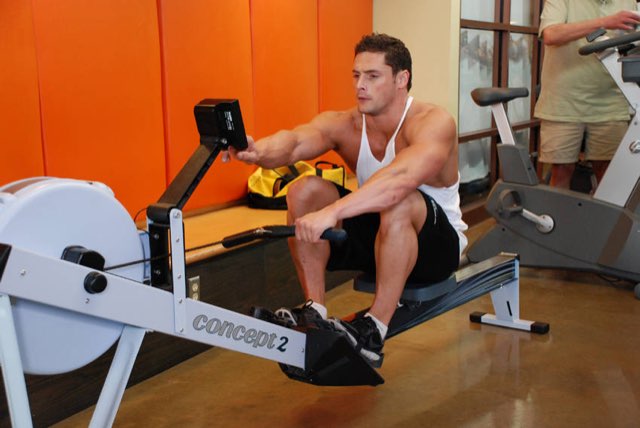
Rowing Machine: Arm Rowing Fitness Gains Lasted Six Months
What it means for you: Commit to a steady block of rowing, about 12 weeks, because the fitness people built lasted for months.
Original title: Impact of upper-body ergometer rowing exercise on aerobic fitness and cardiometabolic disease risk in individuals with spinal cord injury: A 6-month follow-up study · The Journal of Spinal Cord Medicine · Thu Aug 3 2023 · On PubMed · Read our summaryRowing Machine: Hard-Effort Power Tracked 2000 M Time
What it means for you: Include rows at a hard but steady pace you can hold, because this kind of steady power was linked to faster 2000 m times.
Original title: Associations Between Lactate Thresholds and 2000 m Rowing Ergometer Performance: Implications for Prediction-A Systematic Review · Sports Medicine - Open · Fri Feb 28 2025 · On PubMed · Read our summaryRowing Machine: Oxygen Use and Peak Power Matched 2000 M Time
What it means for you: Use a 2000 m row now and then to check how your fitness is going.
Original title: The Evaluation of Physical Performance in Rowing Ergometer: A Systematic Review · Journal of Functional Morphology and Kinesiology · Sun Nov 9 2025 · On PubMed · Read our summary
Surface EMG Characterization of the Jefferson Curl at a Submaximal Load Matched to the Romanian Deadlift: A Cross-Sectional Study in Resistance-Trained Adults
International Journal of Sports Physical Therapy · Sun Nov 1 2026 · On PubMed · Read our summaryRomanian Deadlift: Lifted More, Lower-Back Machine Strength Same
What it means for you: Keep doing Romanian deadlifts to raise how much you can lift.
Original title: A randomized trial to consider the effect of Romanian deadlift exercise on the development of lumbar extension strength · Physical Therapy in Sport : Official Journal of the Association of Chartered Physiotherapists in Sports Medicine · Thu Aug 16 2012 · On PubMed · Read our summaryComparison of Muscle Activity in Three Single-Joint, Hip Extension Exercises in Resistance-Trained Women
What it means for you: Pick Romanian deadlifts when you want to work your glutes, your bum muscles, hard.
Journal of Sports Science & Medicine · Fri Mar 5 2021 · On PubMed · Read our summaryRomanian Deadlift: Same Hamstring Growth as Nordic Curls
What it means for you: Lower the bar slowly on your Romanian deadlifts, as this style grew the back of the thighs in 6 weeks.
Original title: Hamstrings Muscle Architecture and Morphology Following 6 wk of an Eccentrically Biased Romanian Deadlift or Nordic Hamstring Exercise Intervention · Medicine and Science in Sports and Exercise · Wed May 14 2025 · On PubMed · Read our summaryRomanian Deadlift: Stronger Hamstrings in Soccer Players
What it means for you: If you're a young male soccer player, try adding Romanian Deadlift to your fast running work. In this 6-week test, it helped build strength in the back of the thighs.
Original title: Integration of a Knee Flexor Bias or Hip Hinge Bias Resistance Training Program With Combined High-Speed Running in Academy Soccer Players · Journal of Strength and Conditioning Research · Wed Jul 9 2025 · On PubMed · Read our summary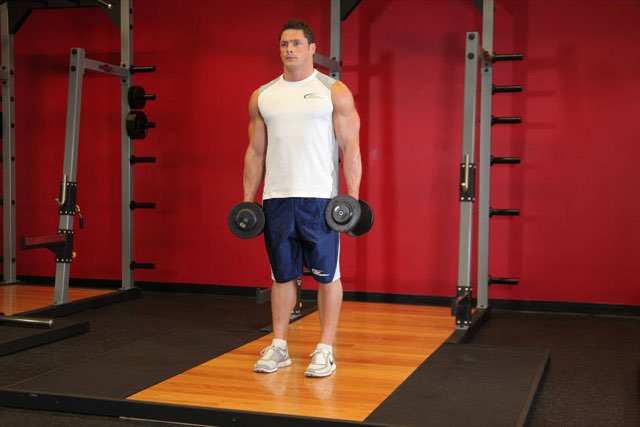
Joint Kinetics and Kinematics During Common Lower Limb Rehabilitation Exercises
What it means for you: Start with reverse lunges, then move to forward lunges when you want more work for your hips.
Journal of Athletic Training · Tue Sep 29 2015 · On PubMed · Read our summaryMyoelectric Responses of Lower-Body Muscles Performing Squat and Lunge Exercise Variations Adopting Visual Feedback With a Laser Sensor
What it means for you: Do your reverse lunges without gadgets if you like. This study gives no clear reason to add laser feedback.
Journal of Sport Rehabilitation · Wed Jan 15 2020 · On PubMed · Read our summaryPatellofemoral joint loading during the forward and backward lunge
What it means for you: Choose the reverse lunge when you want a lunge with less load at the front of the knee.
Physical Therapy in Sport : Official Journal of the Association of Chartered Physiotherapists in Sports Medicine · Fri Dec 4 2020 · On PubMed · Read our summary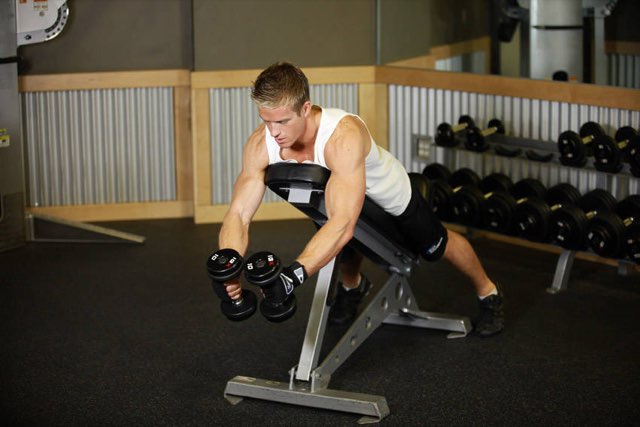
Effect of hand position on EMG activity of the posterior shoulder musculature during a horizontal abduction exercise
What it means for you: Use the handles that let your palms face each other when you do the reverse fly machine.
Journal of Strength and Conditioning Research · Tue Oct 1 2013 · On PubMed · Read our summaryComparative analysis of biomechanical characteristics between the new Tai Chi elastic band exercise for opening and closing movement and elastic band resistance training for the reverse fly movement
What it means for you: Open your arms wide out to the sides, with only a soft bend in your elbows, to put the work on your rear delts.
PeerJ · Wed Aug 28 2024 · On PubMed · Read our summary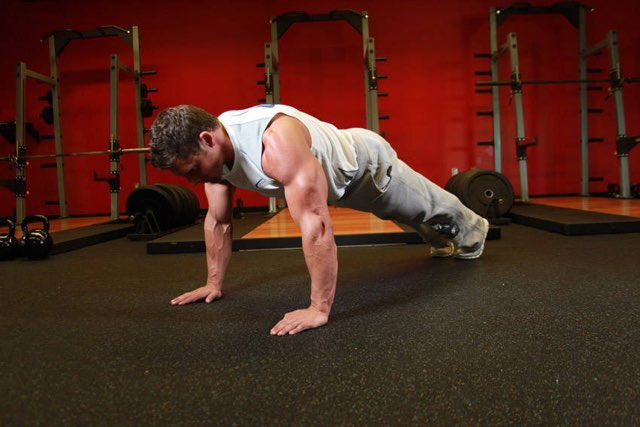
Dynamic and electromyographical analysis in variants of push-up exercise
Journal of Strength and Conditioning Research · Tue Feb 1 2005 · On PubMed · Read our summaryPush-Ups: Built Chest and Arm Size Like Light Bench Press
What it means for you: Use push-ups to build your chest and the backs of your arms when you can't get to a bench.
Original title: Low-load bench press and push-up induce similar muscle hypertrophy and strength gain · Journal of Exercise Science and Fitness · Thu Jun 29 2017 · On PubMed · Read our summaryDifferential activation of parts of the serratus anterior muscle during push-up variations on stable and unstable bases of support
Journal of Electromyography and Kinesiology : Official Journal of the International Society of Electrophysiological Kinesiology · Sun Jul 31 2011 · On PubMed · Read our summaryPush-Ups: Band Push-Ups Built Strength Like Bench Press
What it means for you: Add a resistance band across your back to make push-ups heavy enough that you can only do about 6 reps.
Original title: Bench press and push-up at comparable levels of muscle activity results in similar strength gains · Journal of Strength and Conditioning Research · Thu Jan 1 2015 · On PubMed · Read our summaryComparison of muscle activation using various hand positions during the push-up exercise
What it means for you: Place your hands closer together if you want your chest and triceps to work harder during your Push-Up. This was about muscle effort in one rep, not strength or growth.
Journal of Strength and Conditioning Research · Mon Aug 1 2005 · On PubMed · Read our summaryAn unstable support surface does not increase scapulothoracic stabilizing muscle activity during push up and push up plus exercises
What it means for you: Skip the Swiss ball if your goal is to make your shoulder muscles work harder.
Manual Therapy · Fri Jul 20 2007 · On PubMed · Read our summaryAn electromyographical analysis of the scapular stabilizing synergists during a push-up progression
The Journal of Orthopaedic and Sports Physical Therapy · Tue Sep 1 1998 · On PubMed · Read our summaryPush-Up: Leg Lifts Changed Shoulder Blade Muscle Activity
What it means for you: Try the standard knee push-up plus if you want your side-rib muscle to do more of the work than the muscle at the top of your shoulders.
Original title: Electromyographic analysis of knee push up plus variations: what is the influence of the kinetic chain on scapular muscle activity? · British Journal of Sports Medicine · Mon Sep 14 2009 · On PubMed · Read our summaryQuantifying muscle patterns and spine load during various forms of the push-up
Medicine and Science in Sports and Exercise · Wed Mar 1 2006 · On PubMed · Read our summaryShoulder muscle EMG activity during push up variations on and off a Swiss ball
Dynamic Medicine : DM · Fri Jun 9 2006 · On PubMed · Read our summaryPush-Up: Extra Shoulder Blade Push Worked Side Rib Muscle Most
Original title: Relative balance of serratus anterior and upper trapezius muscle activity during push-up exercises · The American Journal of Sports Medicine · Mon Mar 1 2004 · On PubMed · Read our summary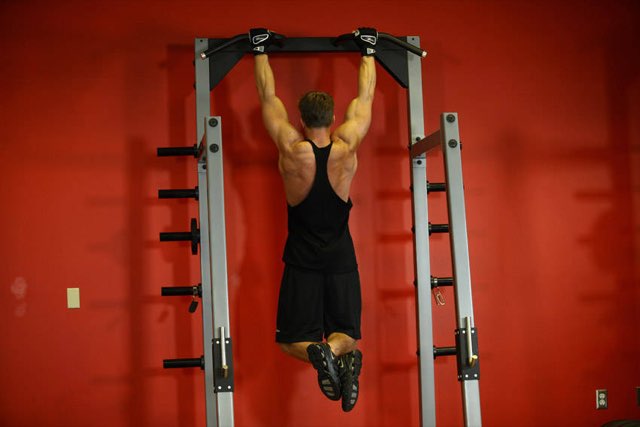
Electromyographical Comparison of a Traditional, Suspension Device, and Towel Pull-Up
What it means for you: Swap in strap or towel pull-ups for variety. Your lats still get a similar workout.
Journal of Human Kinetics · Tue Aug 1 2017 · On PubMed · Read our summaryRelationship of 1 repetition maximum lat-pull to pull-up and lat-pull repetitions in elite collegiate women swimmers
What it means for you: If you're a woman swimmer, count your actual Pull-Up reps to track your progress. Your lat pull numbers only loosely match them.
Journal of Strength and Conditioning Research · Sat Aug 1 2009 · On PubMed · Read our summaryAlterations in kinematics and muscle activation patterns with the addition of a kipping action during a pull-up activity
What it means for you: Choose strict pull-ups when you want your arms and upper body to do the work.
Sports Biomechanics · Wed May 16 2018 · On PubMed · Read our summaryPull-Up: Women Who Got Their First Rep Had More Strength
What it means for you: If you're a woman working toward your first Pull-Up, build your upper-body strength for your size. That's what set apart the women who could do one.
Original title: Training college-age women to perform the pull-up exercise · Research Quarterly for Exercise and Sport · Sat Mar 1 2003 · On PubMed · Read our summaryScapula kinematics of pull-up techniques: Avoiding impingement risk with training changes
Journal of Science and Medicine in Sport · Thu Sep 3 2015 · On PubMed · Read our summaryElectromyographic analysis of muscle activation during pull-up variations
What it means for you: If you're a man who lifts and want your middle back working hard, keep your palms facing away in your Pull-Up.
Journal of Electromyography and Kinesiology : Official Journal of the International Society of Electrophysiological Kinesiology · Mon Nov 28 2016 · On PubMed · Read our summaryDeterminant factors of pull-up performance in trained athletes
What it means for you: If you're a trained man, count your actual Pull-Up reps to track your progress. The most you can lat pull once didn't tell you much.
The Journal of Sports Medicine and Physical Fitness · Wed Jul 15 2015 · On PubMed · Read our summaryPull-Ups: Stopping Sets Early Beat Going to Heavy Slowdown
What it means for you: Stop each set while your reps still move fairly quickly, well before you grind to failure.
Original title: Effects of Velocity Loss During Body Mass Prone-Grip Pull-up Training on Strength and Endurance Performance · Journal of Strength and Conditioning Research · Wed Apr 1 2020 · On PubMed · Read our summarySurface electromyographic activation patterns and elbow joint motion during a pull-up, chin-up, or perfect-pullup™ rotational exercise
What it means for you: Keep your palms facing away from you in your Pull-Up to get your lower traps working harder than in a chin-up.
Journal of Strength and Conditioning Research · Wed Dec 1 2010 · On PubMed · Read our summaryPull-Up: Power Peaked at About 71.0% of Max in Lifters
What it means for you: If you're a man who already lifts and want to train Pull-Up power, try a load around 71.0% of the most you can lift once.
Original title: Load-, Force-, and Power-Velocity Relationships in the Prone Pull-Up Exercise · International Journal of Sports Physiology and Performance · Thu Mar 2 2017 · On PubMed · Read our summaryPull-Ups: Bar Speed Showed How Hard a Set Was for Men
What it means for you: Notice when your reps start to slow down. It is a sign of how many reps you have left.
Original title: Movement Velocity as Indicator of Relative Intensity and Level of Effort Attained During the Set in Pull-Up Exercise · International Journal of Sports Physiology and Performance · Wed Nov 1 2017 · On PubMed · Read our summaryElectromyographic Analysis of Latissimus Dorsi Activation During Common Resistance Training Exercises: A Narrative Review
What it means for you: Pick the Pull-Up grip that feels best for you. Sensors found your lats work about the same across grips.
Journal of Functional Morphology and Kinesiology · Wed Aug 12 2026 · On PubMed · Read our summary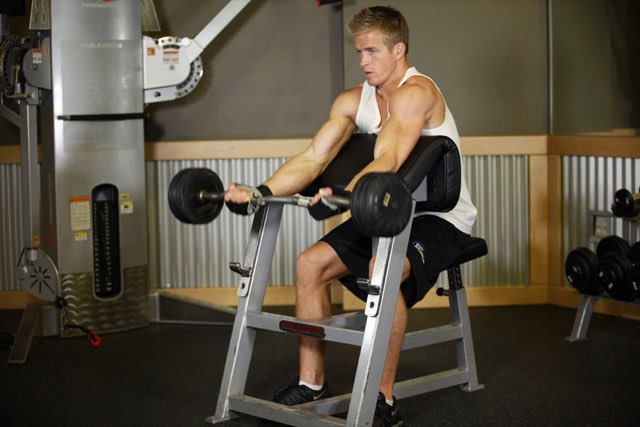
Preacher Curl: Lighter Later Sets Gave Similar Arm Gains
What it means for you: Drop the weight by about 10% for your second and third sets if heavy sets wear you out.
Original title: Planned Load Reduction Versus Fixed Load: A Strategy to Reduce the Perception of Effort With Similar Improvements in Hypertrophy and Strength · International Journal of Sports Physiology and Performance · Mon Oct 22 2018 · On PubMed · Read our summaryPreacher Curl: Light Sets Built No Strength, Cuff or Not
What it means for you: Choose a weight that truly challenges you, rather than a very light one.
Original title: Impact of Complete Intermittent Blood Flow Restriction in Upper Limbs Strength and Neural Function · Research Quarterly for Exercise and Sport · Fri Feb 2 2024 · On PubMed · Read our summaryPreacher Curl: Brain Tasks Plus Training Raised Reps to Failure
What it means for you: If you want to try it, do a short focus task before or after your workout, such as a brain-training game.
Original title: Remote-Based Brain Endurance Training Enhances Bench Press, Preacher Curl, and Jump Squat Performance in Recreational Athletes · European Journal of Sport Science · Fri May 1 2026 · On PubMed · Read our summary
Different Cluster-Loading Protocols Have No Effect on Intraset and Interset Power Expression
Journal of Strength and Conditioning Research · Thu Jul 16 2020 · On PubMed · Read our summaryPower Clean: Three Ways to Measure Power Gave Different Results
What it means for you: Use the same tool every time if you track your power, so your numbers stay comparable.
Original title: Mechanical power production assessment during weightlifting exercises. A systematic review · Sports Biomechanics · Mon Apr 27 2020 · On PubMed · Read our summaryPower Clean: Heavy and Light Both Built Strength and Speed
What it means for you: Train with both heavy and lighter hang power cleans. Both helped strength and sprint speed.
Original title: Effects of Training With Different Hang-Power-Clean Intensities on the Maximum Dynamic Strength, Vertical Jump, and Sprint Performance of Female Handball Players · International Journal of Sports Physiology and Performance · Mon Oct 7 2024 · On PubMed · Read our summaryVelocity-Based Training With Weightlifting Derivatives: Barbell and System Velocity Comparisons
Journal of Strength and Conditioning Research · Thu Oct 24 2024 · On PubMed · Read our summaryPower Clean: Short Rests Between Reps Kept Bar Speed Steady
What it means for you: Take about 30 seconds of rest between reps when you do many power cleans in one set.
Original title: Effect of traditional and cluster set structures on bar path kinematics during high-volume power clean training · Journal of Sports Sciences · Fri Oct 24 2025 · On PubMed · Read our summaryPower Clean: Loads Above 40% of Max Gave More Peak Power
What it means for you: Use a weight above 40% of the most you can lift once when you train for power. There's no need to always go very heavy.
Original title: Optimal power load ranges for the power clean and hang power clean weight-lifting derivatives: A systematic review and meta-analysis · Physiological Reports · Sun Nov 1 2026 · On PubMed · Read our summary
Comparison of Trunk Muscle Activity Between Traditional Plank Exercise and Plank Exercise With Isometric Contraction of Ankle Muscles in Subjects With Chronic Low Back Pain
Journal of Strength and Conditioning Research · Wed Sep 1 2021 · On PubMed · Read our summary
Every summary is written in our own words from the study’s abstract and checked before it goes live. An educational read of the research, not medical advice. How we review research