

Research on Seated Cable Row · Every study we found · How we choose studies
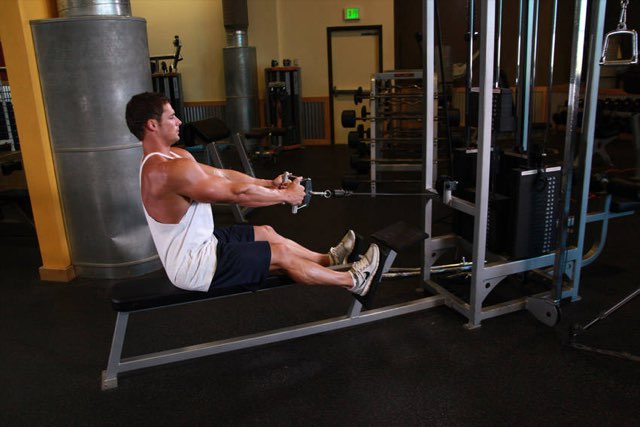
Checked automatically against the study
A narrower grip may make your lats work harder on the Seated Cable Row.
23 studies reviewed; no size of effect was reported.
This was a review of 23 studies that used sensors on the skin to measure how hard back muscles work during pulling exercises. On the Seated Cable Row, a narrower grip went with more lat work in some studies. Keeping the elbows closer to the body did too, in other studies. It measured how hard the muscle works during the lift, not muscle growth or strength over time.
Who took partThe abstract doesn't sayLimitsIt measured how hard the lats work during the lift, not muscle growth or strength over weeks of training.The grip width and elbow position were tested in separate studies, never together.It's a review that described studies without pooling their results.
Why this bandAn expert’s overview, not a pooled reviewTests this exercisePeople with a health condition, not healthy adultsIn a recognised free-to-read journal (DOAJ)
- Try a narrower grip on your Seated Cable Row if you want your lats (the wide muscles down your back) to work harder during each pull.
- Try keeping your elbows closer to your sides on your Seated Cable Row, rather than flared out, to make your lats work harder. Test each change on its own, because the two were never tested together.
- Kind of study
- A review
- Studies pooled
- 23
- What they looked at
- Muscle activity
Original title: Electromyographic Analysis of Latissimus Dorsi Activation During Common Resistance Training Exercises: A Narrative Review
Di Fonza D, Di Claudio G, Colantuono G and others · Journal of Functional Morphology and Kinesiology · Wed Aug 12 2026 · DOI 10.3390/jfmk11030315