

Research on Push-Up · Every study we found · How we choose studies
Checked automatically against the study
Faster, harder Push-Up styles made muscles work harder and loaded the low back more.
12 Push-Up styles tested on 10 people; the one-arm style gave the highest spine load, but no size of effect was reported
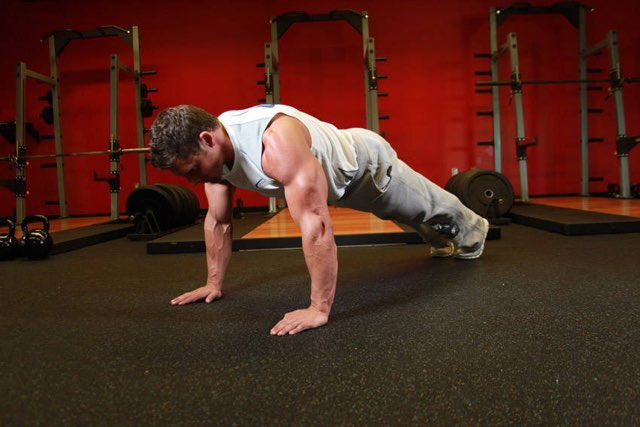
This was a small lab study of 10 fit university-age people: 9 men and 1 woman. They tried up to 12 Push-Up styles. Sensors on the skin measured how hard the stomach, back, chest and arm muscles worked. A computer model estimated the load on the low back. Explosive Push-Up styles took more muscle effort and put more load on the spine.
Who took part10 fit university-age people: 9 men and 1 womanLimitsVery small group, almost all menMeasured muscle effort and estimated spine load in one session, not strength or painSpine load came from a computer model
Why this bandA one-off lab test of 10 peopleAbout this exercise: it’s in the titleAmong the top 5% most cited papers of its age
- Kind of study
- A lab study
- People
- fit university-age adults, mostly men
- What they looked at
- Muscle activity
Original title: Quantifying muscle patterns and spine load during various forms of the push-up
Freeman S, Karpowicz A, Gray J, McGill S · Medicine and Science in Sports and Exercise · Wed Mar 1 2006 · DOI 10.1249/01.mss.0000189317.08635.1b