

Every study we’ve looked at
Each Monday we search for new research on every exercise. Here is all of it, in plain words: what we use, what we’re still checking, and what we didn’t use, and why.
Showing 1–50 of 363
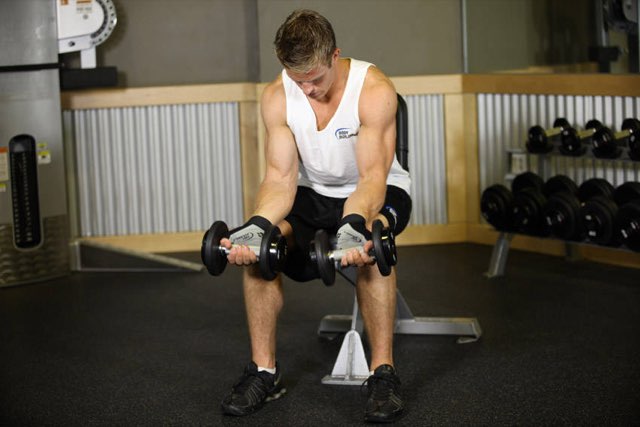
Systemic vs. local cytokine and leukocyte responses to unilateral wrist flexion exercise
What it means for you: Count even short, light forearm sessions as real exercise for your body.
Journal of Applied Physiology (Bethesda, Md. : 1985) · Thu Aug 1 2002 · On PubMed · Read our summaryUltra-weak photon emission during wrist curl and cycling exercises in trained healthy men
What it means for you: Pick your wrist curl weight and reps for your forearm goals, since this study doesn't point to any change.
Electromagnetic Biology and Medicine · Tue Feb 21 2012 · On PubMed · Read our summaryWrist Flexion Exercise Increases the Width of the Medial Elbow Joint Space During a Valgus Stress Test
What it means for you: Do your hard wrist curls after throwing or racket practice, not before it.
Journal of Ultrasound in Medicine : Official Journal of the American Institute of Ultrasound in Medicine · Tue Oct 2 2018 · On PubMed · Read our summary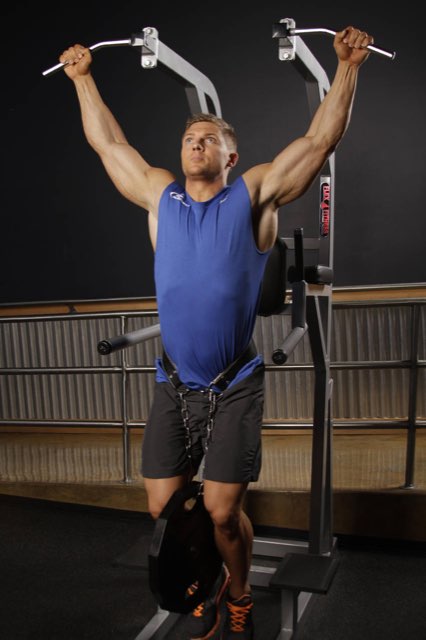
Electromyographical Comparison of a Traditional, Suspension Device, and Towel Pull-Up
What it means for you: Pick the grip you like, whether bar, straps or towel. Most of the main muscles worked about the same.
Journal of Human Kinetics · Tue Aug 1 2017 · On PubMed · Read our summaryAlterations in kinematics and muscle activation patterns with the addition of a kipping action during a pull-up activity
What it means for you: Keep your pull-ups strict, with no swing, if you want your arms and upper body to do the work.
Sports Biomechanics · Wed May 16 2018 · On PubMed · Read our summaryWeighted Pull-Up: Stopping Sets Early Built More Strength
What it means for you: End each set when your reps start to slow down clearly, before you grind out the last few.
Original title: Effects of Velocity Loss During Body Mass Prone-Grip Pull-up Training on Strength and Endurance Performance · Journal of Strength and Conditioning Research · Wed Apr 1 2020 · On PubMed · Read our summaryLoad-, Force-, and Power-Velocity Relationships in the Prone Pull-Up Exercise
What it means for you: If you're a man who already lifts and want the most power from each Weighted Pull-Up rep, try a load of around 71.0% of the most you can lift once. On average, that was the load that gave the most power in this test.
International Journal of Sports Physiology and Performance · Thu Mar 2 2017 · On PubMed · Read our summaryWeighted Pull-Up: Bar Speed Showed How Heavy the Load Was
What it means for you: Track your rep speed with an app or a bar-speed device. Your first rep can tell you how heavy the load is for you that day.
Original title: Movement Velocity as Indicator of Relative Intensity and Level of Effort Attained During the Set in Pull-Up Exercise · International Journal of Sports Physiology and Performance · Wed Nov 1 2017 · On PubMed · Read our summary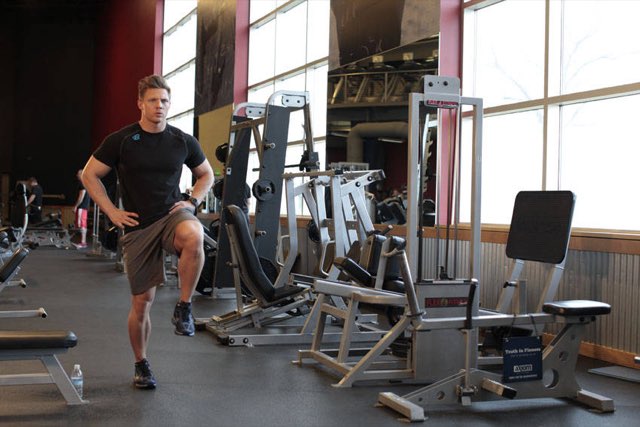
Walking Lunges: Stronger Hamstrings in Young Soccer Players
What it means for you: Do walking lunges twice a week to build strength in the back of your thighs.
Original title: Forward lunge: a training study of eccentric exercises of the lower limbs · Journal of Strength and Conditioning Research · Fri May 1 2009 · On PubMed · Read our summaryWalking Lunges: Heart Rate a Bit Higher than Brisk Walking
What it means for you: Use a few sets of bodyweight walking lunges as a cardio option on days you don't want to walk.
Original title: Acute responses to aerobic and bodyweight exercises with and without blood flow restriction in sedentary individuals - A randomized crossover study · Journal of Sports Sciences · Mon Mar 3 2025 · On PubMed · Read our summaryWalking: Nature and Town Walks Gave Similar Heart Rate
What it means for you: Walk wherever is easiest for you to get out the door. A park walk and a street walk looked about the same for your heart rate right after.
Original title: Acute autonomic and cardiovascular responses to walking in natural versus urban environments: A systematic review and three-level meta-analysis · Environmental Research · Wed Oct 28 2026 · On PubMed · Read our summaryBackward Walking in Cerebral Palsy: Small Mobility Gain
Original title: Effects of Dual-Task Training With and Without Backward Walking on Balance, Functional Mobility, and Participation in Ambulatory Children With Spastic Diplegic Cerebral Palsy: A Randomized Controlled Trial · Physiotherapy Research International : the Journal for Researchers and Clinicians in Physical Therapy · Fri Jan 1 2027 · On PubMed · Read our summary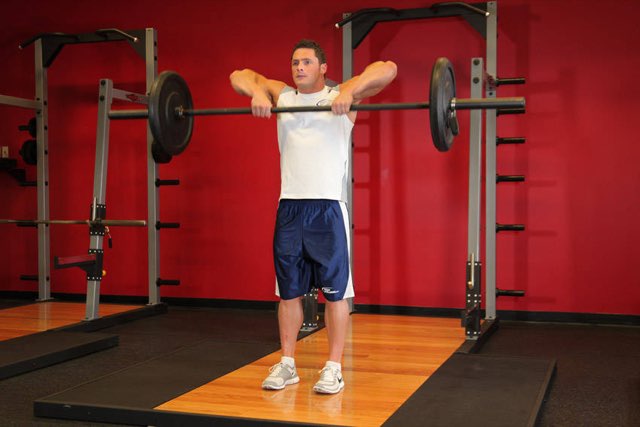
Test-Retest Reliability and Minimum Difference Values of a Novel and Portable Upright Row Strength Assessment in Probation Officers
What it means for you: Test your upright row strength the same way each time: the same grip, handle height and set-up.
International Journal of Environmental Research and Public Health · Fri Jan 27 2023 · On PubMed · Read our summaryMuscle activation during selected strength exercises in women with chronic neck muscle pain
What it means for you: Start your upright row with a light weight. The women here used 3 to 10 kg and still made the upper back muscle work hard.
Physical Therapy · Thu Mar 13 2008 · On PubMed · Read our summary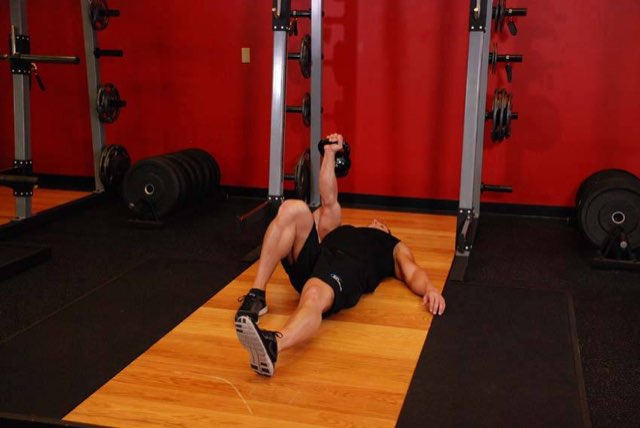
A descriptive analysis of shoulder muscle activities during individual stages of the Turkish Get-Up exercise
What it means for you: Do both the way up and the way down with care, because both halves made the shoulder muscles work.
Journal of Bodywork and Movement Therapies · Wed Jan 31 2018 · On PubMed · Read our summaryClinical application of the Turkish Get-Up to an acute shoulder injury in a competitive Brazilian Jiu-Jitsu athlete
What it means for you: Pick the get-up when you have little space or kit, because it needs just a weight and room to lie down.
Journal of Bodywork and Movement Therapies · Thu Feb 7 2019 · On PubMed · Read our summary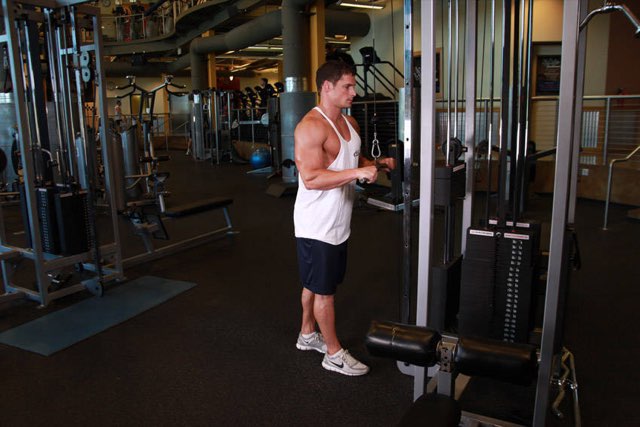
Differences in Muscle Activity During Cable Resistance Training Are Influenced by Variations in Handle Types
What it means for you: Pick the handle that feels best for you, since your triceps work about the same with any of them.
Journal of Strength and Conditioning Research · Fri Jul 1 2016 · On PubMed · Read our summary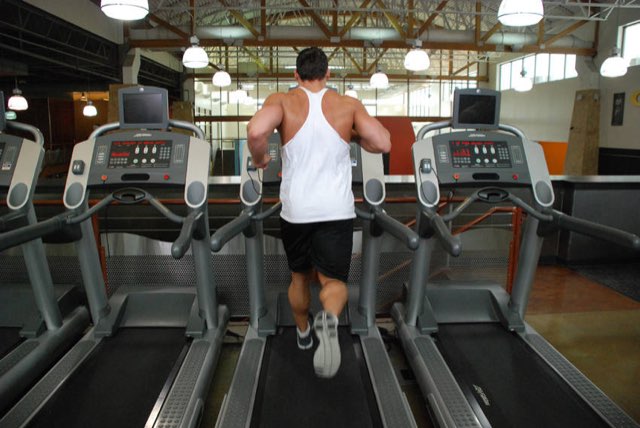
Upregulation of circulating IL-15 by treadmill running in healthy individuals: is IL-15 an endocrine mediator of the beneficial effects of endurance exercise?
Endocrine Journal · Sat Feb 5 2011 · On PubMed · Read our summaryCentral and peripheral contributions to neuromuscular fatigue induced by a 24-h treadmill run
Journal of Applied Physiology (Bethesda, Md. : 1985) · Thu Feb 18 2010 · On PubMed · Read our summaryKinematics and electromyography of lower limb muscles in overground and treadmill running
What it means for you: Expect your stride to feel shorter and quicker on the treadmill. That's normal.
International Journal of Sports Medicine · Thu Oct 1 1998 · On PubMed · Read our summaryTreadmill Running: Mice Did Better on Two Memory Tests
Original title: Differential effects of treadmill running and wheel running on spatial or aversive learning and memory: roles of amygdalar brain-derived neurotrophic factor and synaptotagmin I · The Journal of Physiology · Mon May 18 2009 · On PubMed · Read our summaryTreadmill Run: Like Running Outside, with a Flatter Foot
What it means for you: Use the treadmill as a fair stand-in for most of your running.
Original title: Is Motorized Treadmill Running Biomechanically Comparable to Overground Running? A Systematic Review and Meta-Analysis of Cross-Over Studies · Sports Medicine (Auckland, N.Z.) · Wed Apr 1 2020 · On PubMed · Read our summaryTreadmill Running: Interval Training Raised Fitness in Rats
Original title: Intensity-controlled treadmill running in rats: VO(2 max) and cardiac hypertrophy · American Journal of Physiology. Heart and Circulatory Physiology · Thu Mar 1 2001 · On PubMed · Read our summary
Cardiorespiratory Differences Between Female and Male Subjects During 3 Sets of 10 Repetitions of Trap Bar Deadlift Exercise
Journal of Strength and Conditioning Research · Thu Jul 9 2026 · On PubMed · Read our summaryMuscle Fatigability After Hex-Bar Deadlift Exercise Performed With Fast or Slow Tempo
What it means for you: Lift the bar up fast if you want to move it with more speed and power. The tiredness in your thighs is likely to be similar either way.
International Journal of Sports Physiology and Performance · Fri Sep 11 2020 · On PubMed · Read our summarySensitivity of the Load-Velocity Relationship Variables to Discriminate the Level of Fatigue Induced by Multiple Sets of the Hexagonal Barbell Deadlift Exercise
What it means for you: Stop your sets a few reps short of failure if you want to stay strong for the rest of your session.
Journal of Strength and Conditioning Research · Thu Dec 19 2024 · On PubMed · Read our summaryTrap Bar Deadlift: Holds and Lifts Raised Strength Equally
What it means for you: Use holds that don't move instead of full lifts during a busy, tiring stretch, if you want to keep your strength up.
Original title: Effect of Six Weeks' Isometric Strength Training Compared to Traditional Strength Training on Gains in Strength, Power, and Speed in Male Academy Soccer Players · Research Quarterly for Exercise and Sport · Thu Apr 24 2025 · On PubMed · Read our summaryTrap Bar Deadlift: Older Women Gained Back Strength and Balance
What it means for you: Training the trap bar deadlift twice a week, and sticking with it for months, may help you build a stronger back as you get older.
Original title: Effects of free-weight resistance training based on hexagonal barbell deadlift in older women: A 24-week randomized controlled trial · Experimental Gerontology · Wed Jul 22 2026 · On PubMed · Read our summary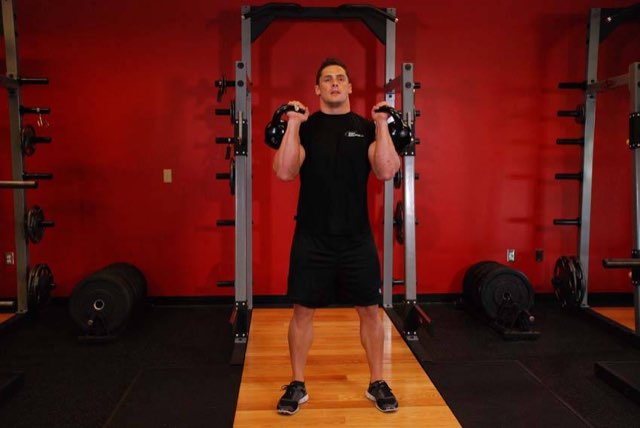
Prediction of thruster maximum load using clean and jerk one-repetition maximum: influence of gender and experience in CrossFit athletes
What it means for you: Use the most you can lift once in the clean and jerk as a starting guide for your thruster weight, then adjust by feel.
The Journal of Sports Medicine and Physical Fitness · Tue Mar 25 2025 · On PubMed · Read our summaryThoracic Rotation: More Upper Back Turn in Soccer Players
What it means for you: Do your upper back rotations regularly, such as 3 times a week, alongside your usual training.
Original title: Effects of adding thoracic spine exercises to routine soccer training on spinal alignment and mobility in professional male soccer players: a randomized controlled study · BMC Sports Science, Medicine & Rehabilitation · Thu Mar 12 2026 · On PubMed · Read our summaryThoracic Rotation: Kneeling and Standing Versions Worked Alike
What it means for you: Pick the version that suits your space: on hands and knees or standing both worked.
Original title: Comparative Analysis of Thoracic Rotation Exercises: Range of Motion Improvement in Standing and Quadruped Variants · Acta Medica Okayama · Sat Jun 1 2024 · On PubMed · Read our summary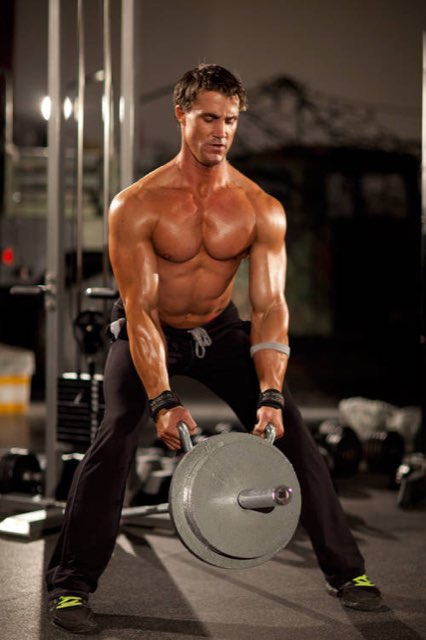
Antagonist activation exercises elicit similar post-activation performance enhancement as agonist activities on throwing performance
What it means for you: Try 2 sets of 4 heavy-ish rows a few minutes before upper-body power work like throws or pushes.
BMC Sports Science, Medicine & Rehabilitation · Mon Mar 27 2023 · On PubMed · Read our summary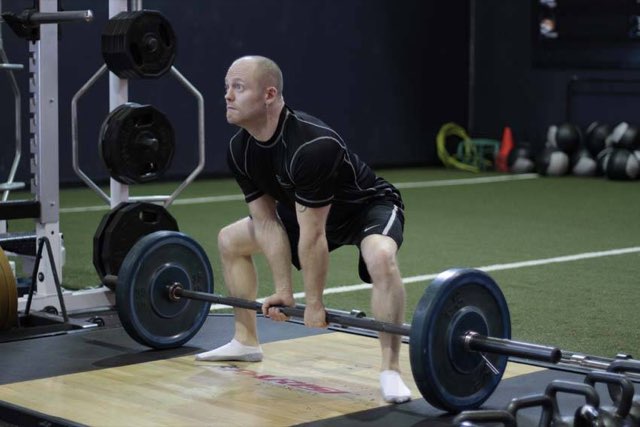
Biomechanical analysis of the deadlift during the 1999 Special Olympics World Games
What it means for you: If you lift in Special Olympics powerlifting, keep the bar close to your body during Sumo Deadlift. The more skilled lifters in this study did this.
Medicine and Science in Sports and Exercise · Wed Aug 1 2001 · On PubMed · Read our summaryAnthropometrical Determinants of Deadlift Variant Performance
What it means for you: If you're new to deadlifts and have a long upper body, try Sumo Deadlift. In this study it may have suited people with longer upper bodies a little better.
Journal of Sports Science & Medicine · Thu Aug 1 2019 · On PubMed · Read our summaryKinematic Differences Between the Front and Back Squat and Conventional and Sumo Deadlift
What it means for you: Set separate bar-speed targets for sumo if you train by bar speed, instead of borrowing your conventional numbers.
Journal of Strength and Conditioning Research · Sun Dec 1 2019 · On PubMed · Read our summaryFootwear Affects Conventional and Sumo Deadlift Performance
What it means for you: Pick the footwear you feel steady in, and don't expect bare feet to make you stronger.
Sports (Basel, Switzerland) · Thu Feb 11 2021 · On PubMed · Read our summaryBiomechanical analysis of conventional and sumo deadlift
What it means for you: Use sumo when you want more work for the front of your thighs, and add conventional deadlifts if you want more hamstring work.
Frontiers in Bioengineering and Biotechnology · Tue May 27 2025 · On PubMed · Read our summaryHip Adductor Muscle Forces during Strength Training and Rehabilitation Exercises
What it means for you: If you want your inner thighs working hard, use Sumo Deadlift. In this lab test it was in the top group for force in two inner-thigh muscles.
Medicine and Science in Sports and Exercise · Fri Apr 3 2026 · On PubMed · Read our summaryPushing limits: the acute effects of a heavy-load resistance protocol and supine exercise on fetal well-being
BMJ Open Sport & Exercise Medicine · Tue Sep 2 2025 · On PubMed · Read our summary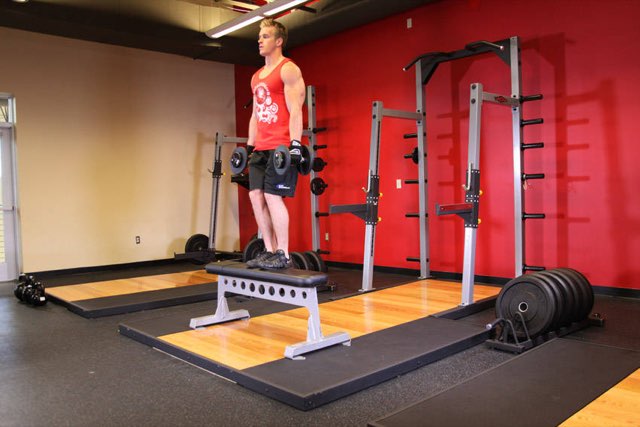
Patellofemoral joint forces and stress during forward step-up, lateral step-up, and forward step-down exercises
What it means for you: Choose either a forward or a lateral Step-Up at the same step height, since the knee cap load was about the same.
The Journal of Orthopaedic and Sports Physical Therapy · Wed Feb 2 2011 · On PubMed · Read our summaryElectromyographic analysis of selected muscles during the lateral step-up exercise
What it means for you: Use a higher step for your Step-Up if you want your thigh muscles to work harder.
Physical Therapy · Thu Mar 1 1984 · On PubMed · Read our summaryStep-Up: Side Step-Ups Improved Leg Press and Hops
What it means for you: Try side step-ups (stepping up sideways onto a box) for a few weeks if you want stronger legs for pressing and hopping.
Original title: Effect of a lateral step-up exercise protocol on quadriceps and lower extremity performance · The Journal of Orthopaedic and Sports Physical Therapy · Wed Dec 1 1993 · On PubMed · Read our summaryElectromyographic activity in the gluteus medius, gluteus maximus, biceps femoris, vastus lateralis, vastus medialis and rectus femoris during the Monopodal Squat, Forward Lunge and Lateral Step-Up exercises
What it means for you: Expect the front of your thighs to do most of the work when you do a lateral Step-Up, more than your glutes.
PloS one · Wed Apr 1 2020 · On PubMed · Read our summaryHip-muscle activation during the lunge, single-leg squat, and step-up-and-over exercises
Journal of Sport Rehabilitation · Sun Feb 1 2009 · On PubMed · Read our summary
Stationary Bike: Leg Cuffs and Thin Air Didn't Change Power
What it means for you: Do short all-out sprint sets with rest between them. Expect your power to fade a little and the effort to feel harder as you go.
Original title: Effects of Combined Blood Flow Restriction and Inter-Effort Recovery Hypoxia On Repeated-Sprint Performance And Physiological Responses: A Randomized And Single-Blinded Crossover Trial · European Journal of Sport Science · Tue Dec 1 2026 · On PubMed · Read our summary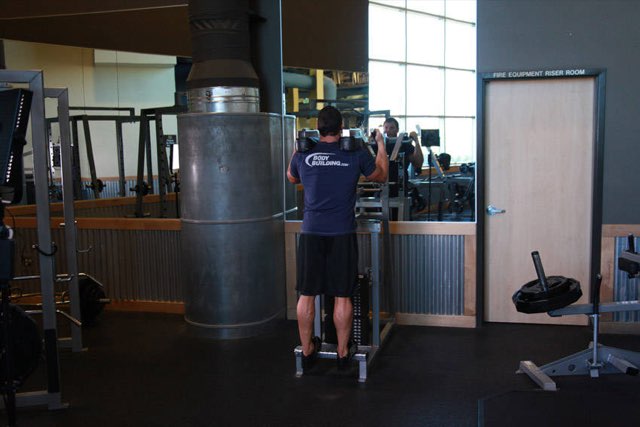
Standing Calf Raise: Massage Gun Cut Calf Muscle Activity
What it means for you: Skip the massage gun right before calf raises if you want your calves working as hard as they can.
Original title: Percussion Massage Therapy Reduced EMG Activity During Standing Heel Raise · Journal of Musculoskeletal & Neuronal Interactions · Mon Sep 1 2025 · On PubMed · Read our summaryStanding Calf Raise: Less Sway in Lab Balance Tests
What it means for you: Do 3 sets of 15 calf raises, 3 to 4 times a week, if you want to work on your balance.
Original title: Differences in calf-raise exercise and short-foot exercise on feedforward and feedback activation in healthy young · Physical Therapy in Sport : Official Journal of the Association of Chartered Physiotherapists in Sports Medicine · Wed Nov 19 2025 · On PubMed · Read our summaryCalf Raises: Shorter Rests Left the Calf Muscle Stiffer
What it means for you: Use shorter rests if you want a harder, denser calf session, and expect your calves to feel tighter right after.
Original title: Acute changes in gastrocnemius muscle stiffness following different work-rest calf-raise protocols and percussive therapy: A randomized crossover experimental study · Medicine · Tue Sep 1 2026 · On PubMed · Read our summaryStanding Calf Raise: Medium Load Gave the Biggest Jump Boost
What it means for you: Try 3 sets of 8 calf raises with a medium load about 4 minutes before you sprint or jump, for a short warm-up boost.
Original title: Acute Reactive Strength Responses and Peak Power-Performance Relationships After Flywheel Calf Raises in National-Level Track-and-Field Athletes: A Randomized Crossover Trial · European Journal of Sport Science · Sun Nov 1 2026 · On PubMed · Read our summary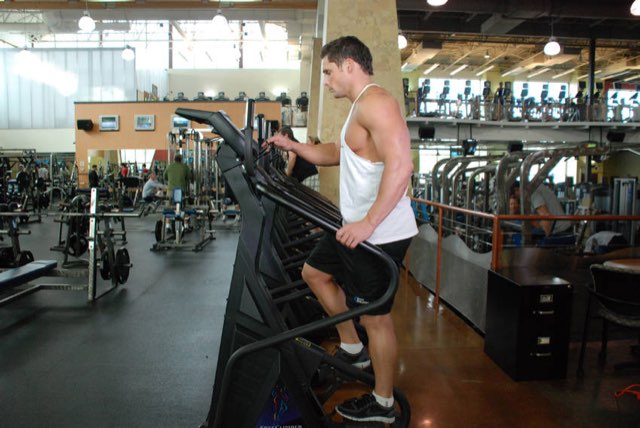
Stair Climber: Walking Plus Stairs Didn't Raise Fitness in Men
Original title: Effects of 2,000 kcal per week of walking and stair climbing on physical fitness and risk factors for coronary heart disease · Journal of Cardiopulmonary Rehabilitation · Wed May 1 1996 · On PubMed · Read our summary
Every summary is written in our own words from the study’s abstract and checked before it goes live. An educational read of the research, not medical advice. How we review research