

Research on Turkish Get-Up · Every study we found · How we choose studies
Checked automatically against the study
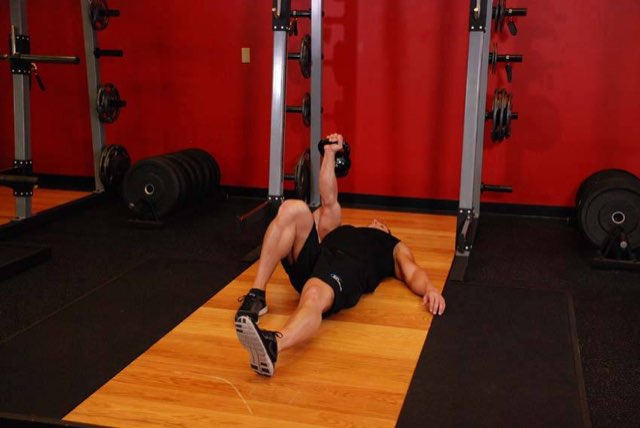
Your shoulders work hardest in the press to elbow and the leg sweep.
The shoulders worked hardest in the second and fifth of the 7 stages. No size of effect was reported.
This was a small study of twelve people who had done get-ups for at least a year. Each person did ten get-ups with a kettlebell in their right hand. Sensors on the skin measured how hard the shoulder muscles on both sides worked. It measured muscle effort, not muscle growth.
Who took part12 people with at least 1 year of get-up practice. The abstract doesn't give their sex or age.LimitsOnly twelve people took part.It measured how hard muscles worked, not strength or muscle growth over time.The weight was only held in the right hand.
Why this bandA one-off lab test of 12 peopleAbout this exercise: it’s in the titleAmong the top 12% most cited papers of its age
- Do both the way up and the way down with care, because both halves made the shoulder muscles work.
- Do your get-ups on both sides, because each shoulder worked differently depending on which hand was holding the weight.
- Kind of study
- A lab study
- People
- people with at least a year of get-up practice
- What they looked at
- Muscle activity
Original title: A descriptive analysis of shoulder muscle activities during individual stages of the Turkish Get-Up exercise
St-Onge E, Robb A, Beach TAC, Howarth SJ · Journal of Bodywork and Movement Therapies · Wed Jan 31 2018 · DOI 10.1016/j.jbmt.2018.01.013