

Research on Upright Row · Every study we found · How we choose studies
Checked automatically against the study
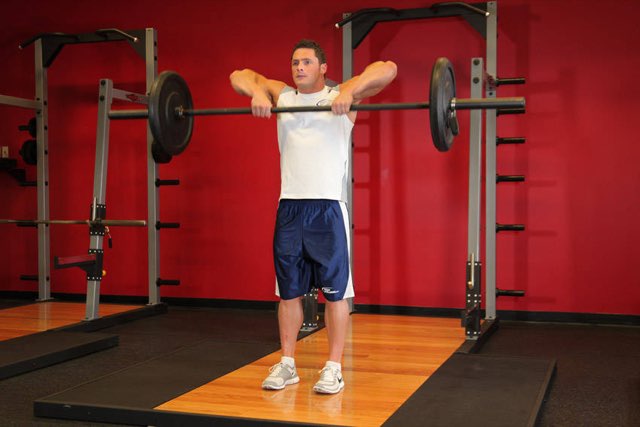
Upright rows made the upper back and shoulder muscles work hard with light weights.
Upper back muscle worked at 85% of its all-out effort in the upright row, close to shrugs at 102%
This was a small one-session lab study of 12 women workers aged 30 to 60 who had long-lasting neck muscle pain. Sensors on the skin measured how hard the upper back and shoulder muscles worked during five exercises. The upper back muscle worked close to its all-out effort in the upright row. People used much lighter weights for this than for shrugs. It measured muscle effort, not muscle growth.
Who took part12 women workers, 30 to 60 years, with long-lasting neck muscle pain; no men; training experience not statedLimitsSmall group of 12 peopleOnly women with neck pain, so it may not match everyoneMeasured muscle effort in one session, not strength or growth over time
Why this bandA one-off lab test of 12 peopleTests this exerciseAmong the top 12% most cited papers of its age
- Start your upright row with a light weight. The women here used 3 to 10 kg and still made the upper back muscle work hard.
- Use upright rows or lateral raises as a lighter swap for heavy shrugs when you want to train your upper back.
- Kind of study
- A lab study
- People
- women workers with long-lasting neck pain
- What they looked at
- Muscle activity
Original title: Muscle activation during selected strength exercises in women with chronic neck muscle pain
Andersen LL, Kjaer M, Andersen CH and others · Physical Therapy · Thu Mar 13 2008 · DOI 10.2522/ptj.20070304