

Power Clean
The Power Clean works the whole body, with the hamstrings, glutes, upper back and quads helping. You need a barbell.
Plan it in Body CEO, and it sets the weight each time.
Body CEO puts the power clean where it fits in a plan for the goal, logs every set and says when to add weight or reps.
Watch it
3 short videos from coachesVideos play inside Body CEO only when tapped (youtube-nocookie). Channel names and lengths come from YouTube.
How to do it, in 8 steps
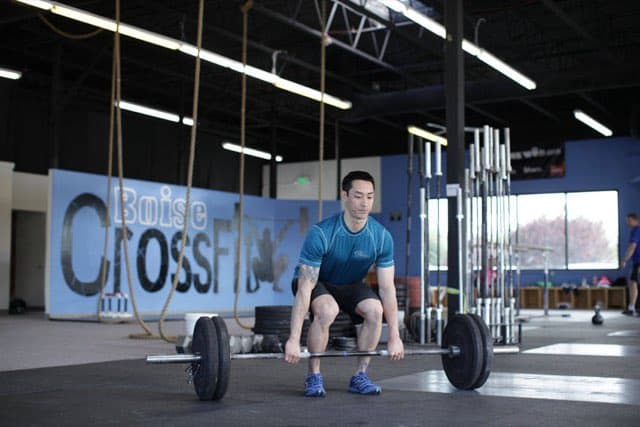
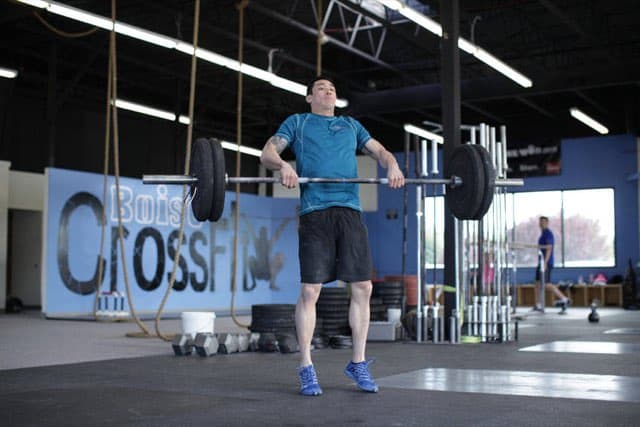
- Stand with your feet slightly wider than shoulder width apart and toes pointing out slightly.
- Squat down and grasp bar with a closed, pronated grip. Your hands should be slightly wider than shoulder width apart outside knees with elbows fully extended.
- Place the bar about 1 inch in front of your shins and over the balls of your feet.
- Your back should be flat or slightly arched, your chest held up and out and your shoulder blades should be retracted.
- Keep your head in a neutral position (in line with vertebral column and not tilted or rotated) with your eyes focused straight ahead. Inhale during this phase.
- Lift the bar from the floor by forcefully extending the hips and the knees as you exhale. Tip: The upper torso should maintain the same angle. Do not bend at the waist yet and do not let the hips rise before the shoulders (this would have the effect of pushing the glutes in the air and stretching the hamstrings.
- Keep elbows fully extended with the head in a neutral position and the shoulders over the bar.
- As the bar raises keep it as close to the shins as possible.
Steps and photos from free-exercise-db (public domain).
Muscles worked
Darker means it does more of the workThe power clean mainly works the whole body, with the hamstrings, glutes, upper back and quads helping.
It needs a barbell. Barbell exercises
Sets and reps for each goal
Stop 1–3 reps short of failureFor most people starting out, 1 to 3 sets of 8 to 12 reps of the Power Clean, stopping with two or three reps still in you, is a good start.
| Goal | Sets × reps | Rest |
|---|---|---|
| Starting out | 1–3 × 8–12 | 1–2 min |
| Strength | 3–5 × 3–6 | 2–5 min |
| Muscle | 3–6 × 6–12 | 1–2 min |
| Endurance | 2–3 × 15–25 | Under 90 s |
From the American College of Sports Medicine’s guidance on resistance training (2009).
What research says
3 studies · 2 reviews · summaries checked against each study · How we choose studies
For a powerful power clean, loads above 40% of your max worked about equally well.
Loads above 40% of the most you can lift once gave more peak power than lighter loads, with no clear gain from going heavier.
Checked automatically against the study
Read the full study →Different ways of measuring power clean output gave results that can't be swapped.
A review of 26 studies found 3 measuring methods can't be swapped. No size of effect was reported.
Checked automatically against the study
Read the full study →Short rests between reps helped keep your power clean fast and tidy in long sets.
A 30-second rest between reps kept bar speed steady over 3 sets of 9 at 70% of max, while speed dropped in normal sets. No size of effect was reported.
Checked automatically against the study
Read the full study →How studies shape Body CEO
Every summary here is checked against its study before it appears: the numbers come from the study, with no promises. 316 studies in use, across 97 exercises, and this one was last checked for new research on Fri Nov 13 2026. How we review research
- 1 · FoundOn PubMed, checked for retractions
- 2 · WeighedScored Strong, Moderate or Early
- 3 · ReadPut in plain words, every number checked
- 4 · Shapes your planStrong and Moderate takeaways guide sets, reps and rest
- 5 · Eliza cites itReads our approved studies first, with the study linked
Calories burned
An estimateThe power clean burns about 5 to 8 calories a minute of work for someone who weighs 60 to 90 kg: about 7 at 75 kg.
At 75 kg: about 7 calories a minute of work.
From the Compendium of Physical Activities (2024), which gives resistance (weight) training, squats, deadlift, slow or explosive effort a MET of 5. Calories a minute = MET × 3.5 × weight in kg ÷ 200. Rest between sets isn’t counted, and effort and body change it.