

What research says
3 studies · 2 reviews · summaries checked against each study · How we choose studies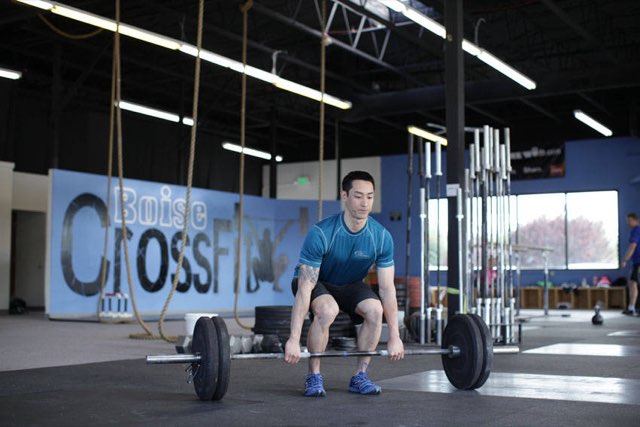
Checked automatically against the study
For a powerful power clean, loads above 40% of your max worked about equally well.
Loads above 40% of the most you can lift once gave more peak power than lighter loads, with no clear gain from going heavier.
This was a review that pooled 14 studies, with 197 people in total. Loads above 40% of the most people could lift once gave more peak power than lighter loads. Past 40%, going heavier didn't add more power. It measured power in a single session, not changes over weeks of training.
Who took part197 people across 14 studies; the abstract doesn't say their sex, age or experience.LimitsIt measured power right after lifting, not over weeks of training.The abstract doesn't say who took part.
Why this bandA review that pooled 14 studiesAbout this exercise: it’s in the titleIn a recognised free-to-read journal (DOAJ)Published recently, so not yet widely cited
- Use a weight above 40% of the most you can lift once when you train for power. There's no need to always go very heavy.
- Pick a load in that range that lets you move fast with clean technique.
- Kind of study
- A review
- Studies pooled
- 14
- What they looked at
- Performance
Original title: Optimal power load ranges for the power clean and hang power clean weight-lifting derivatives: A systematic review and meta-analysis
Sun J, Wu Y, Zhang Y, Shi L, Li L · Physiological Reports · Sun Nov 1 2026 · DOI 10.14814/phy2.71154
Checked automatically against the study
Different ways of measuring power clean output gave results that can't be swapped.
A review of 26 studies found 3 measuring methods can't be swapped. No size of effect was reported.
This was a review of 26 studies on clean variations, including the power clean. It compared three ways of measuring power: force plates under the feet, bar tracking, and both together. The authors found the methods differ too much to swap them for each other. It described the studies rather than pooling their results.
Who took partThe abstract doesn't sayLimitsIt is about how to measure power, not how to train.It described the studies rather than pooling their results.
Why this bandA review that pooled 26 studiesTests this exerciseAmong the top 7% most cited papers of its age
- Use the same tool every time if you track your power, so your numbers stay comparable.
- Don't compare your power numbers with ones measured on a different system.
- Kind of study
- A review
- Studies pooled
- 26
- What they looked at
- Performance
Original title: Mechanical power production assessment during weightlifting exercises. A systematic review
Soriano MA, Kipp K, Lake JP and others · Sports Biomechanics · Mon Apr 27 2020 · DOI 10.1080/14763141.2020.1747529
Checked automatically against the study
Short rests between reps helped keep your power clean fast and tidy in long sets.
A 30-second rest between reps kept bar speed steady over 3 sets of 9 at 70% of max, while speed dropped in normal sets. No size of effect was reported.
Twenty people did 3 sets of 9 power cleans at 70% of their max, both as normal sets and with short rests between reps. People were split into orders by chance and did both. In normal sets, bar speed dropped and the bar path drifted as they tired. With a 30-second rest between reps, bar speed held steady and the bar didn't drift forward.
Who took part20 people; the abstract doesn't say their sex, age or experience.LimitsIt was a small group of 20 people.It looked at single sessions, not results over weeks of training.
Why this bandA randomised trial of 20 peopleAbout this exercise: it’s in the titlePublished recently, so not yet widely cited
- Take about 30 seconds of rest between reps when you do many power cleans in one set.
- Watch for the bar drifting forward late in long sets. It's a sign that tiredness is changing your technique.
- Kind of study
- A fair test
- People
- 20 people
- What they looked at
- How you move, performance
Original title: Effect of traditional and cluster set structures on bar path kinematics during high-volume power clean training
Nagatani T, Vial S, Kendall KL and others · Journal of Sports Sciences · Fri Oct 24 2025 · DOI 10.1080/02640414.2025.2577567
How studies shape Body CEO
Every summary here is checked against its study before it appears: the numbers come from the study, with no promises. 316 studies in use, across 97 exercises, and this one was last checked for new research on Fri Nov 13 2026. How we review research
- 1 · FoundOn PubMed, checked for retractions
- 2 · WeighedScored Strong, Moderate or Early
- 3 · ReadPut in plain words, every number checked
- 4 · Shapes your planStrong and Moderate takeaways guide sets, reps and rest
- 5 · Eliza cites itReads our approved studies first, with the study linked