Seated Calf Raise
The Seated Calf Raise works the calves. You need a weight machine.
Plan it in Body CEO, and it sets the weight each time.
Body CEO puts the seated calf raise where it fits in a plan for the goal, logs every set and says when to add weight or reps.
Watch it
3 short videos from coachesVideos play inside Body CEO only when tapped (youtube-nocookie). Channel names and lengths come from YouTube. Clip: Goulart, CC BY-SA 4.0, via wger.de (licence).
How to do it, in 6 steps
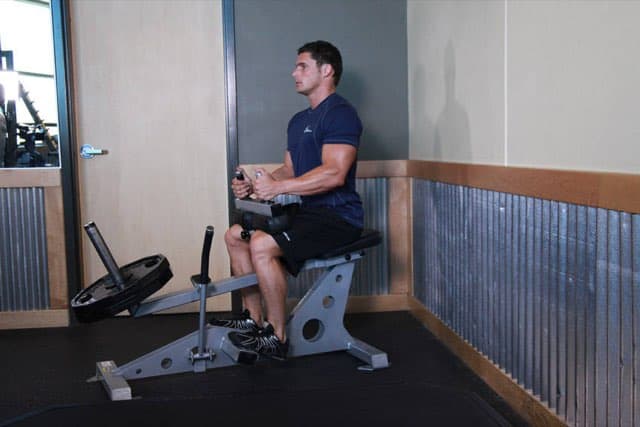
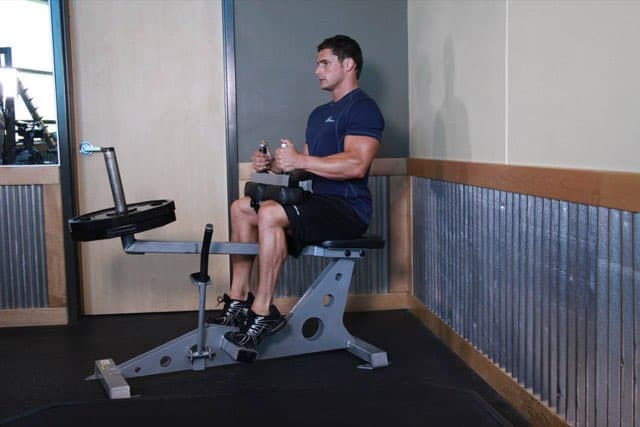
- Sit on the machine and place your toes on the lower portion of the platform provided with the heels extending off. Choose the toe positioning of your choice (forward, in, or out) as per the beginning of this chapter.
- Place your lower thighs under the lever pad, which will need to be adjusted according to the height of your thighs. Now place your hands on top of the lever pad in order to prevent it from slipping forward.
- Lift the lever slightly by pushing your heels up and release the safety bar. This will be your starting position.
- Slowly lower your heels by bending at the ankles until the calves are fully stretched. Inhale as you perform this movement.
- Raise the heels by extending the ankles as high as possible as you contract the calves and breathe out. Hold the top contraction for a second.
- Repeat for the recommended amount of repetitions.
Steps and photos from free-exercise-db (public domain).
Muscles worked
Darker means it does more of the workThe seated calf raise mainly works the calves.
Sets and reps for each goal
Stop 1–3 reps short of failureFor most people starting out, 1 to 3 sets of 8 to 12 reps of the Seated Calf Raise, stopping with two or three reps still in you, is a good start.
| Goal | Sets × reps | Rest |
|---|---|---|
| Starting out | 1–3 × 8–12 | 1–2 min |
| Strength | 3–5 × 3–6 | 1–2 min |
| Muscle | 3–6 × 6–12 | 1–2 min |
| Endurance | 2–3 × 15–25 | Under 90 s |
From the American College of Sports Medicine’s guidance on resistance training (2009).
What research says
3 studies · summaries checked against each study · How we choose studies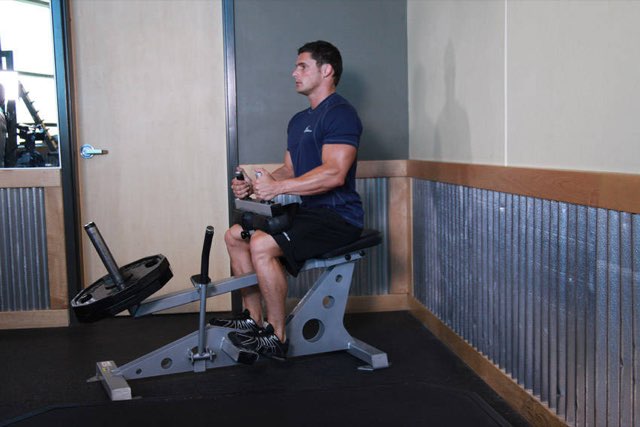
Four weeks of calf raises helped young adults with their balance.
Balance got better after 4 weeks of 3 sets of 15, 3 to 4 times a week; no size of effect was reported
Checked automatically against the study
Read the full study →Heel raises on a slope or a block both helped toe strength and jumps.
Jump height up 1.2 cm in both groups after 11 weeks
Checked automatically against the study
Read the full study →Longer calf-raise sets with short rests made the calf muscle stiffer right after.
Calf stiffness rose 0.22 m/s with 45 s work and 15 s rest, vs 0.08 m/s with 15 s work and 45 s rest
Checked automatically against the study
Read the full study →How studies shape Body CEO
Every summary here is checked against its study before it appears: the numbers come from the study, with no promises. 316 studies in use, across 97 exercises, and this one was last checked for new research on Fri Nov 13 2026. How we review research
- 1 · FoundOn PubMed, checked for retractions
- 2 · WeighedScored Strong, Moderate or Early
- 3 · ReadPut in plain words, every number checked
- 4 · Shapes your planStrong and Moderate takeaways guide sets, reps and rest
- 5 · Eliza cites itReads our approved studies first, with the study linked
Calories burned
An estimateThe seated calf raise burns about 3 to 6 calories a minute of work for someone who weighs 60 to 90 kg: about 5 at 75 kg.
At 75 kg: about 5 calories a minute of work.
From the Compendium of Physical Activities (2024), which gives resistance (weight) training, multiple exercises, 8–15 reps at varied resistance a MET of 3.5. Calories a minute = MET × 3.5 × weight in kg ÷ 200. Rest between sets isn’t counted, and effort and body change it.