

What research says
3 studies · summaries checked against each study · How we choose studies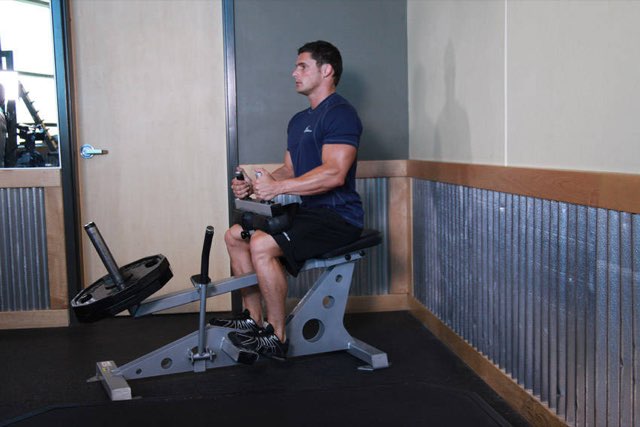
Checked automatically against the study
Four weeks of calf raises helped young adults with their balance.
Balance got better after 4 weeks of 3 sets of 15, 3 to 4 times a week; no size of effect was reported
This was a fair test where people were split into groups by chance. Fifty healthy young adults did either calf raises or a foot-arch exercise for 4 weeks. Both groups got steadier on balance tests in a lab. The foot-arch group did a bit better on some tests over time.
Who took part50 healthy young adults, with an average age of 23.9; 23 men and the rest women; training experience not givenLimitsIt only lasted 4 weeks.Balance was tested in a lab, not in daily life or sport.There was no group that did no exercise, and 46 of the 50 people finished.
Why this bandA randomised trial of 50 peopleOnly mentions this exercise in passing4 weeks of trainingPublished recently, so not yet widely cited
- Do 3 sets of 15 calf raises, 3 to 4 times a week, if you want to help your balance.
- Add a simple foot-arch exercise too, since it did a bit better on some balance tests.
- Kind of study
- A fair test
- People
- healthy young adults
- What they looked at
- Performance, how you move
Original title: Differences in calf-raise exercise and short-foot exercise on feedforward and feedback activation in healthy young
Guo J, Li Y, Huang Q, Rong X, Li P · Physical Therapy in Sport : Official Journal of the Association of Chartered Physiotherapists in Sports Medicine · Wed Nov 19 2025 · DOI 10.1016/j.ptsp.2025.11.004
Checked automatically against the study
Heel raises on a slope or a block both helped toe strength and jumps.
Jump height up 1.2 cm in both groups after 11 weeks
This was a fair test where 33 female volleyball players were split into groups by chance. One group did heel raises on a slope and the other on a block, for 11 weeks. Both groups got stronger toes and jumped a little higher. Their ankle strength didn't change, and both ways worked about the same.
Who took part33 female volleyball players; no men; age not givenLimitsOnly women took part.It used standing heel raises, not seated calf raises.There was no group that did no heel raises.
Why this bandA randomised trial of 33 peopleOnly mentions this exercise in passing11 weeks of trainingPeople who already train
- Use a block or a slope for your heel raises, whichever you have, since both worked about the same.
- Keep going for several weeks, as the gains showed up over 11 weeks.
- Kind of study
- A fair test
- People
- female volleyball players
- What they looked at
- Strength, performance
Original title: Effect of incline versus block heel-raise exercise on foot muscle strength and vertical jump performance - an 11-week randomized resistance training study
Dæhlin TE, Kennedy MD, Rouhani H, Chiu LZF · Sports Biomechanics · Thu Feb 9 2023 · DOI 10.1080/14763141.2023.2176353
Checked automatically against the study
Longer calf-raise sets with short rests made the calf muscle stiffer right after.
Calf stiffness rose 0.22 m/s with 45 s work and 15 s rest, vs 0.08 m/s with 15 s work and 45 s rest
This was a fair test where everyone tried all three set styles in a random order. Thirty trained volleyball players took part, half women and half men. Sets of 45 seconds work and 15 seconds rest made the calf stiffest right after. Stiffness eased back toward normal during 5 minutes of massage-gun work. There was no recovery group without the gun, so the gun's own effect isn't clear.
Who took part30 trained volleyball players: 15 women and 15 men; age not givenLimitsIt only looked at changes in a single session, not over weeks.There was no recovery without a massage gun, so the gun's effect can't be separated out.It measured muscle stiffness, not strength or muscle growth.
Why this bandA randomised trial of 30 peopleOnly mentions this exercise in passingPeople who already trainIn a recognised free-to-read journal (DOAJ)
- Expect your calves to feel tighter right after long sets with short rests, and let them settle for a few minutes.
- Choose shorter work and longer rest if you want your calves to feel less tight straight after.
- Kind of study
- A fair test
- People
- trained volleyball players
Original title: Acute changes in gastrocnemius muscle stiffness following different work-rest calf-raise protocols and percussive therapy: A randomized crossover experimental study
Eken Ö, Çiftçi R, Aldhahi MI · Medicine · Tue Sep 1 2026 · DOI 10.1097/md.0000000000050494
How studies shape Body CEO
Every summary here is checked against its study before it appears: the numbers come from the study, with no promises. 316 studies in use, across 97 exercises, and this one was last checked for new research on Fri Nov 13 2026. How we review research
- 1 · FoundOn PubMed, checked for retractions
- 2 · WeighedScored Strong, Moderate or Early
- 3 · ReadPut in plain words, every number checked
- 4 · Shapes your planStrong and Moderate takeaways guide sets, reps and rest
- 5 · Eliza cites itReads our approved studies first, with the study linked