

Research on Pull-Up · Every study we found · How we choose studies
Checked automatically against the study
Kipping pull-ups use more core and legs, and strict ones use more biceps.
Biceps worked about 26.7% less in kipping pull-ups than in strict ones.
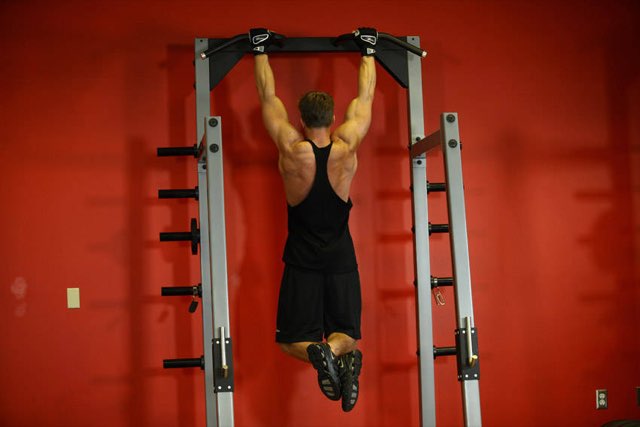
Eleven athletes did sets of 5 strict pull-ups and 5 kipping pull-ups (swinging the body to help). Sensors on the skin measured how hard each muscle worked, and cameras tracked the movement. Kipping made the abs and hip muscles work harder. The biceps worked less. This was a small, single-session study.
Who took part11 athletes; the abstract doesn't say their sex, age or experienceLimitsVery small group.Measured muscle effort in a single session, not growth or strength over time.Only sets of 5 reps were tested.
Why this bandA one-off lab test of 11 peopleAbout this exercise: it’s in the titlePeople who already trainAmong the top 13% most cited papers of its age
- Choose strict pull-ups when you want your arms and upper body to do the work.
- Choose kipping when you want more full-body work, or more reps with less arm tiredness.
- Kind of study
- A lab study
- People
- athletes
- What they looked at
- Muscle activity, how you move
Original title: Alterations in kinematics and muscle activation patterns with the addition of a kipping action during a pull-up activity
Dinunzio C, Porter N, Van Scoy J, Cordice D, McCulloch RS · Sports Biomechanics · Wed May 16 2018 · DOI 10.1080/14763141.2018.1452971