

Research on Russian Twist · Every study we found · How we choose studies
Checked automatically against the study
Deep and surface back muscles switch on differently as you twist while seated.
10 people, back muscles measured at several levels of the spine; no size of effect was reported
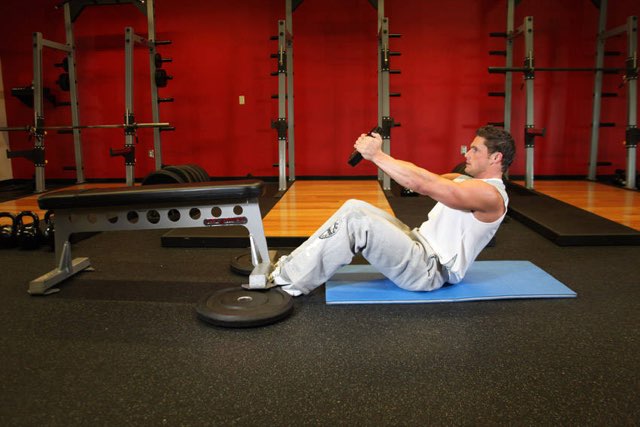
This was a small one-time study with 10 people. Sensors placed in the muscle measured how hard deep and surface back muscles worked at several levels of the upper and middle back. People twisted as far as they could each way while seated. The surface muscles followed a clear pattern with the direction of the twist. The deep muscles were more mixed and may help control each section of the spine as you turn.
Who took part10 people; the abstract doesn't say their age, whether they were men or women, or how much they trainedLimitsVery small group of 10 peopleOne session in a lab, not training over weeksIt measured how hard muscles worked, not muscle growth or strength
Why this bandCompared 10 people at one point in timeOnly mentions this exercise in passingAmong the top 12% most cited papers of its age
- Twist both ways while seated and keep the movement smooth, because your back muscles work differently in each direction.
- Turn only as far as you can control, since your back muscles help guide the spine through the twist.
- Kind of study
- A one-time comparison
- People
- 10 people
- What they looked at
- Muscle activity
Original title: Differential activation of the thoracic multifidus and longissimus thoracis during trunk rotation
Lee LJ, Coppieters MW, Hodges PW · Spine · Fri Apr 1 2005 · DOI 10.1097/01.brs.0000158956.77897.ec