

Research on Pull-Up · Every study we found · How we choose studies
Checked automatically against the study
Grip changed little in the Pull-Up, except more middle back work.
Middle traps peaked at about 60.1% of max effort with palms away, versus 37.1% with palms facing in
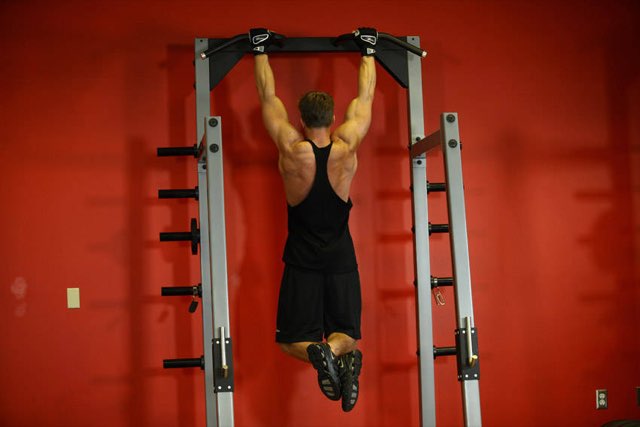
This was a small lab test with 19 men who already train for strength. Sensors on the skin measured how hard eight shoulder and arm muscles worked. They tested palms facing away, palms facing you, palms facing in, and a rope. Most muscles worked about the same with every grip. The standard Pull-Up grip, palms facing away, made the middle traps (between your shoulder blades) work harder than a palms-facing-in grip.
Who took part19 strength-trained men, average age 24.9; no womenLimitsSmall group of only menMeasured how hard muscles work, not muscle growth or strengthA single lab session
Why this bandA one-off lab test of 19 peopleAbout this exercise: it’s in the titlePeople who already trainAmong the top 12% most cited papers of its age
- If you're a man who lifts and want your middle back working hard, keep your palms facing away in your Pull-Up.
- Kind of study
- A lab study
- People
- strength-trained men
- What they looked at
- Muscle activity
Original title: Electromyographic analysis of muscle activation during pull-up variations
Dickie JA, Faulkner JA, Barnes MJ, Lark SD · Journal of Electromyography and Kinesiology : Official Journal of the International Society of Electrophysiological Kinesiology · Mon Nov 28 2016 · DOI 10.1016/j.jelekin.2016.11.004