

Every study we’ve looked at
Each Monday we search for new research on every exercise. Here is all of it, in plain words: what we use, what we’re still checking, and what we didn’t use, and why.
Showing 251–300 of 363
Glute Bridge: Stroke Patients Stood up More Evenly on Both Feet
What it means for you: Make your bridges harder step by step, as this study did.
Original title: Effect of progressive bridging exercise on weight-bearing during the extension phase of sit-to-stand, and on sit-to-stand ability in individuals with stroke: A randomised controlled trial · Clinical Rehabilitation · Mon Jul 11 2022 · On PubMed · Read our summary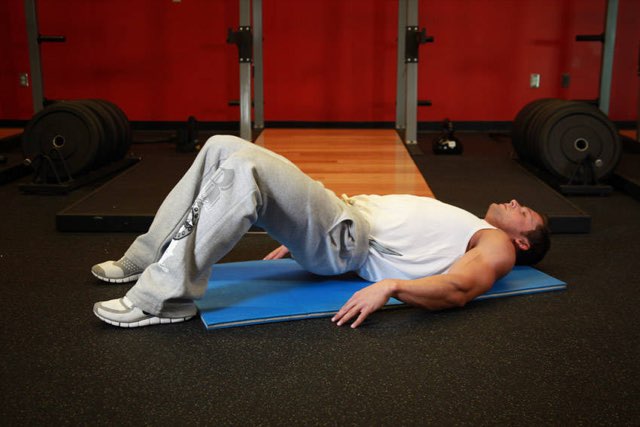
Glute Bridge: Small Sprint Boost in Teenage Footballers
What it means for you: Try a few heavy glute bridges about 7 minutes before you sprint, as a warm-up boost.
Original title: The Acute Effects Of Hip Thrust and Glute Bridge Exercises With Different Loads on Sprint Performance and Horizontal Force-Velocity Profile in Adolescent Soccer Players: A Post-Activation Performance Enhancement Approach · European Journal of Sport Science · Sat Feb 1 2025 · On PubMed · Read our summarySupine Bridge Exercise: A Narrative Review of the Literature (Part I)
Cureus · Mon Mar 10 2025 · On PubMed · Read our summarySupine Bridge Exercise for Low Back Pain: A Fascial Approach for Movement Impairment Syndromes (Part II)
Cureus · Fri May 9 2025 · On PubMed · Read our summarySupine Bridge Exercise in Degenerative and Functional Hip Disorders: A Biomechanical and Therapeutic Approach (Part III)
Cureus · Tue Jun 10 2025 · On PubMed · Read our summary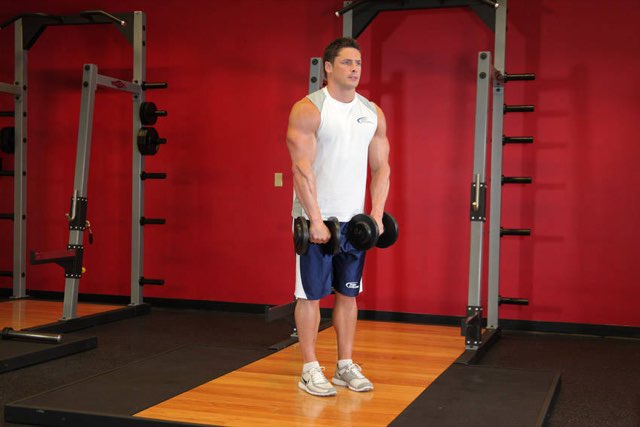
Effects of Pre-exhaustion on the Patterns of Muscular Activity in the Flat Bench Press
What it means for you: Do front raises for their own sake, not as a way to pre-tire your shoulders before heavy bench pressing.
Journal of Strength and Conditioning Research · Sat Jul 1 2017 · On PubMed · Read our summaryElectromyography activity of the deltoid muscle of the weight-bearing side during shoulder flexion in various weight-bearing positions
What it means for you: Try a forward arm raise on hands and knees, or propped on your elbows, for a change from standing.
Journal of Physical Therapy Science · Fri Oct 30 2015 · On PubMed · Read our summary
The Quantification of Muscle Activation During the Loaded Carry Movement Pattern
What it means for you: Walk with your weights rather than just holding them still, so your core works harder.
International Journal of Exercise Science · Mon Apr 1 2024 · On PubMed · Read our summary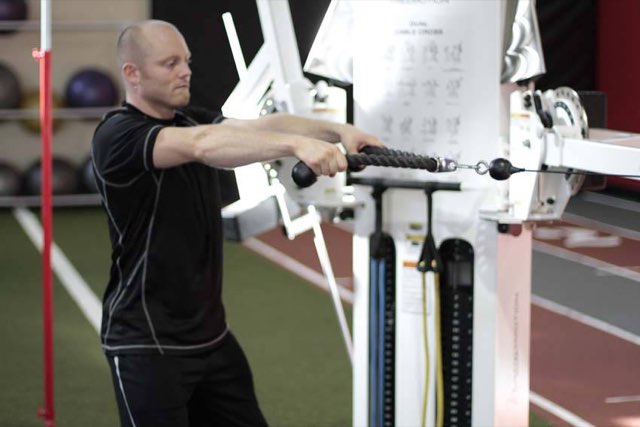
Biomechanical evaluation of posterior deltoid exercises and kinematic trajectory modeling
What it means for you: Use face pulls when you want to train the back of your shoulders, since they worked it as hard as bent-over raises.
Acta of Bioengineering and Biomechanics · Mon Dec 1 2025 · On PubMed · Read our summary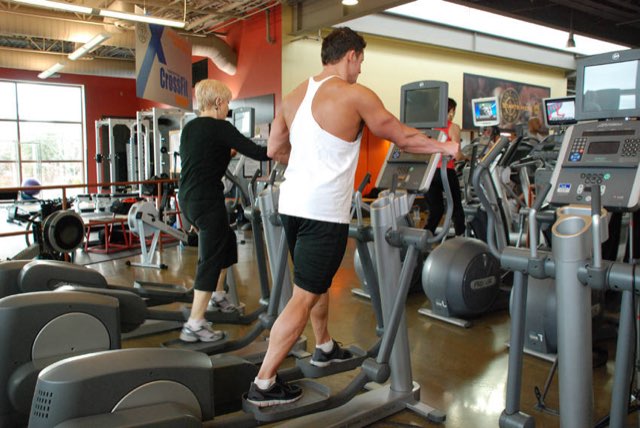
Elliptical exercise improves fatigue ratings and quality of life in patients with multiple sclerosis
What it means for you: If you have MS, ask your doctor or care team whether sessions on the Elliptical could fit into your week.
Journal of Rehabilitation Research and Development · Sat Jan 1 2011 · On PubMed · Read our summaryA pivoting elliptical training system for improving pivoting neuromuscular control and rehabilitating musculoskeletal injuries
IEEE Transactions on Neural Systems and Rehabilitation Engineering : a Publication of the IEEE Engineering in Medicine and Biology Society · Sun Sep 1 2013 · On PubMed · Read our summaryElliptical: Children with Cerebral Palsy Got Faster on It
What it means for you: Pick a pace to aim for on the elliptical, and add resistance once you can hold it.
Original title: Task-Specific and Functional Effects of Speed-Focused Elliptical or Motor-Assisted Cycle Training in Children With Bilateral Cerebral Palsy: Randomized Clinical Trial · Neurorehabilitation and Neural Repair · Sat Jul 8 2017 · On PubMed · Read our summaryEffect of Elliptical High Intensity Interval Training on Metabolic Risk Factor in Pre- and Type 2 Diabetes Patients: A Pilot Study
What it means for you: If you have prediabetes or type 2 diabetes, ask your doctor whether interval sessions on the Elliptical could suit you.
Journal of Physical Activity & Health · Fri Aug 22 2014 · On PubMed · Read our summaryElliptical: Better Balance in Adults with a Brain Injury
Original title: Effects of a rapid-resisted elliptical training program on motor, cognitive and neurobehavioral functioning in adults with chronic traumatic brain injury · Experimental Brain Research · Wed Mar 30 2016 · On PubMed · Read our summaryComparison of elliptical training, stationary cycling, treadmill walking and overground walking
Gait & Posture · Fri Jun 17 2011 · On PubMed · Read our summaryComparison of elliptical training, stationary cycling, treadmill walking and overground walking. Electromyographic patterns
What it means for you: Expect the front of your thighs to work harder on the Elliptical than when you walk or cycle. This is about how hard the muscle works, not how strong it gets.
Gait & Posture · Thu Jan 6 2011 · On PubMed · Read our summarySimilarity of joint kinematics and muscle demands between elliptical training and walking: implications for practice
What it means for you: Expect your glutes and the front of your thighs to work harder on the Elliptical than when walking. This was measured with sensors in one session, so it says nothing about strength or muscle growth.
Physical Therapy · Fri Dec 18 2009 · On PubMed · Read our summaryJoint loading in the lower extremities during elliptical exercise
Medicine and Science in Sports and Exercise · Sat Sep 1 2007 · On PubMed · Read our summary
Effects of Pre-exhaustion on the Patterns of Muscular Activity in the Flat Bench Press
What it means for you: Do skull crushers before your bench press if you want your triceps to work harder during the press.
Journal of Strength and Conditioning Research · Sat Jul 1 2017 · On PubMed · Read our summaryInfluence of exercise order on electromyographic activity during upper body resistance training
What it means for you: Keep your shoulders still and let your elbows do the bending when skull crushers come at the end of a pressing day.
Journal of Human Kinetics · Tue Dec 30 2014 · On PubMed · Read our summary
Comparison of Muscle Activity in Three Single-Joint, Hip Extension Exercises in Resistance-Trained Women
Journal of Sports Science & Medicine · Fri Mar 5 2021 · On PubMed · Read our summaryDumbbell Romanian Deadlift: Growth Didn't Drive Carry-Over
What it means for you: Do a knee-bending hamstring move, like Nordic curls, as well as your deadlifts. The authors suggest this builds hamstring strength in both kinds of movement.
Original title: Minimal Role of Hamstring Hypertrophy in Strength Transfer Between Nordic Hamstring and Stiff-Leg Deadlift: A Blinded Randomized Controlled Trial · Journal of Strength and Conditioning Research · Wed Jul 9 2025 · On PubMed · Read our summaryRomanian Deadlift: Hamstring Growth Matched Nordic Curls
What it means for you: Lower the weight slowly on your Romanian deadlifts. This study found that grew the back of the thighs as well as Nordic curls did.
Original title: Hamstrings Muscle Architecture and Morphology Following 6 wk of an Eccentrically Biased Romanian Deadlift or Nordic Hamstring Exercise Intervention · Medicine and Science in Sports and Exercise · Wed May 14 2025 · On PubMed · Read our summary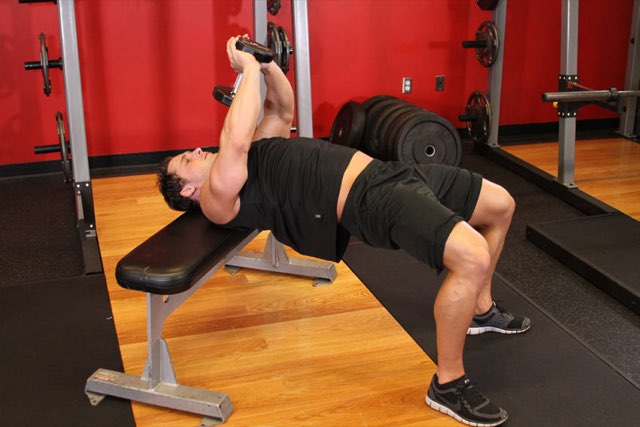
Effects of the pullover exercise on the pectoralis major and latissimus dorsi muscles as evaluated by EMG
What it means for you: Count the pullover as a chest exercise as much as a back exercise when you plan your week.
Journal of Applied Biomechanics · Tue Oct 4 2011 · On PubMed · Read our summaryThe Pre-Exhaustion Method Does Not Increase Muscle Activity in Target Muscle During Strength Training in Untrained Individuals
What it means for you: Do pullovers for their own sake, not as a trick to make your lats work harder in rows.
Journal of Human Kinetics · Tue Apr 26 2022 · On PubMed · Read our summaryElectromyographic Analysis of Latissimus Dorsi Activation During Common Resistance Training Exercises: A Narrative Review
What it means for you: Expect your Dumbbell Pullover to work your chest hard, not just your lats, based on sensor readings.
Journal of Functional Morphology and Kinesiology · Wed Aug 12 2026 · On PubMed · Read our summary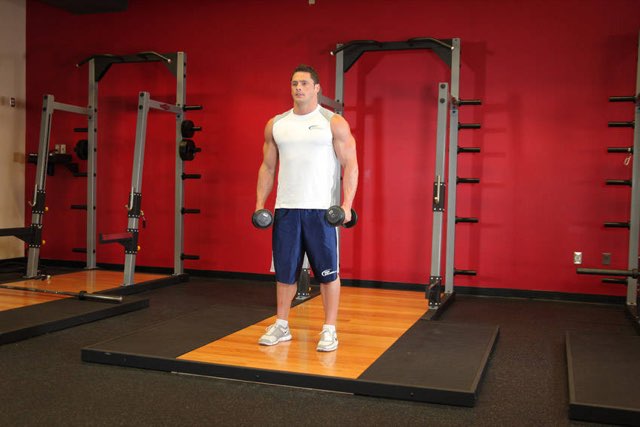
Different Shoulder Exercises Affect the Activation of Deltoid Portions in Resistance-Trained Individuals
What it means for you: If you're a man who already lifts, pick the Dumbbell Lateral Raise when you want the side and back of your shoulder to work hard. In this test it beat the bench press and dumbbell fly for both.
Journal of Human Kinetics · Sat Oct 31 2020 · On PubMed · Read our summaryLateral Raise: Dumbbells and Cables Grew Shoulders Equally
What it means for you: Use dumbbells or a cable, whichever you like or have to hand. Both grew the shoulder about equally.
Original title: Dumbbell versus cable lateral raises for lateral deltoid hypertrophy: an experimental study · Frontiers in Physiology · Mon Jul 7 2025 · On PubMed · Read our summaryBiomechanical evaluation of posterior deltoid exercises and kinematic trajectory modeling
Acta of Bioengineering and Biomechanics · Mon Dec 1 2025 · On PubMed · Read our summaryMuscle activation during selected strength exercises in women with chronic neck muscle pain
Physical Therapy · Thu Mar 13 2008 · On PubMed · Read our summaryLateral Raise: Hard Interval Sets Boosted Shoulder Endurance
What it means for you: Get advice from a qualified health professional first if your shoulder hurts, before you train it hard.
Original title: High-Intensity Shoulder Abduction Exercise in Subacromial Pain Syndrome · Medicine and Science in Sports and Exercise · Fri Jan 1 2021 · On PubMed · Read our summary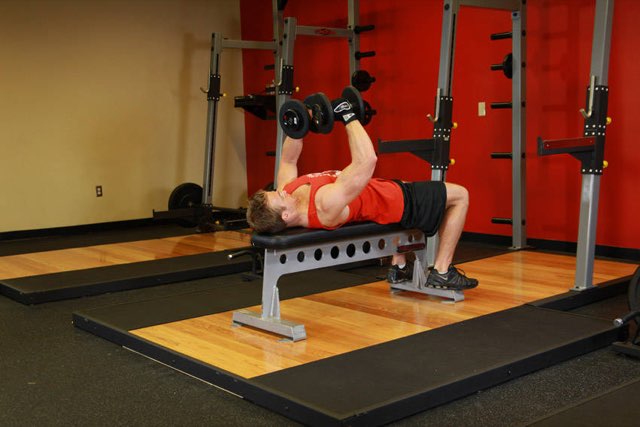
Effects of Pre-exhaustion on the Patterns of Muscular Activity in the Flat Bench Press
What it means for you: Don't count on doing flyes before your bench press to make your chest work harder.
Journal of Strength and Conditioning Research · Sat Jul 1 2017 · On PubMed · Read our summaryActivation of upper limb muscles in subjects with scapular dyskinesis during bench-press and dumbbell fly on stable and unstable surfaces
What it means for you: Do your flyes on a normal bench, because a Swiss ball didn't make your muscles work harder here.
Journal of Back and Musculoskeletal Rehabilitation · Sat Jan 1 2022 · On PubMed · Read our summaryA Comparison of Muscle Activation between Barbell Bench Press and Dumbbell Flyes in Resistance-Trained Males
What it means for you: Make a press, like the bench press, your main chest move, and add the fly as an extra.
Journal of Sports Science & Medicine · Thu Nov 19 2020 · On PubMed · Read our summaryForce Profile Characteristics of Gravitational and Pneumatic Resistances in Pull and Push Exercises
Sports (Basel, Switzerland) · Tue Jul 22 2025 · On PubMed · Read our summaryDumbbell Curl: Incline and Preacher Grew Different Arm Areas
What it means for you: Mix incline and preacher curls to work the whole length of your arm muscle.
Original title: Distinct muscle growth and strength adaptations after preacher and incline biceps curls · International Journal of Sports Medicine · Tue Jan 14 2025 · On PubMed · Read our summary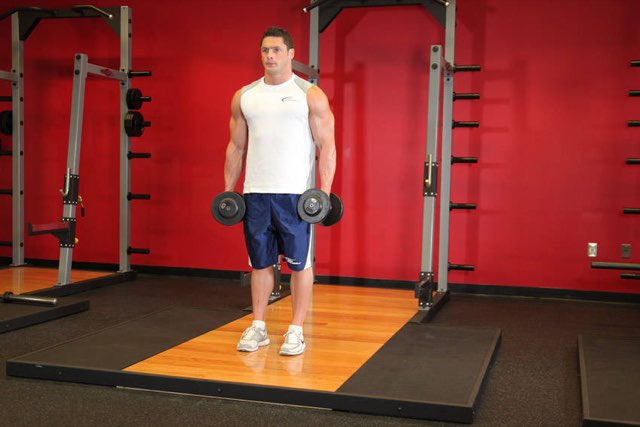
Dumbbell Curl: Blood-Flow Cuffs Barely Moved Blood Pressure
What it means for you: Expect curls with blood-flow cuffs to feel tougher and allow fewer reps than plain light curls.
Original title: Acute impact of autoregulation of applied blood flow restriction pressures on bilateral single-joint upper limb resistance exercise · Journal of Sports Sciences · Sun Oct 27 2024 · On PubMed · Read our summaryDumbbell Curl: Easy Weeks Didn't Slow Beginner Muscle Gains
What it means for you: Take an easier week when you need it, like 2 sets once a week, without worrying about losing progress.
Original title: Effects of deload periods in resistance training on muscle hypertrophy and strength endurance in untrained young men using a randomized within subject design · Scientific Reports · Tue Feb 24 2026 · On PubMed · Read our summaryDumbbell Curl: One-Arm vs Two-Arm Built Similar Muscle Size
What it means for you: Pick one-arm or two-arm curls, whichever you enjoy, because muscle growth was about the same.
Original title: Small muscle mass exercise enhances muscular adaptations? Effects of unilateral and bilateral biceps curl on maximum strength and muscle size changes · European Journal of Applied Physiology · Mon Dec 8 2025 · On PubMed · Read our summary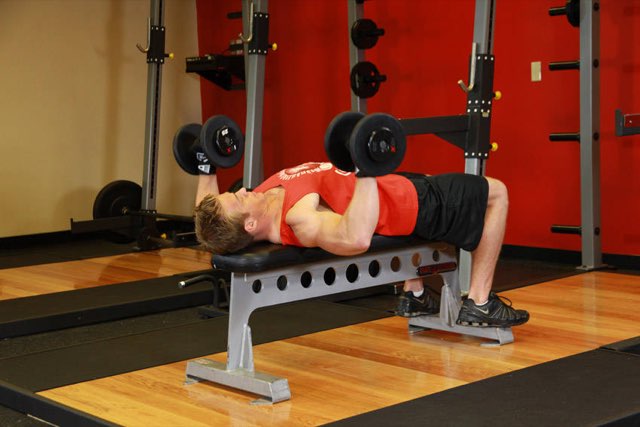
Shoulder Muscle Activation of Novice and Resistance Trained Women during Variations of Dumbbell Press Exercises
What it means for you: Use the flat dumbbell bench when you want lots of chest work and less front-shoulder work.
Journal of Sports Medicine (Hindawi Publishing Corporation) · Wed May 15 2013 · On PubMed · Read our summaryMuscle activation when performing the chest press and shoulder press on a stable bench vs. a Swiss ball
What it means for you: Stick with a stable bench for your dumbbell press, because a Swiss ball didn't make your chest work harder.
Journal of Strength and Conditioning Research · Thu Apr 1 2010 · On PubMed · Read our summaryDumbbell Bench Press: Same Recovery, Less Triceps Soreness
What it means for you: Choose dumbbells on days when you want your triceps less sore afterwards, for example before an arm session.
Original title: Chest Press Exercises With Different Stability Requirements Result in Similar Muscle Damage Recovery in Resistance-Trained Men · Journal of Strength and Conditioning Research · Sun Jan 1 2017 · On PubMed · Read our summary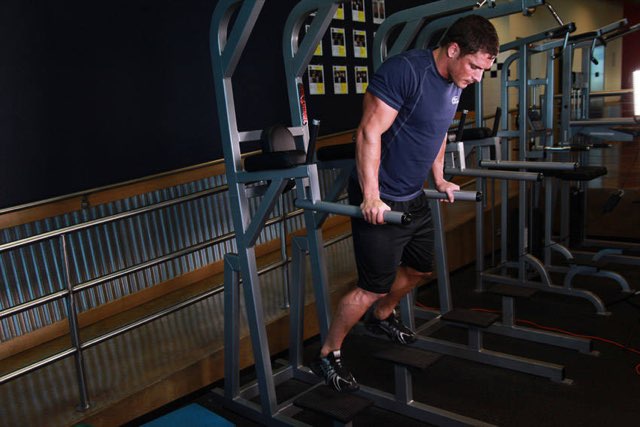
Fatigue Increases Muscle Activations but Does Not Change Maximal Joint Angles during the Bar Dip
What it means for you: Take your sets of dips close to your limit if you want your chest and triceps to work hard.
International Journal of Environmental Research and Public Health · Thu Nov 3 2022 · On PubMed · Read our summaryStress fracture of the manubrium sterni during parallel bar dips
What it means for you: If you hear a click at the front of your chest during dips, get it checked by a qualified health professional, even if it doesn't hurt.
The Physician and Sportsmedicine · Wed Mar 8 2023 · On PubMed · Read our summary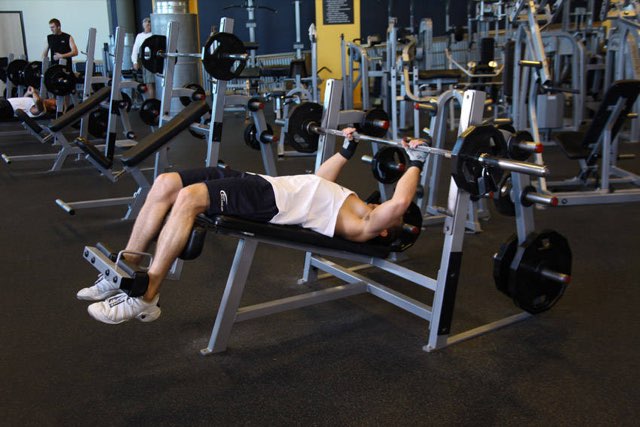
Effects of whole-body vibration applied to lower extremity muscles during decline bench press exercise
What it means for you: Don't count on leg vibration to make your chest work harder. In this study, it didn't.
Journal of Musculoskeletal & Neuronal Interactions · Wed Sep 7 2016 · On PubMed · Read our summarySex-related differences in the load-velocity and load-power relationships of the decline bench press exercise
What it means for you: Use a bar speed tracker, if you have one, to judge how heavy a set really is for you that day.
Journal of Sports Sciences · Mon Jul 1 2024 · On PubMed · Read our summary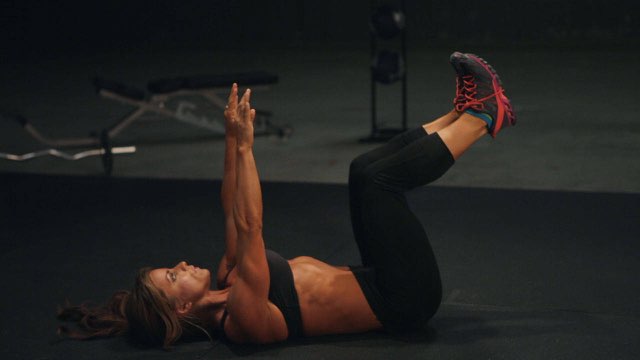
Deadbug Bridging Performance in 6- to 15-Year-Old Competitive Alpine Skiers-A Cross-Sectional Study
What it means for you: Keep your hips level and still when you lift a leg, because that is how this test judged a good rep.
Biology · Fri Feb 18 2022 · On PubMed · Read our summaryComparison of linea alba length and core-muscles engagement during core and lower back orientated exercises
What it means for you: Choose the dead bug if you want more side belly work than a glute bridge gives you.
Journal of Bodywork and Movement Therapies · Wed Jul 14 2021 · On PubMed · Read our summaryTransversus Abdominis Ultrasound Thickness during Popular Trunk-Pilates Exercises in Young and Middle-Aged Women
What it means for you: Use the dead bug as one of your main moves for your deep belly muscle.
Journal of Functional Morphology and Kinesiology · Fri Aug 4 2023 · On PubMed · Read our summary
Are Lifting Straps a Game Changer for Resistance Training or an Overrated Tool? An Exploratory Review of Current Evidence and Future Research Directions
What it means for you: Use straps when your grip gives out before your legs and back do.
International Journal of Sports Physiology and Performance · Mon Jan 12 2026 · On PubMed · Read our summary
Every summary is written in our own words from the study’s abstract and checked before it goes live. An educational read of the research, not medical advice. How we review research