

Research on Elliptical · Every study we found · How we choose studies
Checked automatically against the study
Elliptical: Children with Cerebral Palsy Got Faster on It
Children got faster on the elliptical they trained on, but not at walking.
Pace rose on the machine each child trained on over 12 weeks; the abstract reports no size of effect.
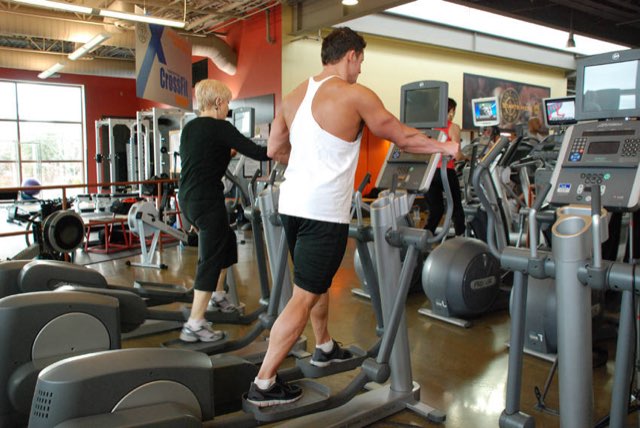
This was a fair test with 27 children and teens, aged 5 to 17, who have cerebral palsy. They trained at home for 12 weeks, 20 minutes a day, 5 days a week, on either an elliptical or a motor-assisted bike. Both groups got faster on the machine they trained on, and the front of their thighs got stronger. Their walking speed didn't change. It was a small study.
Who took part27 children and teens, 5 to 17 years, with cerebral palsy. The abstract doesn't say how many were boys or girls.LimitsIt was a small group.Everyone had cerebral palsy, so the results may not apply to other people.The authors say the total training time was low, at 20 hours or less.
Why this bandA randomised trial of 27 peopleTests this exercise12 weeks of trainingChildren or teenagers, not adults
- Pick a pace to aim for on the elliptical, and add resistance once you can hold it.
- Practise the activity you want to get better at, because gains in this study mostly stayed on the machine people trained on.
- Kind of study
- A fair test
- People
- children and teens with cerebral palsy
- What they looked at
- Performance, strength, how you move
Original title: Task-Specific and Functional Effects of Speed-Focused Elliptical or Motor-Assisted Cycle Training in Children With Bilateral Cerebral Palsy: Randomized Clinical Trial
Damiano DL, Stanley CJ, Ohlrich L, Alter KE · Neurorehabilitation and Neural Repair · Sat Jul 8 2017 · DOI 10.1177/1545968317718631