

Research on Decline Bench Press · Every study we found · How we choose studies
Checked automatically against the study
How fast the bar moves shows how close you are to your max.
Bar speed matched share of max with a fit score of 0.94, and 0.99 on each person's own chart.
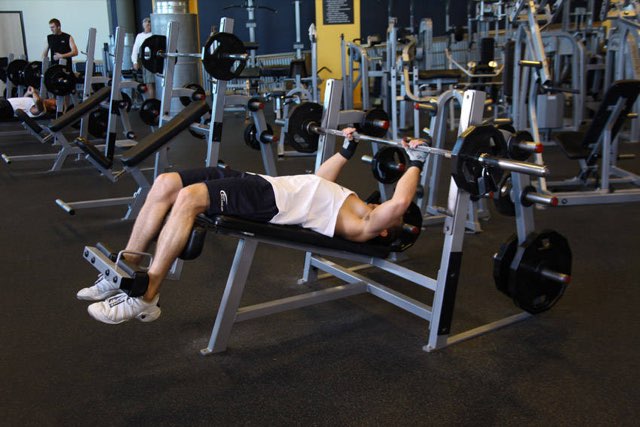
This was a small lab test with 12 young, healthy men and women. Each person worked up to the most they could lift once on the decline bench. The researchers found bar speed matched the share of max lifted very closely. The match was even closer when men and women were looked at separately. It was closest of all when each person had their own chart.
Who took part12 young healthy men and women; the split by sex, age and lifting experience aren't givenLimitsVery small group of 12 people.A one-time lab test, not weeks of training.The abstract doesn't say how experienced the lifters were.
Why this bandA one-off lab test of 12 peopleAbout this exercise: it’s in the titleAmong the top 7% most cited papers of its age
- Use a bar speed tracker, if you have one, to judge how heavy a set really is for you that day.
- Build your own speed chart from your own lifts. A general chart for everyone is less exact.
- Kind of study
- A lab study
- People
- young healthy men and women
- What they looked at
- Strength, performance
Original title: Sex-related differences in the load-velocity and load-power relationships of the decline bench press exercise
Valdés-Álvarez A, Nieto-Acevedo R, Rojo-Tirado MÁ · Journal of Sports Sciences · Mon Jul 1 2024 · DOI 10.1080/02640414.2024.2386207