

Every study we’ve looked at
Each Monday we search for new research on every exercise. Here is all of it, in plain words: what we use, what we’re still checking, and what we didn’t use, and why.
Showing 351–363 of 363
Barbell Curl: One-Arm and Two-Arm Curls Built Similar Muscle
What it means for you: Use two-arm barbell curls if your main aim is bigger arms. They grew muscle as well as one-arm curls here.
Original title: Small muscle mass exercise enhances muscular adaptations? Effects of unilateral and bilateral biceps curl on maximum strength and muscle size changes · European Journal of Applied Physiology · Mon Dec 8 2025 · On PubMed · Read our summary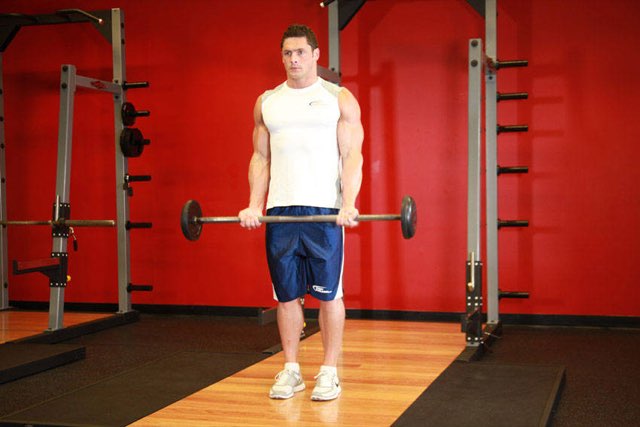
Barbell Curl: Adding Leg Work Didn't Slow Arm Muscle Growth
What it means for you: Train your legs in the same session as your curls if you like. In this study it didn't hold back arm growth.
Original title: Skeletal Muscles Do Not Compete for Growth: Activating Additional Muscle Mass Does Not Compromise Changes in Muscle Size · Journal of Strength and Conditioning Research · Tue Sep 1 2026 · On PubMed · Read our summaryBench Press: Heavier Sets Built the Most Chest Size and Strength
What it means for you: Try doing most of your bench work at about 70% to 85% of the most you can lift once.
Original title: Optimizing Strength and Hypertrophy: The Combined Effect of Intensity and Velocity Loss Thresholds in Bench Press Training · Medicine and Science in Sports and Exercise · Tue Mar 24 2026 · On PubMed · Read our summaryBench Press: Two Ways to End Sets Gave Similar Strength Gains
What it means for you: Use three sets at about 65% to 75% of the most you can lift once to build bench strength.
Original title: Effects of Velocity Loss Programming in the Bench Press on Strength Gains and Hypertrophy · International Journal of Sports Medicine · Wed May 20 2026 · On PubMed · Read our summary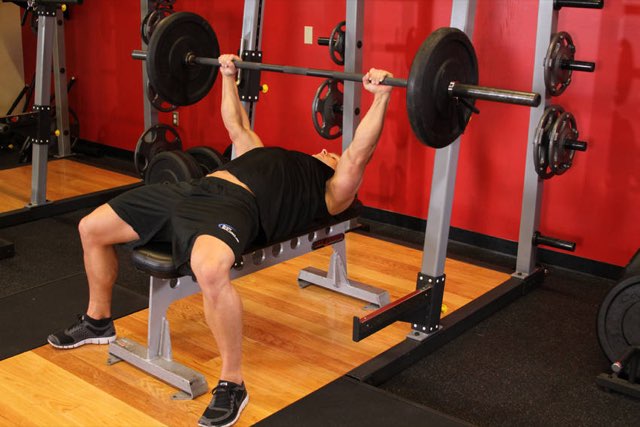
Bench Press: Light Sets with Cuff or Stim, Small Grip Boost
What it means for you: Use light bench sets as a warm-up if you like them, but expect only a small short-term boost.
Original title: Postactivation Performance Enhancement With Low-Load Upper-Body Exercise Using Blood Flow Restriction or Electrical Muscle Stimulation in Volleyball · Journal of Strength and Conditioning Research · Wed May 27 2026 · On PubMed · Read our summary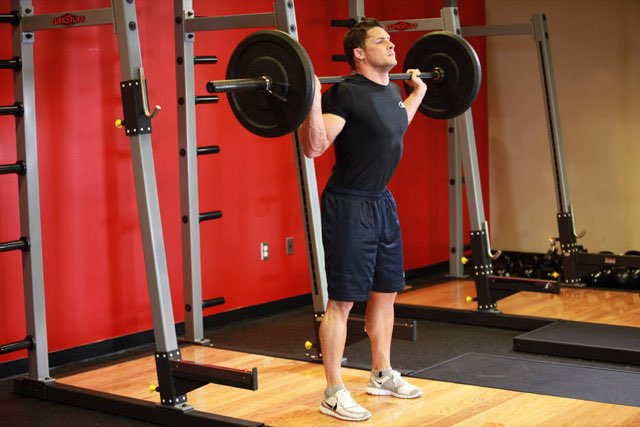
Barbell Back Squat: Heavier Lowering Didn't Speed up the Lift
What it means for you: Stick with normal sets if you want speed, because extra lowering weight didn't help and felt harder.
Original title: Acute Effects of Accentuated Eccentric Loading in Comparison to Traditional Resistance Loading on Velocity and Other Parameters in Concentric and Eccentric Phases in Barbell Back Squat · Journal of Strength and Conditioning Research · Fri May 8 2026 · On PubMed · Read our summaryBack Squat: Extra Weight Lowering Slowed the Next Rep
What it means for you: Use normal loading if you want a fast first rep, because extra lowering weight slowed it down.
Original title: Acute Effects of Accentuated Eccentric Loading on Mean Concentric Velocity During Resistance Training: A Systematic Review and Meta-analysis · Sports Medicine - Open · Thu Jun 18 2026 · On PubMed · Read our summaryBack Squat: Ankle Joint Manipulation Did Not Beat a Fake
What it means for you: Keep building your squat with regular training, and don't count on a single joint-cracking session before you test your max.
Original title: Effects of lower limb joint manipulation on squat strength and ankle range of motion: a sham-controlled double-blind randomised cross-over trial · Chiropractic & Manual Therapies · Fri Jun 19 2026 · On PubMed · Read our summaryBarbell Back Squat: Sets Closer to Failure Caused More Fatigue
What it means for you: Stop one to three reps short of failure on most squat sets, so you can keep your sets strong and recover in time.
Original title: Effects of different resistance training loads, exercises, and volume-regulated proximities to failure on acute and short-term neuromuscular, perceptual, and metabolic responses · Journal of Sports Sciences · Wed Jul 15 2026 · On PubMed · Read our summary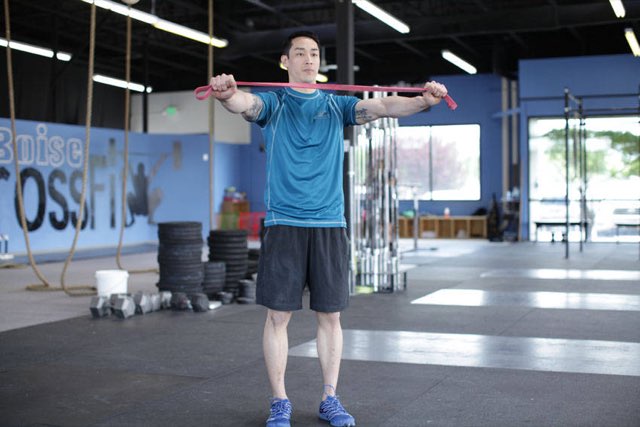
Investigation of muscle activation during kinetic chain based exercises in individuals with and without forward head posture
What it means for you: Hold a squat while you do your pull-aparts. This shifts more work to the middle and lower parts of your upper back.
Journal of Back and Musculoskeletal Rehabilitation · Mon Jan 1 2024 · On PubMed · Read our summaryBand Pull-Apart Exercise: Effects of Movement Direction and Hand Position on Shoulder Muscle Activity
What it means for you: Turn your palms up if you want more work in your lower traps (the lower part of your upper back) and the small muscle on the back of your shoulder blade.
International Journal of Sports Physical Therapy · Sat Apr 2 2022 · On PubMed · Read our summary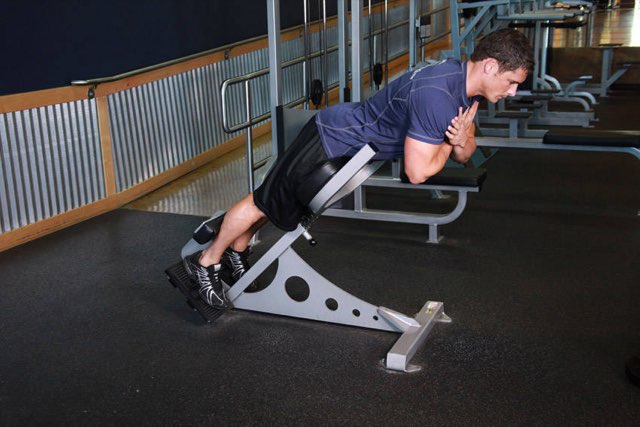
Comparison of Muscle Activity in Three Single-Joint, Hip Extension Exercises in Resistance-Trained Women
What it means for you: Choose the 45-degree back extension over the seated machine if you want your glutes and the back of your thighs to work harder.
Journal of Sports Science & Medicine · Fri Mar 5 2021 · On PubMed · Read our summary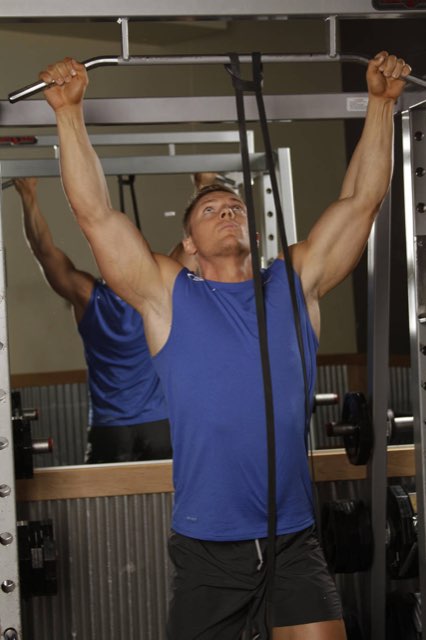
Effect of Magnesium Carbonate Use on Repeated Open-Handed and Pinch Grip Weight-Assisted Pull-Ups
What it means for you: Chalk your hands before your sets if your grip gives out before your back does.
International Journal of Exercise Science · Mon Jan 1 2018 · On PubMed · Read our summary
Every summary is written in our own words from the study’s abstract and checked before it goes live. An educational read of the research, not medical advice. How we review research