

Research on Band Pull-Apart · Every study we found · How we choose studies
Checked automatically against the study
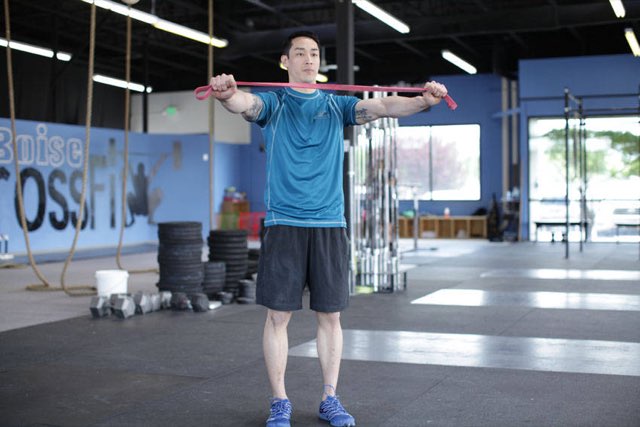
How you turn your palms and which way you pull changes which shoulder muscles work.
Muscles worked at 15.3% to 72.6% of their max effort, depending on grip and direction
This was a small lab study with 10 healthy men. They did band pull-aparts with three hand positions and three pull directions. Sensors on the skin measured how hard five upper back and shoulder muscles worked. It did not measure muscle growth or strength.
Who took part10 healthy men, about 36 years old on average; no women. Training experience isn't stated.LimitsVery small group of only menA short lab test, with only three reps of each versionMeasured how hard muscles worked, not growth or strength
Why this bandA one-off lab test of 10 peopleAbout this exercise: it’s in the titleIn a recognised free-to-read journal (DOAJ)Among the top 13% most cited papers of its age
- Turn your palms up if you want more work in your lower traps (the lower part of your upper back) and the small muscle on the back of your shoulder blade.
- Try pulling on a diagonal up and out. This direction made most of the measured muscles work hardest.
- Kind of study
- A lab study
- People
- healthy adult men
- What they looked at
- Muscle activity
Original title: Band Pull-Apart Exercise: Effects of Movement Direction and Hand Position on Shoulder Muscle Activity
Fukunaga T, Fedge C, Tyler T and others · International Journal of Sports Physical Therapy · Sat Apr 2 2022 · DOI 10.26603/001c.33026