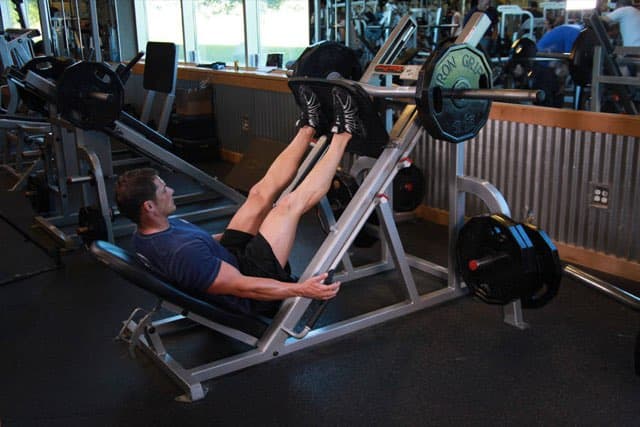
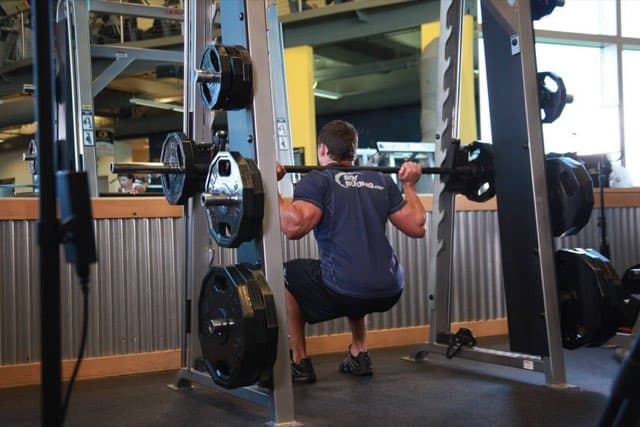
Barbell Back Squat
The Barbell Back Squat is a beginner barbell exercise where you lower and stand up with a bar across your upper back. It works the front of your thighs, with your glutes, inner thighs and core helping. What matters most is bracing your middle before every rep. Then let your hips and chest rise together.
Plan it in Body CEO, and it sets the weight each time.
Body CEO puts the barbell back squat where it fits in a plan for the goal, logs every set and says when to add weight or reps.
Watch it
3 short videos from coachesVideos play inside Body CEO only when tapped (youtube-nocookie). Channel names and lengths come from YouTube.
How to do it, in 6 steps
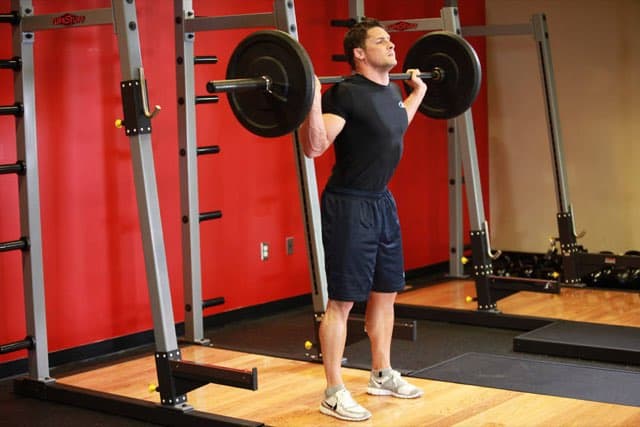
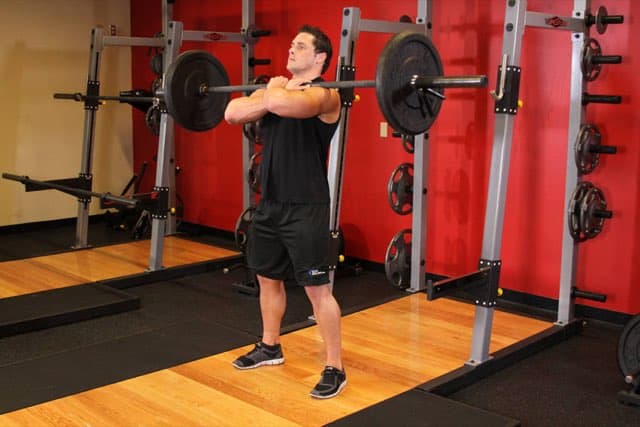
- This exercise is best performed inside a squat rack for safety purposes. To begin, first set the bar on a rack to just below shoulder level. Once the correct height is chosen and the bar is loaded, step under the bar and place the back of your shoulders (slightly below the neck) across it.
- Hold on to the bar using both arms at each side and lift it off the rack by first pushing with your legs and at the same time straightening your torso.
- Step away from the rack and position your legs using a shoulder width medium stance with the toes slightly pointed out. Keep your head up at all times and also maintain a straight back. This will be your starting position. (Note: For the purposes of this discussion we will use the medium stance described above which targets overall development; however you can choose any of the three stances discussed in the foot stances section).
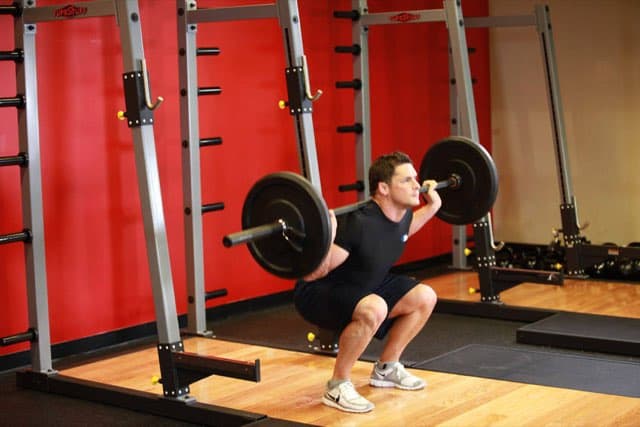
- Begin to slowly lower the bar by bending the knees and hips as you maintain a straight posture with the head up. Continue down until the angle between the upper leg and the calves becomes slightly less than 90-degrees. Inhale as you perform this portion of the movement. Tip: If you performed the exercise correctly, the front of the knees should make an imaginary straight line with the toes that is perpendicular to the front. If your knees are past that imaginary line (if they are past your toes) then you are placing undue stress on the knee and the exercise has been performed incorrectly.
- Begin to raise the bar as you exhale by pushing the floor with the heel of your foot as you straighten the legs again and go back to the starting position.
- Repeat for the recommended amount of repetitions.
Steps and photos from free-exercise-db (public domain).
Muscles worked
Darker means it does more of the workThe barbell back squat mainly works the quads, with the glutes and adductors helping. The core holds the body steady.
It needs a barbell. Barbell exercises
Sets and reps for each goal
Stop 1–3 reps short of failureFor most people starting out, 1 to 3 sets of 8 to 12 reps of the Barbell Back Squat, stopping with two or three reps still in you, is a good start.
| Goal | Sets × reps | Rest |
|---|---|---|
| Starting out | 1–3 × 8–12 | 1–2 min |
| Strength | 3–5 × 3–6 | 2–5 min |
| Muscle | 3–6 × 6–12 | 1–2 min |
| Endurance | 2–3 × 15–25 | Under 90 s |
From the American College of Sports Medicine’s guidance on resistance training (2009).
What research says
3 studies · 1 review · summaries checked against each study · How we choose studies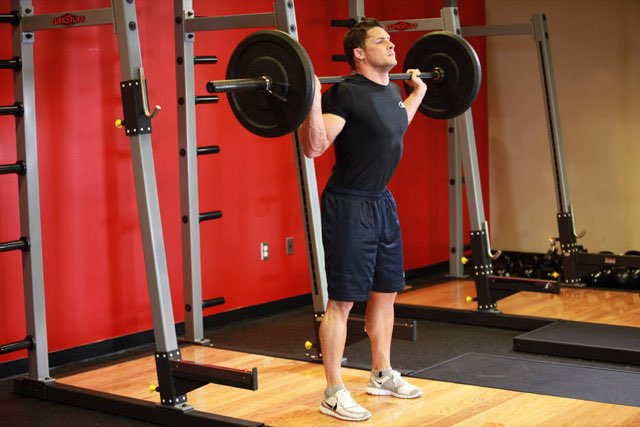
Adding extra weight on the way down slowed the next squat rep briefly.
8 studies found a small drop in bar speed on the first lift. It faded by rep two.
Checked automatically against the study
Read the full study →Extra weight on the way down didn't speed up squats but felt harder.
Effort was rated 8.5 out of 10 with the heaviest lowering. Normal sets were rated 6.9.
Checked automatically against the study
Read the full study →Squatting closer to failure brings more fatigue, especially with moderate weights.
Six squat sets at 65% or 85% of the most each person could lift once. No size of effect was reported.
Checked automatically against the study
Read the full study →How studies shape Body CEO
Every summary here is checked against its study before it appears: the numbers come from the study, with no promises. 316 studies in use, across 97 exercises, and this one was last checked for new research on Fri Nov 13 2026. How we review research
- 1 · FoundOn PubMed, checked for retractions
- 2 · WeighedScored Strong, Moderate or Early
- 3 · ReadPut in plain words, every number checked
- 4 · Shapes your planStrong and Moderate takeaways guide sets, reps and rest
- 5 · Eliza cites itReads our approved studies first, with the study linked
Calories burned
An estimateThe barbell back squat burns about 5 to 8 calories a minute of work for someone who weighs 60 to 90 kg: about 7 at 75 kg.
At 75 kg: about 7 calories a minute of work.
From the Compendium of Physical Activities (2024), which gives resistance (weight) training, squats, deadlift, slow or explosive effort a MET of 5. Calories a minute = MET × 3.5 × weight in kg ÷ 200. Rest between sets isn’t counted, and effort and body change it.
Questions people ask
What muscles does the barbell back squat work?
It mainly works the front of your thighs. Your glutes, inner thighs and core help out.
How many sets and reps of back squats should a beginner do?
A good start is 1 to 3 sets of 8 to 12 reps, resting 1 to 2 minutes. Stop each set with two or three reps still in you.
How many sets and reps for strength or muscle?
For strength, try 3 to 5 sets of 3 to 6 reps with 2 to 5 minutes' rest. For muscle, try 3 to 6 sets of 6 to 12 reps with 1 to 2 minutes' rest.
How low should you go in a back squat?
Lower slowly until your knees bend a little past a right angle. Then push through your heels to stand up.
Where should the bar sit on your back?
Rest it across the back of your shoulders, just below your neck. Set it in a rack just below shoulder level so you can step under it.
How should you breathe during a squat?
Breathe in as you lower down and breathe out as you stand up. Brace your middle before each rep.