

Every study we’ve looked at
Each Monday we search for new research on every exercise. Here is all of it, in plain words: what we use, what we’re still checking, and what we didn’t use, and why.
Showing 101–150 of 618
Tasmanian Aborigines step up to health: evaluation of a cardiopulmonary rehabilitation and secondary prevention program
We’re checking whether it tells you anything useful for training before it goes on a page.
BMC Health Services Research · Mon Aug 18 2014 · On PubMedEffects of progressive resistance strength training on knee biomechanics during single leg step-up in persons with mild knee osteoarthritis
We’re checking whether it tells you anything useful for training before it goes on a page.
Clinical Biomechanics (Bristol, Avon) · Thu Apr 21 2011 · On PubMed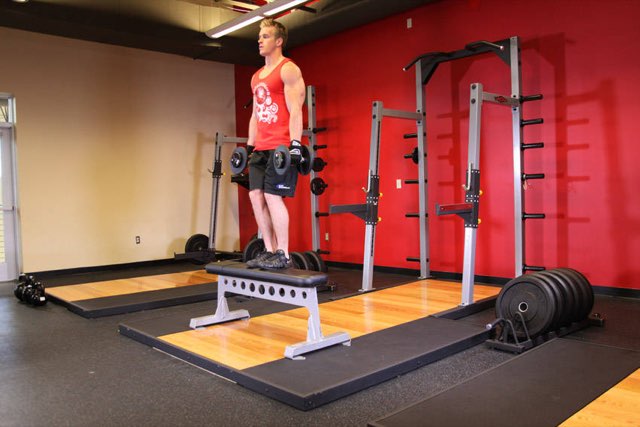
Electromyographic activity in the gluteus medius, gluteus maximus, biceps femoris, vastus lateralis, vastus medialis and rectus femoris during the Monopodal Squat, Forward Lunge and Lateral Step-Up exercises
What it means for you: Expect the front of your thighs to do most of the work when you do a lateral Step-Up, more than your glutes.
PloS one · Wed Apr 1 2020 · On PubMed · Read our summaryObjective physical activity and weight loss in adults: the step-up randomized clinical trial
We’re checking whether it tells you anything useful for training before it goes on a page.
Obesity (Silver Spring, Md.) · Sat Nov 1 2014 · On PubMedThree-dimensional dynamic simulation of total knee replacement motion during a step-up task
We’re checking whether it tells you anything useful for training before it goes on a page.
Journal of Biomechanical Engineering · Sat Dec 1 2001 · On PubMedHip-muscle activation during the lunge, single-leg squat, and step-up-and-over exercises
Journal of Sport Rehabilitation · Sun Feb 1 2009 · On PubMed · Read our summaryEffectiveness of Behaviorally Designed Gamification Interventions With Social Incentives for Increasing Physical Activity Among Overweight and Obese Adults Across the United States: The STEP UP Randomized Clinical Trial
We’re checking whether it tells you anything useful for training before it goes on a page.
JAMA Internal Medicine · Sun Dec 1 2019 · On PubMedLong-term outcomes of top-down therapy versus a conventional step-up strategy in adults newly diagnosed with Crohn's disease: 5-year follow-up of the PROFILE trial
We’re checking whether it tells you anything useful for training before it goes on a page.
The Lancet. Gastroenterology & Hepatology · Fri Sep 11 2026 · On PubMedSit-To-Stand Breaks to Optimize Cardiometabolic Health Effects Following Exercise in Sedentary Adults With Dyslipidaemia: A Randomized Crossover Trial
Why we didn’t use it: Taken down by our team after a closer look.
Scandinavian Journal of Medicine & Science in Sports · Wed Jul 1 2026 · On PubMedNormal limits for the right ventricle-pulmonary circulation exercise echocardiography: a meta-analysis
Why we didn’t use it: Taken down by our team after a closer look.
European Respiratory Review : an Official Journal of the European Respiratory Society · Wed Jul 1 2026 · On PubMedEffects of exercise in a fed or fasted state on mitochondrial dynamics regulators in the skeletal muscle of recreationally active males
Why we didn’t use it: Taken down by our team after a closer look.
Experimental Physiology · Thu Aug 6 2026 · On PubMed
Stationary Bike: Leg Cuffs and Thin Air Didn't Change Power
What it means for you: Do short all-out sprint sets with rest between them. Expect your power to fade a little and the effort to feel harder as you go.
Original title: Effects of Combined Blood Flow Restriction and Inter-Effort Recovery Hypoxia On Repeated-Sprint Performance And Physiological Responses: A Randomized And Single-Blinded Crossover Trial · European Journal of Sport Science · Tue Dec 1 2026 · On PubMed · Read our summary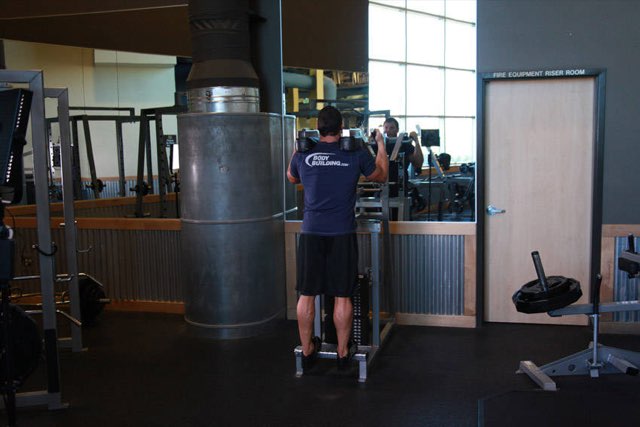
Standing Calf Raise: Massage Gun Cut Calf Muscle Activity
What it means for you: Skip the massage gun right before calf raises if you want your calves working as hard as they can.
Original title: Percussion Massage Therapy Reduced EMG Activity During Standing Heel Raise · Journal of Musculoskeletal & Neuronal Interactions · Mon Sep 1 2025 · On PubMed · Read our summaryStanding Calf Raise: Less Sway in Lab Balance Tests
What it means for you: Do 3 sets of 15 calf raises, 3 to 4 times a week, if you want to work on your balance.
Original title: Differences in calf-raise exercise and short-foot exercise on feedforward and feedback activation in healthy young · Physical Therapy in Sport : Official Journal of the Association of Chartered Physiotherapists in Sports Medicine · Wed Nov 19 2025 · On PubMed · Read our summaryCalf Raises: Shorter Rests Left the Calf Muscle Stiffer
What it means for you: Use shorter rests if you want a harder, denser calf session, and expect your calves to feel tighter right after.
Original title: Acute changes in gastrocnemius muscle stiffness following different work-rest calf-raise protocols and percussive therapy: A randomized crossover experimental study · Medicine · Tue Sep 1 2026 · On PubMed · Read our summaryStanding Calf Raise: Medium Load Gave the Biggest Jump Boost
What it means for you: Try 3 sets of 8 calf raises with a medium load about 4 minutes before you sprint or jump, for a short warm-up boost.
Original title: Acute Reactive Strength Responses and Peak Power-Performance Relationships After Flywheel Calf Raises in National-Level Track-and-Field Athletes: A Randomized Crossover Trial · European Journal of Sport Science · Sun Nov 1 2026 · On PubMed · Read our summary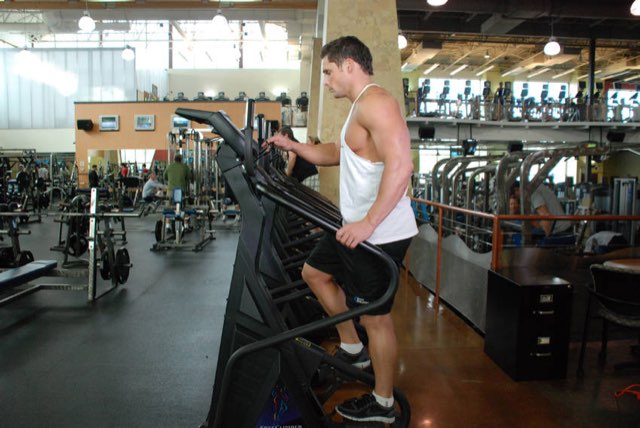
Stair Climber: Walking Plus Stairs Didn't Raise Fitness in Men
Original title: Effects of 2,000 kcal per week of walking and stair climbing on physical fitness and risk factors for coronary heart disease · Journal of Cardiopulmonary Rehabilitation · Wed May 1 1996 · On PubMed · Read our summaryStair Climber: Every Second Step Cut Heart Rate in Seniors
What it means for you: If you're a healthy older adult, try taking every second step during your Stair Climber sessions, three times a week.
Original title: Effects of stair-climbing on balance, gait, strength, resting heart rate, and submaximal endurance in healthy seniors · Scandinavian Journal of Medicine & Science in Sports · Tue Aug 27 2013 · On PubMed · Read our summaryStair Climber: Stronger Legs, Lower Blood Pressure in Women
What it means for you: Climb on about 4 days a week, and slowly add more climbs per day.
Original title: The effects of stair climbing on arterial stiffness, blood pressure, and leg strength in postmenopausal women with stage 2 hypertension · Menopause (New York, N.Y.) · Sun Jul 1 2018 · On PubMed · Read our summaryMobile and fixed bearing total knee prosthesis functional comparison during stair climbing
We’re checking whether it tells you anything useful for training before it goes on a page.
Clinical Biomechanics (Bristol, Avon) · Sun Jun 1 2003 · On PubMedTask-specific modulation of cutaneous reflexes expressed at functionally relevant gait cycle phases during level and incline walking and stair climbing
We’re checking whether it tells you anything useful for training before it goes on a page.
Experimental Brain Research · Wed Jul 5 2006 · On PubMedStair Climber: Short Hard Climbs Modestly Raised Fitness
What it means for you: Do a few short, hard climbs during your day, with rest in between.
Original title: Do stair climbing exercise "snacks" improve cardiorespiratory fitness? · Applied Physiology, Nutrition, and Metabolism = Physiologie Appliquee, Nutrition et Metabolisme · Wed Jan 16 2019 · On PubMed · Read our summaryStair Climber: Weighted Vest Built Leg Power in Older Adults
Original title: Weighted stair climbing in mobility-limited older people: a pilot study · Journal of the American Geriatrics Society · Mon Apr 1 2002 · On PubMed · Read our summaryStair Climber: Short, Hard Climbs Raised Fitness in Women
What it means for you: If you're a woman new to exercise, try three 20-second all-out Stair Climber efforts, three days a week.
Original title: Brief Intense Stair Climbing Improves Cardiorespiratory Fitness · Medicine and Science in Sports and Exercise · Wed Feb 1 2017 · On PubMed · Read our summaryStair Climber: Short Daily Climbs Raised Good Cholesterol
What it means for you: Start with one climb a day, then add a climb each week as it gets easier.
Original title: Training effects of accumulated daily stair-climbing exercise in previously sedentary young women · Preventive Medicine · Sat Apr 1 2000 · On PubMed · Read our summaryInnovative gait robot for the repetitive practice of floor walking and stair climbing up and down in stroke patients
Journal of Neuroengineering and Rehabilitation · Mon Jun 28 2010 · On PubMed · Read our summaryStair Climber: Short Bouts Raised Fitness in Young Women
What it means for you: If you're a young woman new to exercise, try short Stair Climber bouts of about two minutes. Build from one a day to five a day over eight weeks.
Original title: Training effects of short bouts of stair climbing on cardiorespiratory fitness, blood lipids, and homocysteine in sedentary young women · British Journal of Sports Medicine · Thu Sep 1 2005 · On PubMed · Read our summaryA study of lower-limb mechanics during stair-climbing
We’re checking whether it tells you anything useful for training before it goes on a page.
The Journal of Bone and Joint Surgery. American Volume · Tue Jul 1 1980 · On PubMedStair Climber: Linked to Lower Heart Disease Death Risk
What it means for you: Count stair climbing as everyday movement that is good for your heart, at home, at work or on the machine.
Original title: Evaluating the Impact of Stair Climbing on Cardiovascular Risk Reduction: A Systematic Review and Meta-analysis · American Journal of Cardiovascular Drugs : Drugs, Devices, and Other Interventions · Thu Aug 13 2026 · On PubMed · Read our summary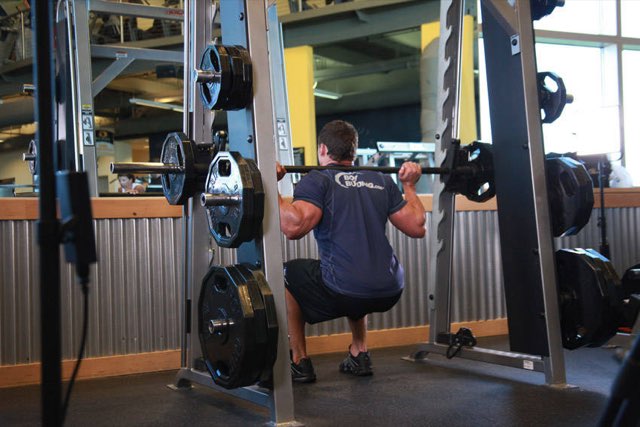
Smith Machine Squat: Added Vibration Gave Bigger Jump Gains
Original title: Effects of a 6-week periodized squat training program with or without whole-body vibration on jump height and power output following acute vibration exposure · Journal of Strength and Conditioning Research · Sun Nov 1 2009 · On PubMed · Read our summaryA comparison of free weight squat to Smith machine squat using electromyography
What it means for you: Add free-weight squats alongside Smith squats if you want your calves and thighs to work harder.
Journal of Strength and Conditioning Research · Tue Dec 1 2009 · On PubMed · Read our summarySmith Machine Squat: Vibration Helped Early Force Rise Only
What it means for you: Focus on a steady Smith squat plan first. Vibration plates are an optional extra with small, limited results.
Original title: Effects of adding whole body vibration to squat training on isometric force/time characteristics · Journal of Strength and Conditioning Research · Fri Jan 1 2010 · On PubMed · Read our summarySmith Machine Squat: Slow and Fast Lowering Both Built Strength
What it means for you: Lower the bar with control in about 2 to 4 seconds if you also want to stay quick and springy.
Original title: The Effects of Eccentric Contraction Duration on Muscle Strength, Power Production, Vertical Jump, and Soreness · Journal of Strength and Conditioning Research · Wed Mar 1 2017 · On PubMed · Read our summaryLoad-velocity relationship 1RM predictions: A comparison of Smith machine and free-weight exercise
Why we didn’t use it: Retracted by the journal, so it comes off every page.
Journal of Sports Sciences · Wed Jul 15 2020 · On PubMedMuscle Hypertrophy and Strength Adaptations to Systematically Varying Resistance Exercises
Why we didn’t use it: Taken down by our team after a closer look.
Research Quarterly for Exercise and Sport · Thu Oct 10 2024 · On PubMedThe effect of flywheel complex training with eccentric-overload on muscular adaptation in elite female volleyball players
Why we didn’t use it: Taken down by our team after a closer look.
PeerJ · Thu Mar 21 2024 · On PubMedValidity and reliability of linear position transducers and linear velocity transducers: a systematic review
Why we didn’t use it: Taken down by our team after a closer look.
Sports Biomechanics · Tue Nov 2 2021 · On PubMedMuscle Hypertrophy and Strength Adaptations to Systematically Varying Resistance Exercises
Why we didn’t use it: Taken down by our team after a closer look.
Research Quarterly for Exercise and Sport · Thu Oct 10 2024 · On PubMedAnterior-posterior ground reaction forces in free-weight vs. Smith machine squats: Are differences modulated by load and volume?
Why we didn’t use it: Taken down by our team after a closer look.
Journal of Sports Sciences · Wed Dec 10 2025 · On PubMed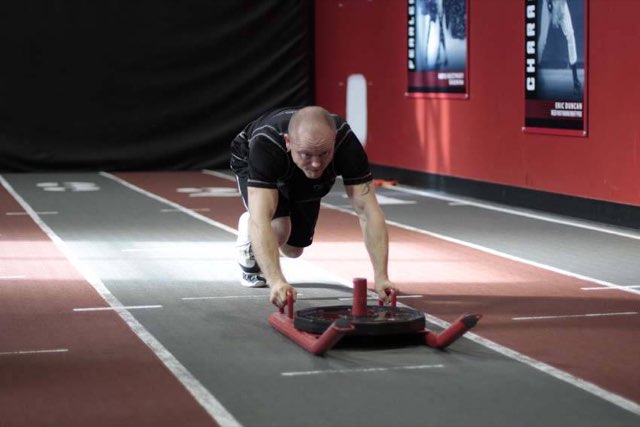
Sled Push: Live Power Feedback Raised Peak Power Output
What it means for you: If your sled or gym has a screen that shows your power or speed, watch it and try to beat your last push.
Original title: Effect of Real-Time Feedback on Power Output Using a Novel Smart-Resisted Sled Push · International Journal of Exercise Science · Thu Dec 1 2022 · On PubMed · Read our summaryInfluence of resisted sled-push training on the sprint force-velocity profile of male high school athletes
We’re checking whether it tells you anything useful for training before it goes on a page.
Scandinavian Journal of Medicine & Science in Sports · Thu Dec 5 2019 · On PubMedElectromyography, Stiffness and Kinematics of Resisted Sprint Training in the Specialized SKILLRUN ® Treadmill Using Different Load Conditions in Rugby Players
Sensors (Basel, Switzerland) · Wed Nov 10 2021 · On PubMed · Read our summarySled Push: Heavy Pushes Before a Match Aided Next-Day Sprints
What it means for you: If you play football, you could try a short, heavy Sled Push session the day before a match, since players here sprinted and jumped better the next day without feeling less recovered.
Original title: Effects of a priming session with heavy sled pushes on neuromuscular performance and perceived recovery in soccer players: a crossover design study during competitive microcycles · Biology of Sport · Fri May 24 2024 · On PubMed · Read our summarySled-Push Load-Velocity Profiling and Implications for Sprint Training Prescription in Young Athletes
What it means for you: If you're a young male athlete, pick your Sled Push load by how much it slows your top speed, not by a fixed share of your body weight.
Journal of Strength and Conditioning Research · Mon Nov 1 2021 · On PubMed · Read our summarySled Push: Lighter Load Made Sprints Faster Minutes Later
What it means for you: Load the sled to about 75% of your body weight if you want a warm-up boost for sprints.
Original title: A sled push stimulus potentiates subsequent 20-m sprint performance · Journal of Science and Medicine in Sport · Mon Jan 23 2017 · On PubMed · Read our summarySled Push: Healthy Older Adults Finished Safely and Enjoyed It
What it means for you: Build up slowly, starting with easier pushes and rest about 2 minutes between them.
Original title: An Investigation of the Sled-Push Exercise Using a Resisted Sled Machine in Apparently Healthy Older Adults: An Exploratory Study · Journal of Aging and Physical Activity · Sat Feb 10 2024 · On PubMed · Read our summarySled Push: Heavy Sleds Gave the Next Sprint a Small Boost
What it means for you: Before sprints, try one sled push of 15 to 20 metres with a sled of about 50 to 75% of your body weight.
Original title: Acute Effects of Assisted and Resisted Sprint Training on Subsequent Sprint Performance: A Systematic Review and Meta-Analysis · Journal of Strength and Conditioning Research · Thu May 1 2025 · On PubMed · Read our summary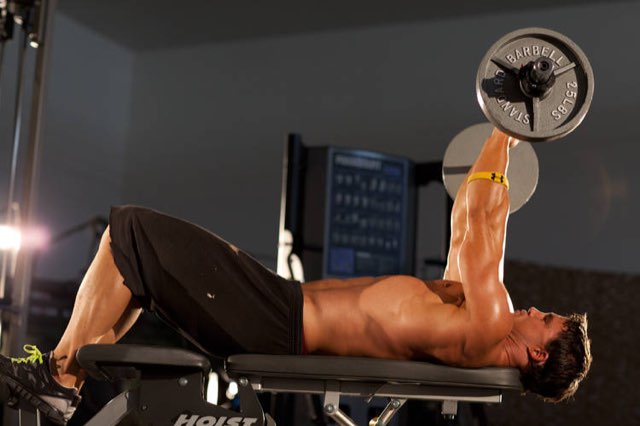
Effects of Pre-exhaustion on the Patterns of Muscular Activity in the Flat Bench Press
What it means for you: Do a set of skull crushers before heavy bench press if you want your triceps to do more of the work.
Journal of Strength and Conditioning Research · Sat Jul 1 2017 · On PubMed · Read our summaryInfluence of exercise order on electromyographic activity during upper body resistance training
What it means for you: Place skull crushers at the end of a pressing session if you're happy for your front shoulders to chip in more.
Journal of Human Kinetics · Tue Dec 30 2014 · On PubMed · Read our summarySeparate and combined effects of local and systemic hypoxia in resistance exercise
Why we didn’t use it: Taken down by our team after a closer look.
European Journal of Applied Physiology · Thu Aug 29 2019 · On PubMed
Every summary is written in our own words from the study’s abstract and checked before it goes live. An educational read of the research, not medical advice. How we review research