

Three quick climbs a day, for 6 weeks
You are at the bottom of a staircase with a few spare minutes. You could take the elevator, or you could go up hard and be done in a short burst.
Researchers wanted to know if bursts like that, which they call exercise "snacks," can raise fitness. They used a measure called peak oxygen uptake. It is the most oxygen your body can use when you work as hard as you can, and it is a common way to track heart and lung fitness.
Twelve young adults who didn't exercise were randomly put in a climbing group. Each climb was a vigorous trip up a 3-flight stairwell, 60 steps in all. They did 3 climbs a day, with 1 to 4 hours of rest between them. They did this 3 days a week for 6 weeks.
Another 12 young adults, who also didn't exercise, made up a comparison group. They did no training. Peak oxygen uptake was compared between the groups after the 6 weeks.
The climbs helped, but not by a lot
After the 6 weeks, peak oxygen uptake was higher in the climbers than in the group who didn't train. The reported P value was 0.003. A P value that small means the gap is unlikely to be down to chance alone.
The authors say the climbs were "effective" for fitness. They also say the absolute increase was "modest." Both of those statements matter. The gap was real in this study, and it was not large.
The detail to hold on to is how little each session asked for. Each climb was a short effort up a single stairwell, with hours of rest before the next. Even so, fitness moved in the right direction compared with doing nothing.
What this means for you
If you don't exercise now and have a stairwell nearby, this study suggests a few hard climbs spread through the day can lift your fitness a little. It is a low-gear way to start, with no gym trip and no long block of time.
The evidence applies to young adults who were not exercising. It doesn't tell us about people who already train, older adults, or people with health conditions. If hard efforts are new to you or you have a health concern, check with a qualified professional first.
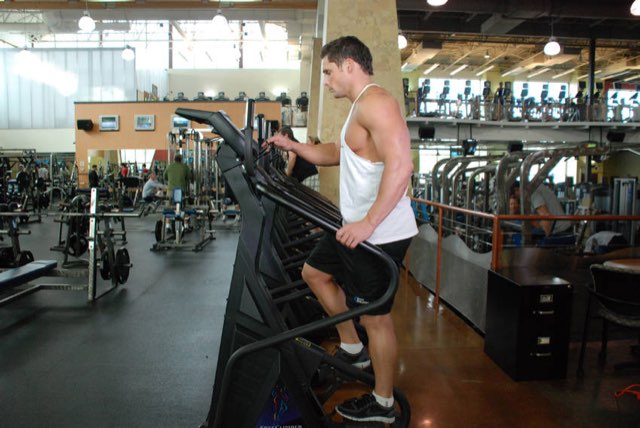
The study used real stairs, not a stair machine. Body CEO's suggestion, not something the study tested: if you only have a machine, treat these results as a hint rather than a promise. Keep the same pattern of short, hard efforts with long rests between.
Your own goals decide the rest. If you want a large jump in fitness, a modest gain may not be enough. If you want something you will actually do, short climbs may fit your day better than a long session.
- A small group, with 12 people in each group.
- Short, at only 6 weeks.
- The gain in fitness was modest, and it used real stairs, not a machine.
What this study can't answer
The climbers were compared only with people who did no training. That shows stair snacks beat doing nothing. It doesn't show how they compare with a longer, steady workout, which would need a study that puts them side by side.
The study was also small, with 12 people per group, and it lasted just 6 weeks. We don't know if the gains keep growing, level off, or fade. Nor do we know if the results hold for other ages, for people who already train, or for stair machines. Each of those needs its own study.
The numbers behind the article
This table shows what the abstract reports for each group. Read across each row to compare the climbers with the group who didn't train.
| Measure | Stair climbers | Non-training group |
|---|---|---|
| People in group | 12 | 12 |
| What they did | 3 climbs a day up a 3-flight stairwell (60 steps), 1 to 4 hours apart, 3 days a week, for 6 weeks | No training |
| Peak oxygen uptake after 6 weeks | Higher (P = 0.003) | Lower than the climbers; size not given in the abstract |
The abstract names the group with higher peak oxygen uptake but gives no size for the gain, so we can't say how many units it rose. The authors describe it as modest. With only 12 people per group, a short 6 weeks, and real stairs instead of a machine, treat this as an encouraging early result, not a final answer.
Written with Ronan Diego, Head of Health Programs at Mindvalley, Certified Mindvalley Coach. Written in our own words from the study’s abstract: the full paper isn’t open to read.
Body CEO educational article · Editorial review pending · Updated Sun Nov 22
This page explains research for general wellness. It isn’t personal training or medical advice.