

Every study we’ve looked at
Each Monday we search for new research on every exercise. Here is all of it, in plain words: what we use, what we’re still checking, and what we didn’t use, and why.
Showing 151–200 of 363
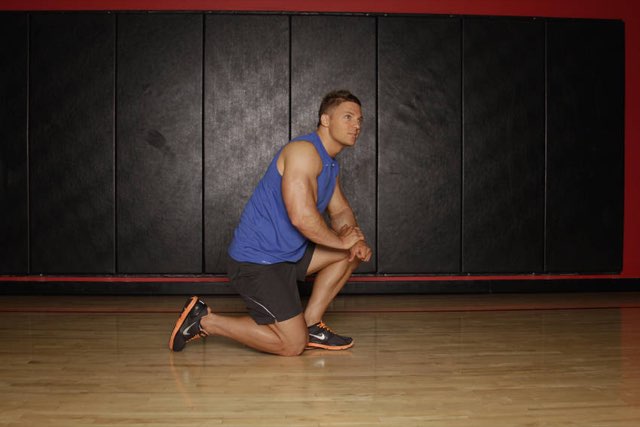
A Comparison of Muscle Activation Among the Front Squat, Overhead Squat, Back Extension and Plank
International Journal of Exercise Science · Fri May 1 2020 · On PubMed · Read our summaryWhich trunk exercise most effectively activates abdominal muscles? A comparative study of plank and isometric bilateral leg raise exercises
Journal of Back and Musculoskeletal Rehabilitation · Tue Jan 1 2019 · On PubMed · Read our summaryInfluence of Abdominal Hollowing Maneuver on the Core Musculature Activation during the Prone Plank Exercise
What it means for you: Draw your belly button in toward your spine while you hold your Plank. In this study, that made the muscles at the sides of your belly work much harder, though it also felt harder.
International Journal of Environmental Research and Public Health · Mon Oct 12 2020 · On PubMed · Read our summaryInfluence of Scapular Position on the Core Musculature Activation in the Prone Plank Exercise
What it means for you: Tuck your hips under and pull your shoulder blades together when you hold your Plank. In this small study, that position made your core muscles work hardest, though it also felt hardest.
Journal of Strength and Conditioning Research · Tue Aug 1 2017 · On PubMed · Read our summaryComparison of EMG activity on abdominal muscles during plank exercise with unilateral and bilateral additional isometric hip adduction
Journal of Electromyography and Kinesiology : Official Journal of the International Society of Electrophysiological Kinesiology · Wed May 11 2016 · On PubMed · Read our summaryAn electromyographic comparison of a modified version of the plank with a long lever and posterior tilt versus the traditional plank exercise
What it means for you: Make your plank harder by placing your elbows further forward than your shoulders.
Sports Biomechanics · Tue Aug 5 2014 · On PubMed · Read our summaryElectromyographical comparison of plank variations performed with and without instability devices
What it means for you: Try a plank on a ball or suspension strap once a regular plank feels easy and you want more challenge.
Journal of Strength and Conditioning Research · Sat Nov 1 2014 · On PubMed · Read our summaryEffect of using a suspension training system on muscle activation during the performance of a front plank exercise
Journal of Strength and Conditioning Research · Sat Nov 1 2014 · On PubMed · Read our summarySport-specific endurance plank test for evaluation of global core muscle function
What it means for you: If you're a young athlete timing your Plank to track your core, do one practice try first. Count the attempts after it, because the study found those gave the most steady scores.
Physical Therapy in Sport : Official Journal of the Association of Chartered Physiotherapists in Sports Medicine · Thu Jul 11 2013 · On PubMed · Read our summary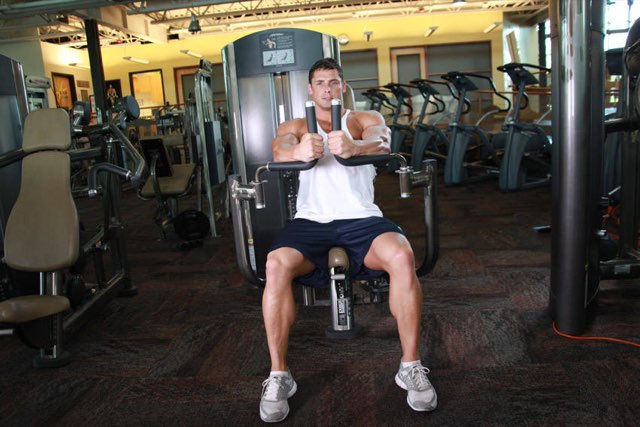
Real-Time Visual Biofeedback via Wearable Ultrasound Imaging Can Enhance the Muscle Contraction Training Outcome of Young Adults
What it means for you: Focus on squeezing your chest on each rep, as if you could see it working.
Journal of Strength and Conditioning Research · Fri Apr 1 2022 · On PubMed · Read our summaryAutomated analysis of pectoralis major thickness in pec-fly exercises: evolving from manual measurement to deep learning techniques
What it means for you: Focus on feeling your chest squeeze during each rep.
Visual Computing for Industry, Biomedicine, and art · Tue Apr 16 2024 · On PubMed · Read our summaryCardiorespiratory responses of pregnant and nonpregnant women during resistance exercise
Journal of Strength and Conditioning Research · Sun Mar 1 2015 · On PubMed · Read our summaryFetal heart rate responses during maternal resistance exercise: a pilot study
Revista Brasileira de Ginecologia e Obstetricia : Revista da Federacao Brasileira das Sociedades de Ginecologia e Obstetricia · Sun Mar 1 2015 · On PubMed · Read our summaryPec Deck: One Set Grew Chest Muscle Like Three Sets
What it means for you: If you're a young man new to lifting and short on time, try one set of Pec Deck until you can't do another rep. In this study, one set grew the chest about as much as three sets.
Original title: Pectoralis Clavicular and Sternocostal Thicknesses Increase Similarly in Response to One and Three Sets of Pec Deck Resistance Training in Untrained Young Men · Journal of Strength and Conditioning Research · Thu May 1 2025 · On PubMed · Read our summary
Effect of Body Position and Support Surface on the Postural Control Challenge During the Pallof Press Exercise: A Smartphone Accelerometer-Based Study
What it means for you: Start your Pallof press kneeling. As it gets easy, move to standing, then to standing heel-to-toe.
Medicina (Kaunas, Lithuania) · Tue Feb 11 2025 · On PubMed · Read our summary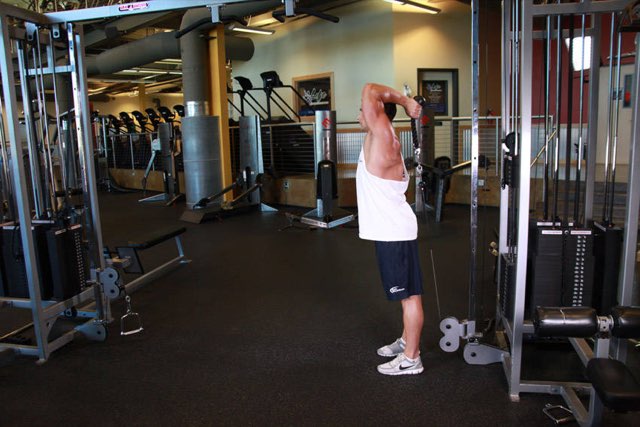
How does the French press handle a controversial biotechnology? A psychosocial study of media coverage of human genome editing
What it means for you: Look to other studies for triceps advice, because this study only looked at newspaper articles.
Public Understanding of Science (Bristol, England) · Thu Dec 5 2024 · On PubMed · Read our summary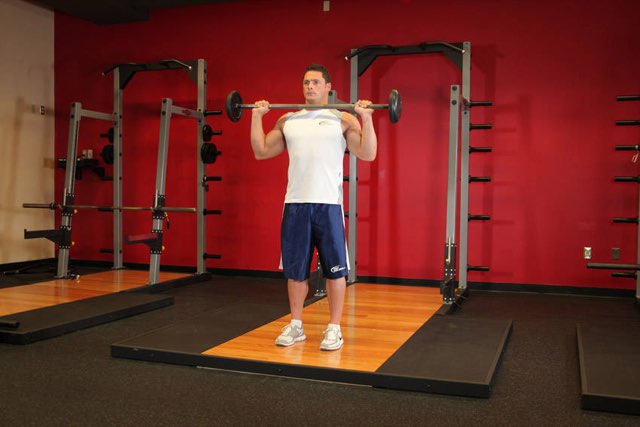
Electromyographic validation of the muscles deltoid (anterior portion) and pectoralis major (clavicular portion) in military press exercises with open grip
Electromyography and Clinical Neurophysiology · Thu Jul 1 2010 · On PubMed · Read our summaryElectromyographic validation of the trapezius and serratus anterior muscles in military press exercises with open and middle grip
What it means for you: If you're a man, use either a wide or a middle grip on your Overhead Press. Your traps and side-of-ribs muscles worked about as hard either way in this study.
Electromyography and Clinical Neurophysiology · Fri Jun 1 2001 · On PubMed · Read our summaryFront vs Back and Barbell vs Machine Overhead Press: An Electromyographic Analysis and Implications For Resistance Training
Frontiers in Physiology · Fri Jul 22 2022 · On PubMed · Read our summaryThe Effect of the Weight and Type of Equipment on Shoulder and Back Muscle Activity in Surface Electromyography during the Overhead Press-Preliminary Report
Sensors (Basel, Switzerland) · Tue Dec 13 2022 · On PubMed · Read our summaryKinematic characteristics of the scapula and clavicle during military press exercise and shoulder flexion
Journal of Shoulder and Elbow Surgery · Thu Jan 16 2014 · On PubMed · Read our summaryActivity of Shoulder Stabilizers and Prime Movers During an Unstable Overhead Press
Journal of Strength and Conditioning Research · Wed Jan 1 2020 · On PubMed · Read our summaryStability of Resistance Training Implement alters EMG Activity during the Overhead Press
What it means for you: Pick a dumbbell over a kettlebell if you want your front shoulder to work a little harder in your Overhead Press. This study measured muscle effort during the lift, not strength or muscle growth.
International Journal of Exercise Science · Fri Jun 1 2018 · On PubMed · Read our summaryInfluence of different ranges of motion on selective recruitment of shoulder muscles in the sitting military press: an electromyographic study
What it means for you: If you're an experienced lifter, press your Overhead Press all the way up to straight arms. In this small study, that made your shoulder muscles work harder than stopping halfway.
Journal of Strength and Conditioning Research · Tue Jun 1 2010 · On PubMed · Read our summaryOverhead Press: Slower Bar Speed Went with Heavier Weights
What it means for you: Watch your bar speed: when the bar moves very slowly, you're close to the most you can lift once.
Original title: A comprehensive analysis of the velocity-based method in the shoulder press exercise: stability of the load-velocity relationship and sticking region parameters · Biology of Sport · Mon Aug 31 2020 · On PubMed · Read our summaryMuscle activation when performing the chest press and shoulder press on a stable bench vs. a Swiss ball
What it means for you: Press seated on a stable bench, or standing, since a Swiss ball didn't make your muscles work any harder.
Journal of Strength and Conditioning Research · Thu Apr 1 2010 · On PubMed · Read our summaryShoulder muscular activation during common kettlebell exercises: a randomized cross-sectional surface EMG study
What it means for you: Try a few sets of bottoms-up kettlebell presses if you want your upper back and shoulder muscles to work a bit harder.
Physiotherapy Theory and Practice · Tue Apr 7 2026 · On PubMed · Read our summary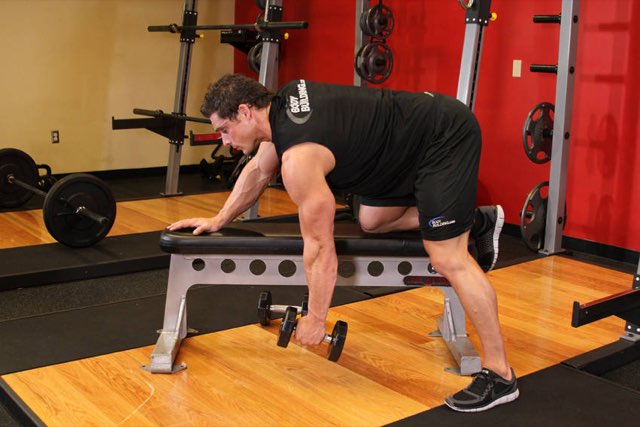
Exercise selection plays an important role in inducing non-uniform acute responses on elbow flexors muscle thickness
What it means for you: Do curls if you want more work for your biceps.
Journal of Bodywork and Movement Therapies · Mon Jul 15 2024 · On PubMed · Read our summaryOne-Arm Dumbbell Row: Curls Grew the Upper Arm More
What it means for you: Add biceps curls if bigger arms are a goal, because rows alone gave less arm growth.
Original title: Single-Joint Exercise Results in Higher Hypertrophy of Elbow Flexors Than Multijoint Exercise · Journal of Strength and Conditioning Research · Fri Oct 1 2021 · On PubMed · Read our summary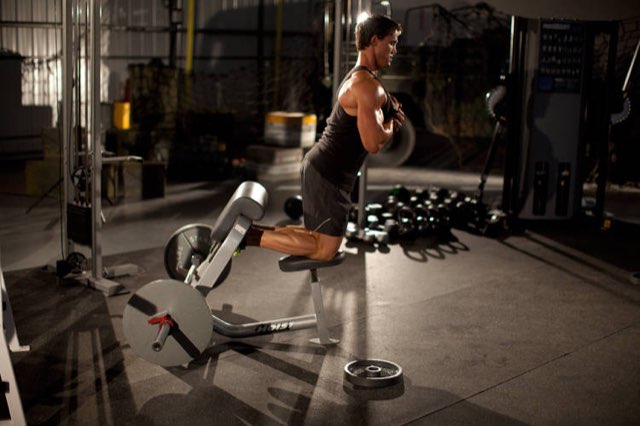
Eccentric Hamstring Torque Production and Muscle Activity in Unassisted Versus Assisted Nordic Hamstring Exercises
What it means for you: Try an assisted Nordic to let your hamstrings work harder through a longer range.
Journal of Sport Rehabilitation · Thu Jul 10 2025 · On PubMed · Read our summaryNordic Curls: Longer Hamstring Fibres in Soccer Players
What it means for you: Build up your Nordic reps over the weeks, aiming for roughly 57 reps a week across a 6 to 12 week block.
Original title: Influence of Resistance Training Variables and the Nordic Hamstring Exercise on Biceps Femoris Architectural Adaptations in Soccer Players: A Systematic Review · Sports Health · Tue Apr 15 2025 · On PubMed · Read our summaryNordic Hamstring Curl: Fewer Injuries in Football Players
What it means for you: If you play football, add Nordic Hamstring Curl to your usual training, since players who did it built more strength in the back of their thighs when lowering.
Original title: Strengthening football: The role of the nordic hamstring exercise in preventing hamstring injuries · Journal of Back and Musculoskeletal Rehabilitation · Mon Apr 28 2025 · On PubMed · Read our summaryNordic Hamstring Curl: Linked to Longer Hamstring Fibres
What it means for you: Keep the slow lowering as the main part of your Nordic, since that style showed the most steady changes in the muscle.
Original title: Effect of Hamstring Exercises on Morphological Parameters of the Hamstring Muscle: A Systematic Review With MRI and USI Findings · Sports Health · Thu Jul 16 2026 · On PubMed · Read our summaryNordic Hamstring Curl: Twice a Week Built More Strength
What it means for you: Aim for two Nordic sessions a week if you can, but know that one session still helped.
Original title: Dose-response characteristics of the Nordic hamstring exercise: Total impulse versus total repetitions · Journal of Sports Sciences · Tue Aug 18 2026 · On PubMed · Read our summary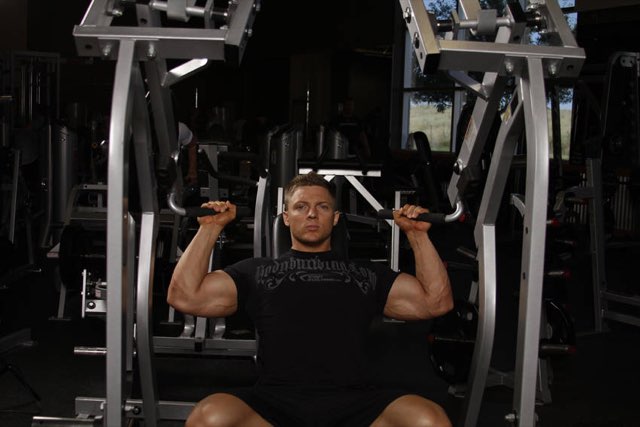
Effects of Mind-Muscle Connection on Muscle Activity During Machine-Based Shoulder Press in Untrained Individuals
What it means for you: Think about your shoulder muscles as you press, if building your shoulders is your goal.
Journal of Clinical Medicine · Wed May 20 2026 · On PubMed · Read our summaryA comprehensive analysis of the velocity-based method in the shoulder press exercise: stability of the load-velocity relationship and sticking region parameters
What it means for you: Expect the press to slow down around the middle of a heavy rep, and keep pushing through that sticky point.
Biology of Sport · Mon Aug 31 2020 · On PubMed · Read our summaryMuscle activation when performing the chest press and shoulder press on a stable bench vs. a Swiss ball
What it means for you: Use a stable seat, like the one on your machine, because a wobbly surface didn't add extra shoulder work here.
Journal of Strength and Conditioning Research · Thu Apr 1 2010 · On PubMed · Read our summary
Electromyographic Analysis of Latissimus Dorsi Activation During Common Resistance Training Exercises: A Narrative Review
Journal of Functional Morphology and Kinesiology · Wed Aug 12 2026 · On PubMed · Read our summaryAn Electromyographic Analysis of Lateral Raise Variations and Frontal Raise in Competitive Bodybuilders
International Journal of Environmental Research and Public Health · Wed Aug 19 2020 · On PubMed · Read our summaryDifferent Shoulder Exercises Affect the Activation of Deltoid Portions in Resistance-Trained Individuals
Journal of Human Kinetics · Sat Oct 31 2020 · On PubMed · Read our summaryMuscle activation during selected strength exercises in women with chronic neck muscle pain
What it means for you: Use a light weight you can control, because lateral raises can make your shoulders work hard without heavy loads.
Physical Therapy · Thu Mar 13 2008 · On PubMed · Read our summaryChest Press: Cluster Sets Kept Rep Speed Higher and Felt Easier
What it means for you: Split your chest press sets into two sets of 5 with a short break if you want reps to stay fast and feel a bit easier.
Original title: Performance and Perceptual Responses to Cluster Sets in Pneumatic-Resistance Exercises: Impact of Exercise Selection, Sex, and Strength · International Journal of Sports Physiology and Performance · Mon Sep 8 2025 · On PubMed · Read our summary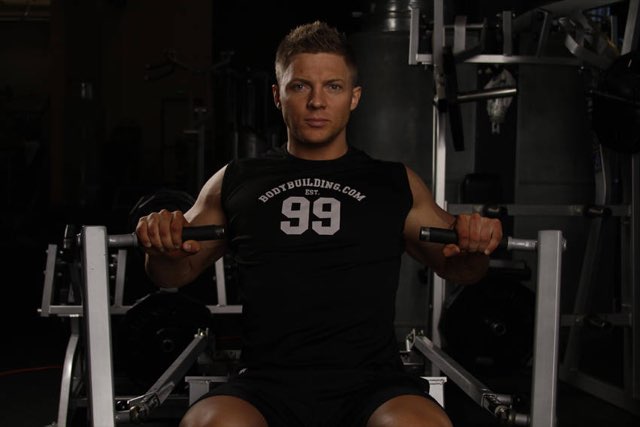
Machine Chest Press: Short Mid-Set Rests Kept Speed Higher
What it means for you: Try splitting a set of 10 into two sets of 5 with a 30-second break when you want each rep to stay fast.
Original title: Acute effects of cluster vs. traditional sets on performance and perceptual responses during upper- and lower-limb power-oriented resistance exercises in older adults · Aging Clinical and Experimental Research · Wed Jan 21 2026 · On PubMed · Read our summary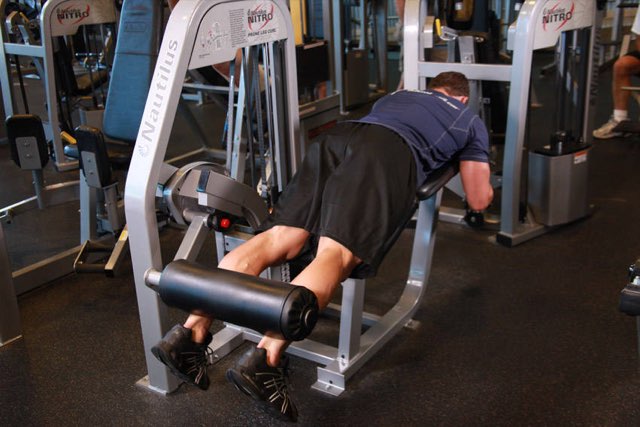
Leg Curls: Soccer Players Got Stronger but Not Faster
What it means for you: Do your leg curls for strength in the backs of your thighs, and add sprint work if you want to get faster.
Original title: Effects of concentric and concentric-eccentric resistance training on speed and force in adult soccer players · Scientific Reports · Tue Jul 1 2025 · On PubMed · Read our summary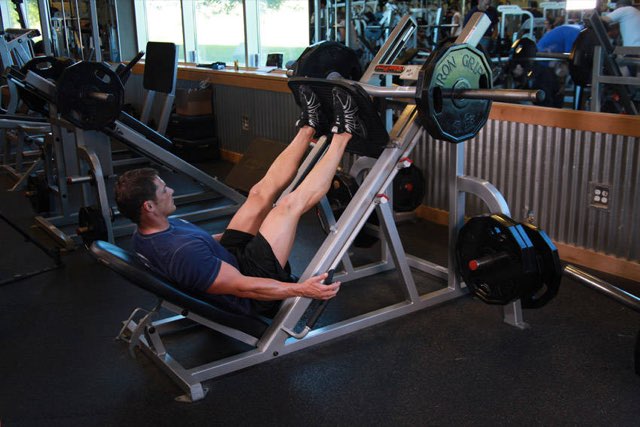
Leg Press: Less Squat Strength Gain than Squats Gave
Original title: Strength, body composition, and functional outcomes in the squat versus leg press exercises · The Journal of Sports Medicine and Physical Fitness · Thu Oct 13 2016 · On PubMed · Read our summaryAnalysis of muscle activation during different leg press exercises at submaximum effort levels
What it means for you: If you're a woman and want the front of your thighs working harder on the Leg Press, put your feet lower on the plate.
Journal of Strength and Conditioning Research · Tue Jul 1 2008 · On PubMed · Read our summaryAnaerobic energy expenditure and mechanical efficiency during exhaustive leg press exercise
PloS one · Tue Oct 19 2010 · On PubMed · Read our summaryGreater bilateral deficit in leg press than in handgrip exercise might be linked to differences in postural stability requirements
Applied Physiology, Nutrition, and Metabolism = Physiologie Appliquee, Nutrition et Metabolisme · Mon Dec 1 2008 · On PubMed · Read our summaryLeg Press: Squats Improved Jumping More than Leg Press
What it means for you: Add squats to your week alongside the leg press if jumping higher is your goal.
Original title: The Impact of Back Squat and Leg-Press Exercises on Maximal Strength and Speed-Strength Parameters · Journal of Strength and Conditioning Research · Sun May 1 2016 · On PubMed · Read our summaryLeg Press: Adding a Hip Squeeze Made No Extra Difference
Original title: Surplus value of hip adduction in leg-press exercise in patients with patellofemoral pain syndrome: a randomized controlled trial · Physical Therapy · Thu Mar 19 2009 · On PubMed · Read our summary
Every summary is written in our own words from the study’s abstract and checked before it goes live. An educational read of the research, not medical advice. How we review research