

Research on Overhead Press · Every study we found · How we choose studies
Checked automatically against the study
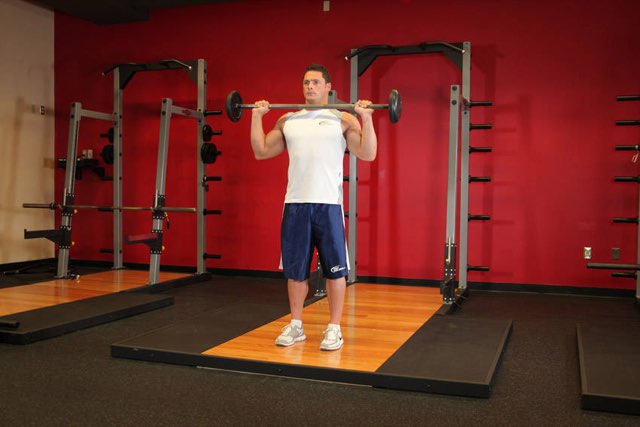
An unstable bar made more trunk and back muscles work in the Overhead Press.
Foot sway reached about 35.3% of foot length with the unstable bar, compared with about 22.2% with a normal bar.
This was a one-session lab test with twelve men. They did the Overhead Press with a normal bar and with two wobbly setups, where kettlebells hung from bands. Sensors measured how hard muscles worked. Researchers also tracked how much each man swayed on his feet. The most unstable bar made several back, chest and belly muscles work harder and caused the most sway.
Who took part12 men, about 25.3 years old on average; no women; training experience not statedLimitsSmall group of men onlyOne session in a lab, measuring muscle activity, not strength or growthUsed a light weight, 50% of the most they could lift once
Why this bandA one-off lab test of 12 peopleAbout this exercise: it’s in the titleAmong the top 7% most cited papers of its age
- Kind of study
- A lab study
- People
- young men
- What they looked at
- Muscle activity, how you move
Original title: Activity of Shoulder Stabilizers and Prime Movers During an Unstable Overhead Press
Williams MR, Hendricks DS, Dannen MJ, Arnold AM, Lawrence MA · Journal of Strength and Conditioning Research · Wed Jan 1 2020 · DOI 10.1519/jsc.0000000000002660