

Research on Chest-Supported Row · Every study we found · How we choose studies
Checked automatically against the study
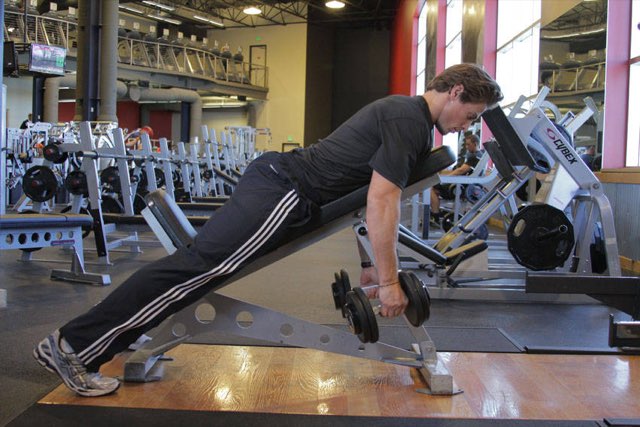
A hard chest-supported row hold got the lats working well and evenly.
The lats were measured at 4 spots on the back, and no size of effect was reported.
This was a lab study that used sensors on the skin to measure how hard the lats work. The lats are the wide muscles down your back. People did all-out holds, pulling against something that didn't move, in four positions, plus some lifting tasks. The chest-supported row hold was the best of the four for getting the lats working hard. The whole muscle tended to work together rather than in separate parts. The abstract doesn't say how many people took part.
Who took partThe abstract doesn't sayLimitsThe abstract doesn't say how many people took part or who they were.It measured all-out holds in a lab, not sets of reps in a gym.It measured how hard the muscle works, not muscle growth or strength gains.
Why this bandA one-off lab testTests this exerciseAmong the top 13% most cited papers of its age
- Choose the chest-supported row when you want a move that gets your lats working hard.
- Train your lats as one muscle, because this study found no clear split between upper and lower parts.
- Kind of study
- A lab study
- What they looked at
- Muscle activity
Original title: Electromyographic assessment of isometric and dynamic activation characteristics of the latissimus dorsi muscle
Beaudette SM, Unni R, Brown SH · Journal of Electromyography and Kinesiology : Official Journal of the International Society of Electrophysiological Kinesiology · Fri Mar 28 2014 · DOI 10.1016/j.jelekin.2014.03.006