Chest-Supported Row
The chest-supported row is a dumbbell row done lying chest-down on an incline bench, and it works your upper back. Your lats, rear shoulders and biceps help. The key is keeping your chest on the pad the whole time. That way your back does the work, not swinging.
Plan it in Body CEO, and it sets the weight each time.
Body CEO puts the chest-supported row where it fits in a plan for the goal, logs every set and says when to add weight or reps.
Watch it
3 short videos from coachesVideos play inside Body CEO only when tapped (youtube-nocookie). Channel names and lengths come from YouTube.
How to do it, in 4 steps
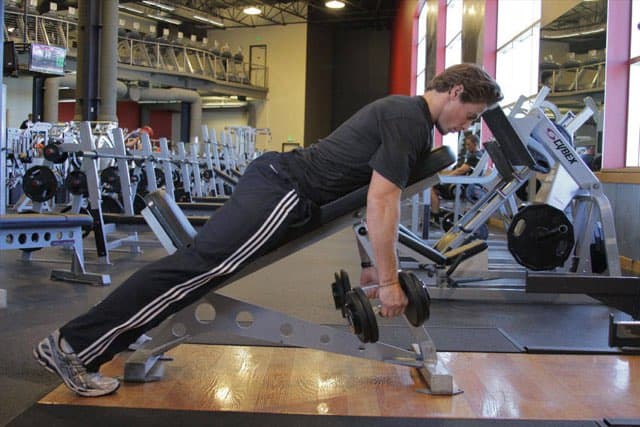
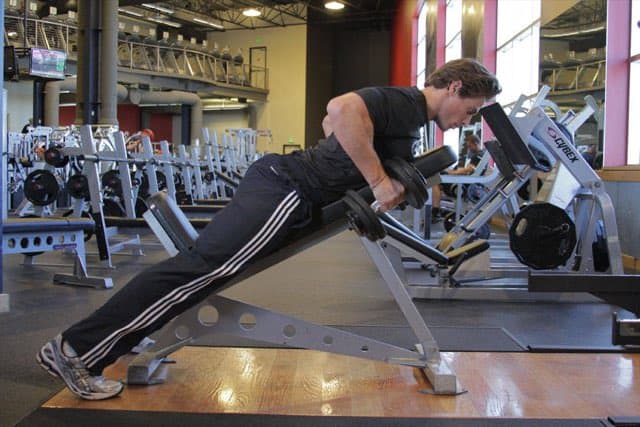
- Using a neutral grip, lean into an incline bench.
- Take a dumbbell in each hand with a neutral grip, beginning with the arms straight. This will be your starting position.
- Retract the shoulder blades and flex the elbows to row the dumbbells to your side.
- Pause at the top of the motion, and then return to the starting position.
Steps and photos from free-exercise-db (public domain).
Muscles worked
Darker means it does more of the workThe chest-supported row mainly works the upper back, with the lats, rear delts and biceps helping.
It needs dumbbells. Dumbbell exercises
Sets and reps for each goal
Stop 1–3 reps short of failureFor most people starting out, 1 to 3 sets of 8 to 12 reps of the Chest-Supported Row, stopping with two or three reps still in you, is a good start.
| Goal | Sets × reps | Rest |
|---|---|---|
| Starting out | 1–3 × 8–12 | 1–2 min |
| Strength | 3–5 × 3–6 | 2–5 min |
| Muscle | 3–6 × 6–12 | 1–2 min |
| Endurance | 2–3 × 15–25 | Under 90 s |
From the American College of Sports Medicine’s guidance on resistance training (2009).
What research says
1 study · summaries checked against each study · How we choose studies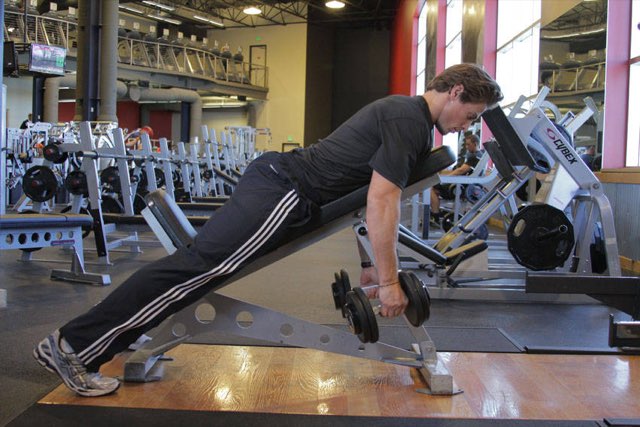
A hard chest-supported row hold got the lats working well and evenly.
The lats were measured at 4 spots on the back, and no size of effect was reported.
Checked automatically against the study
Read the full study →How studies shape Body CEO
Every summary here is checked against its study before it appears: the numbers come from the study, with no promises. 316 studies in use, across 97 exercises, and this one was last checked for new research on Fri Nov 13 2026. How we review research
- 1 · FoundOn PubMed, checked for retractions
- 2 · WeighedScored Strong, Moderate or Early
- 3 · ReadPut in plain words, every number checked
- 4 · Shapes your planStrong and Moderate takeaways guide sets, reps and rest
- 5 · Eliza cites itReads our approved studies first, with the study linked
Calories burned
An estimateThe chest-supported row burns about 5 to 8 calories a minute of work for someone who weighs 60 to 90 kg: about 7 at 75 kg.
At 75 kg: about 7 calories a minute of work.
From the Compendium of Physical Activities (2024), which gives resistance (weight) training, squats, deadlift, slow or explosive effort a MET of 5. Calories a minute = MET × 3.5 × weight in kg ÷ 200. Rest between sets isn’t counted, and effort and body change it.
Questions people ask
What muscles does the chest-supported row work?
It mainly works your upper back. Your lats, rear shoulders and biceps help.
What equipment do I need for a chest-supported row?
You need a pair of dumbbells and an incline bench to lean your chest on.
How many sets and reps should I do?
If you're starting out, try 1 to 3 sets of 8 to 12 reps. Stop with two or three reps still in you, and rest 1 to 2 minutes between sets.
How should I do the chest-supported row for strength or muscle?
For strength, do 3 to 5 sets of 3 to 6 reps with 2 to 5 minutes' rest. For muscle, do 3 to 6 sets of 6 to 12 reps with 1 to 2 minutes' rest.
How many calories does the chest-supported row burn?
It burns about 5 to 8 calories a minute.