

What research says
2 studies · summaries checked against each study · How we choose studies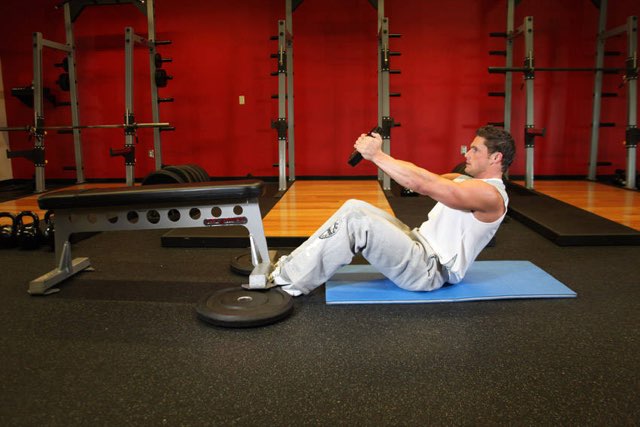
Checked automatically against the study
Deep back muscles worked harder at tender spots during tasks like seated twisting.
Deep back muscles worked hardest at tender spots in every task; 12 people took part, and no size of effect was reported in everyday units
This was a small lab study with 12 adults. Fine needle sensors measured how hard the deep muscles beside the upper and middle spine were working. Tasks included sitting still, twisting while seated and holding light weights out in front. The muscles under tender spots worked harder than nearby muscles that felt normal, but results varied a lot between people.
Who took part12 people aged 22 to 43; the abstract doesn't say if they were men or women or how much they trainedLimitsSmall group of 12 peopleResults varied a lot within and between people, the authors sayIt measured how hard muscles worked, not training results
Why this bandA one-off lab test of 12 peopleOnly mentions this exercise in passingAmong the top 12% most cited papers of its age
- Pay attention to any spot along your upper or middle back that feels tender when you twist, and ease off if it bothers you.
- If a sore spot doesn't settle, check with a qualified health professional rather than pushing through it.
- Kind of study
- A lab study
- People
- adults aged 22 to 43
- What they looked at
- Muscle activity
Original title: The electromyographic activity of thoracic paraspinal muscles identified as abnormal with palpation
Fryer G, Morris T, Gibbons P, Briggs A · Journal of Manipulative and Physiological Therapeutics · Sat Jul 1 2006 · DOI 10.1016/j.jmpt.2006.06.003
Checked automatically against the study
Deep and surface back muscles switch on differently as you twist while seated.
10 people, back muscles measured at several levels of the spine; no size of effect was reported
This was a small one-time study with 10 people. Sensors placed in the muscle measured how hard deep and surface back muscles worked at several levels of the upper and middle back. People twisted as far as they could each way while seated. The surface muscles followed a clear pattern with the direction of the twist. The deep muscles were more mixed and may help control each section of the spine as you turn.
Who took part10 people; the abstract doesn't say their age, whether they were men or women, or how much they trainedLimitsVery small group of 10 peopleOne session in a lab, not training over weeksIt measured how hard muscles worked, not muscle growth or strength
Why this bandCompared 10 people at one point in timeOnly mentions this exercise in passingAmong the top 12% most cited papers of its age
- Twist both ways while seated and keep the movement smooth, because your back muscles work differently in each direction.
- Turn only as far as you can control, since your back muscles help guide the spine through the twist.
- Kind of study
- A one-time comparison
- People
- 10 people
- What they looked at
- Muscle activity
Original title: Differential activation of the thoracic multifidus and longissimus thoracis during trunk rotation
Lee LJ, Coppieters MW, Hodges PW · Spine · Fri Apr 1 2005 · DOI 10.1097/01.brs.0000158956.77897.ec
How studies shape Body CEO
Every summary here is checked against its study before it appears: the numbers come from the study, with no promises. 316 studies in use, across 97 exercises, and this one was last checked for new research on Fri Nov 13 2026. How we review research
- 1 · FoundOn PubMed, checked for retractions
- 2 · WeighedScored Strong, Moderate or Early
- 3 · ReadPut in plain words, every number checked
- 4 · Shapes your planStrong and Moderate takeaways guide sets, reps and rest
- 5 · Eliza cites itReads our approved studies first, with the study linked