

What research says
2 studies · summaries checked against each study · How we choose studies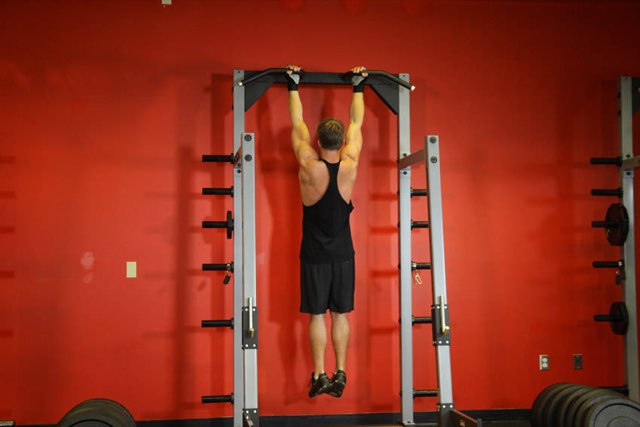
Checked automatically against the study
Chin-ups work your biceps and chest harder than pull-ups do.
Elbows bent through about 100.6° in the chin-up, compared with about 93.4° in the pull-up
This was a one-session lab study with 21 men and 4 women. Sensors on the skin measured how hard each muscle worked during chin-ups, pull-ups and pull-ups on twisting handles. It measured muscle effort, not muscle growth. Your lats worked hardest in all three. The chin-up made your biceps and chest work harder. The pull-up made your lower traps (the muscles between your lower shoulder blades) work harder. The twisting handles added nothing.
Who took part21 men with an average age of 24.9 and 4 women with an average age of 23.5; training experience not statedLimitsOnly one session in a lab, so it shows muscle effort, not growth over timeMostly men, with only 4 womenA fairly small group
Why this bandA one-off lab test of 25 peopleAbout this exercise: it’s in the titleAmong the top 5% most cited papers of its age
- Use the palms-facing-you chin-up grip when you want more biceps and chest work.
- Save your money on twisting handles. A plain bar worked just as well in this study.
- Kind of study
- A lab study
- People
- young adult volunteers
- What they looked at
- Muscle activity, how you move
Original title: Surface electromyographic activation patterns and elbow joint motion during a pull-up, chin-up, or perfect-pullup™ rotational exercise
Youdas JW, Amundson CL, Cicero KS and others · Journal of Strength and Conditioning Research · Wed Dec 1 2010 · DOI 10.1519/jsc.0b013e3181f1598c
Checked automatically against the study
A woman dislocated both shoulders at once while doing chin-ups.
A 44-year-old woman. No size of effect was reported.
This is a case report, which tells the story of just her. A 44-year-old woman felt sudden, severe pain in both shoulders near the end of a chin-up workout. Both shoulders had slipped out of joint at the front, and she had tingling in her hands. The authors say the chin-up position can leave the shoulder joint less stable.
Who took partA woman, 44 years old; no men. Her training experience isn't stated.LimitsIt describes only her case.The authors say this kind of injury is extremely rare.It can't tell us how often this happens to other people who do chin-ups.
Why this bandAbout a single personAbout this exercise: it’s in the titleAmong the top 12% most cited papers of its age
- Kind of study
- A single case
- People
- one 44-year-old woman
Original title: Chin-up-induced bilateral anterior shoulder dislocation: a case report
Felderman H, Shih R, Maroun V · The Journal of Emergency Medicine · Thu Dec 4 2008 · DOI 10.1016/j.jemermed.2008.06.001
How studies shape Body CEO
Every summary here is checked against its study before it appears: the numbers come from the study, with no promises. 316 studies in use, across 97 exercises, and this one was last checked for new research on Fri Nov 13 2026. How we review research
- 1 · FoundOn PubMed, checked for retractions
- 2 · WeighedScored Strong, Moderate or Early
- 3 · ReadPut in plain words, every number checked
- 4 · Shapes your planStrong and Moderate takeaways guide sets, reps and rest
- 5 · Eliza cites itReads our approved studies first, with the study linked