

Research on Chin-Up · Every study we found · How we choose studies
Checked automatically against the study
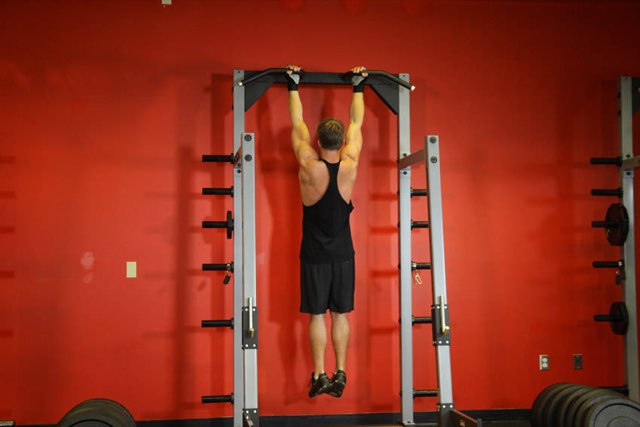
Chin-ups work your biceps and chest harder than pull-ups do.
Elbows bent through about 100.6° in the chin-up, compared with about 93.4° in the pull-up
This was a one-session lab study with 21 men and 4 women. Sensors on the skin measured how hard each muscle worked during chin-ups, pull-ups and pull-ups on twisting handles. It measured muscle effort, not muscle growth. Your lats worked hardest in all three. The chin-up made your biceps and chest work harder. The pull-up made your lower traps (the muscles between your lower shoulder blades) work harder. The twisting handles added nothing.
Who took part21 men with an average age of 24.9 and 4 women with an average age of 23.5; training experience not statedLimitsOnly one session in a lab, so it shows muscle effort, not growth over timeMostly men, with only 4 womenA fairly small group
Why this bandA one-off lab test of 25 peopleAbout this exercise: it’s in the titleAmong the top 5% most cited papers of its age
- Use the palms-facing-you chin-up grip when you want more biceps and chest work.
- Save your money on twisting handles. A plain bar worked just as well in this study.
- Kind of study
- A lab study
- People
- young adult volunteers
- What they looked at
- Muscle activity, how you move
Original title: Surface electromyographic activation patterns and elbow joint motion during a pull-up, chin-up, or perfect-pullup™ rotational exercise
Youdas JW, Amundson CL, Cicero KS and others · Journal of Strength and Conditioning Research · Wed Dec 1 2010 · DOI 10.1519/jsc.0b013e3181f1598c