

What this means for you
The research here is about older adults who had trouble sleeping. It does not tell us how magnesium works for younger people or for people who sleep fine. Treat it as a small, early signal, not a sure thing.
If you want to try it, start with food. Pumpkin seeds, almonds, spinach, beans and oats all supply magnesium. Many people eat less than they need, so this step may be worth taking either way.
If you still want a supplement, bring the bottle to your doctor or pharmacist. Ask three things. Does it fit with my medicines? Is my kidney health a concern? How much is safe for me?
Trouble sleeping that keeps going deserves a check-up. Cramps, twitching or a racing heartbeat do too. A supplement is not a substitute for that conversation.
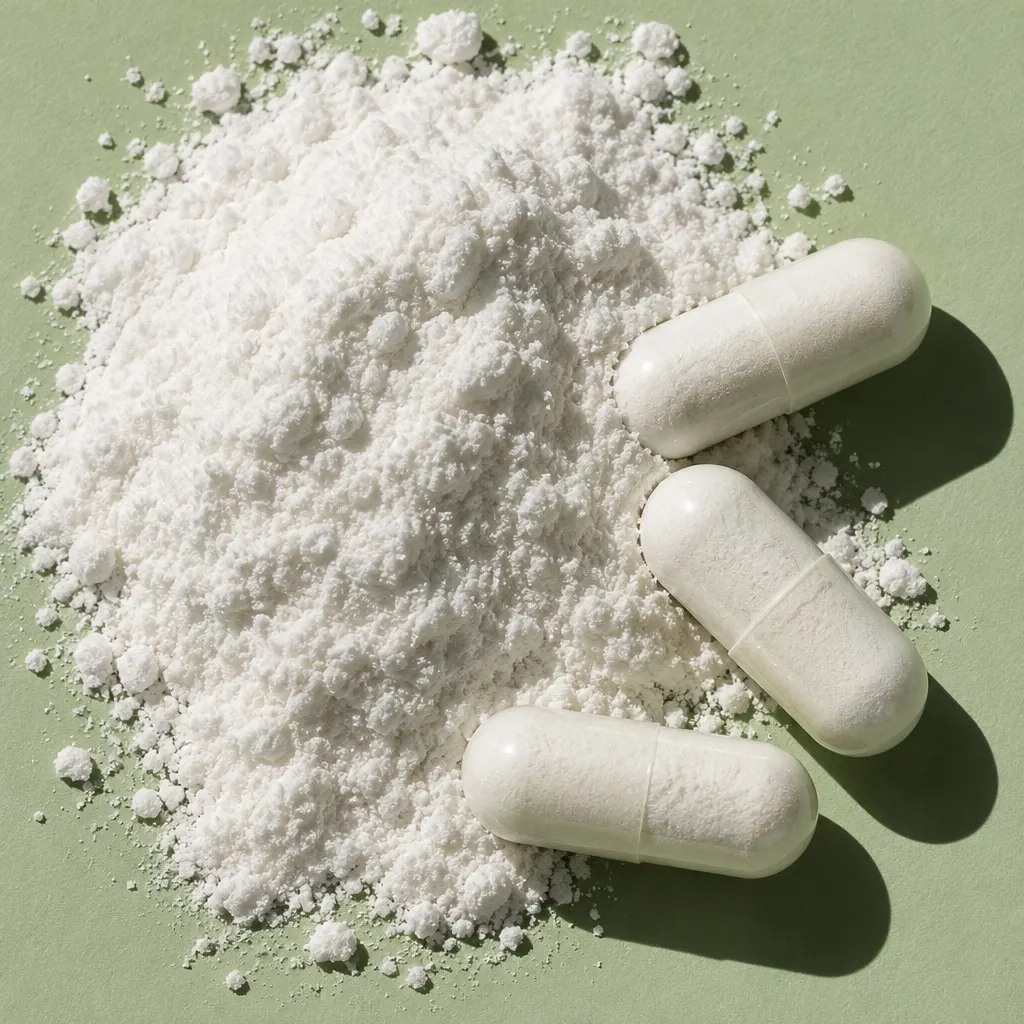
Magnesium on your plate and in a capsule
Magnesium is a mineral your body uses for muscles, nerves and making energy. It is found in pumpkin and chia seeds, almonds, cashews, peanuts, spinach, black beans, edamame, oats, brown rice and whole-wheat bread. Potatoes with skin, avocado, bananas and dark chocolate have some too.
A capsule is different from a handful of almonds. Food gives magnesium in small amounts spread through the day, along with other nutrients. A capsule gives a set dose in one form, and the form matters.
Magnesium citrate is well absorbed but can loosen stools. Glycinate is often chosen because it tends to be gentler on the stomach, though head-to-head research is limited. Oxide packs a lot of magnesium into a tablet but is poorly absorbed. Skin sprays, flakes and baths have no good evidence of meaningful absorption.
- 320 mgDaily need (RDA) for women 31 and over, from food and supplements together
- 420 mgDaily need (RDA) for men 31 and over, from food and supplements together
- 350 mgUS upper limit a day from supplements and medicines; food does not count toward it
Sources: MedlinePlus · PubMed 2017
What the sleep research found
The main evidence is a 2021 systematic review and meta-analysis. That means the authors searched for all matching trials and combined their results. They found three randomized trials in 151 older adults across three countries, all with insomnia. Each trial compared oral magnesium with placebo or no treatment.
The key outcome was sleep onset latency, which is how long it takes to fall asleep. After magnesium, it was 17.36 minutes shorter than after placebo. The range of likely values ran from 7.44 to 27.27 minutes shorter.
Total sleep time was 16.06 minutes longer in the magnesium group. The authors say this was not statistically significant, so it could be down to chance.
All three trials had moderate-to-high risk of bias, and the evidence was low to very low quality. The authors called the literature substandard for firm advice. They did say the evidence may support oral magnesium, in amounts under 1 g given up to three times a day. The summary does not say whether that means elemental magnesium or compound weight. It cannot be compared directly with the upper limit.
The summary we have does not describe the form, the dose or the length of each trial. So we cannot walk through one trial in detail. The authors declared no conflicts of interest.
Sources: PubMed 2021
Skill: put the amounts side by side
Magnesium numbers are easy to mix up because they answer different questions. The daily need, called the Recommended Dietary Allowance (RDA), counts food and supplements together. The upper limit counts only supplements and medicines. Magnesium from food does not count toward it.
The chart shows the daily need for adults 31 and over, the US and European upper limits, and the amounts used in migraine trials. Those trial amounts are what was studied in those groups. They are not advice for you, and they sit above the upper limit for supplements. Only use amounts like that with a healthcare professional.
On a bottle, look for the elemental magnesium per serving on the Supplement Facts panel. That is the actual magnesium, not the weight of the whole compound. Use that number to compare products and to stay within the limit. Laxatives and antacids often contain magnesium too, so count them.
Magnesium amounts a day, side by side
Amounts in mg a day. Each bar is drawn to scale.
- EFSA upper limit, supplements250 mg a day
- RDA, women 31 and over (food and supplements)320 mg a day
- US upper limit, supplements and medicines350 mg a day
- RDA, men 31 and over (food and supplements)420 mg a day
- Migraine trials, low end of range studied400 mg a day
- Migraine trials, high end of range studied600 mg a day
Sources: PubMed 2025 · PubMed 2021
Safety, forms and quality seals
- Reduced kidney functionIf your kidneys work less well, talk to a doctor before taking magnesium. It can build up to dangerous levels. Severe cases are almost always in people with much lower kidney function who take a lot through supplements, laxatives or antacids. (PubMed 2019)
- Medicine interactionsMagnesium can reduce absorption of bisphosphonates (bone medicines) and tetracycline and quinolone antibiotics. Some diuretics raise magnesium loss, others raise levels, and long-term acid reducers can lower it. Ask your doctor or pharmacist how to space doses. Do not change any medicine yourself. (MedlinePlus)
- PregnancyIf you are pregnant, check with your doctor before taking a magnesium supplement.
- Stomach side effectsLoose stools, diarrhea, nausea and cramping are the most common side effects above the upper limit.
- Too muchVery large amounts, usually from laxatives or antacids, can cause low blood pressure, muscle weakness and an irregular heartbeat. Rarely, they cause serious toxicity. (PubMed 2019)
- Cramps, twitching or palpitationsIf these keep happening, get them checked by a healthcare professional rather than adding a supplement on your own.
Forms differ in how well they are absorbed and how your stomach handles them. Oxide is more likely to cause loose stools. Taking magnesium with a meal, and splitting larger amounts across the day, can ease stomach upset.
A third-party seal such as USP Verified, NSF Certified for Sport or Informed Sport helps. It confirms the label amount and screens for contaminants. The sport seals also test for banned substances. A seal does not show that a product works or that it is right for you.
Ingredients from dolomite or bone meal can carry heavy metals such as lead and arsenic. Independent testing checks for these.
Sources: PubMed 2017 · PubMed 2019
Where this comes from
5 sources. Studies are read from their abstracts unless a full report is linked. Body CEO editorial review pending.
- Oral magnesium supplementation for insomnia in older adults: a Systematic Review & Meta-Analysis (2021)Supported the sleep answer: three trials, 151 older adults, 17.36 minutes faster sleep onset versus placebo, low to very low quality evidence, no conflicts declared.
- Magnesium and Migraine (2025)Supported the migraine trial amounts shown in the chart and the note that these exceed the supplement upper limit.
- Myth or Reality-Transdermal Magnesium? (2017)Supported the point that skin sprays, flakes and baths are not scientifically supported, and that oral magnesium is the documented route.
- Hypomagnesemia and hypermagnesemia (2019)Supported cautions on reduced kidney function and the risk of high magnesium from supplements, laxatives or antacids.
- Minerals (MedlinePlus)Supported what magnesium is, that most people get minerals from varied food, and that some medicines call for care.
Written with Ronan Diego, Head of Health Programs at Mindvalley, Certified Mindvalley Coach
Body CEO educational article · Editorial review pending · Updated Sun Nov 22
This page explains research for general wellness. It isn’t a diagnosis or medical advice; talk to your doctor or pharmacist about your own situation.
These statements have not been evaluated by the Food and Drug Administration. This product is not intended to diagnose, treat, cure or prevent any disease.