

Research on Incline Walk · Every study we found · How we choose studies
Checked automatically against the study
A steeper Incline Walk made thigh muscles work harder and raised heart rate.
Average activity in an inner front-thigh muscle rose 125% from a flat walk to a 24% slope
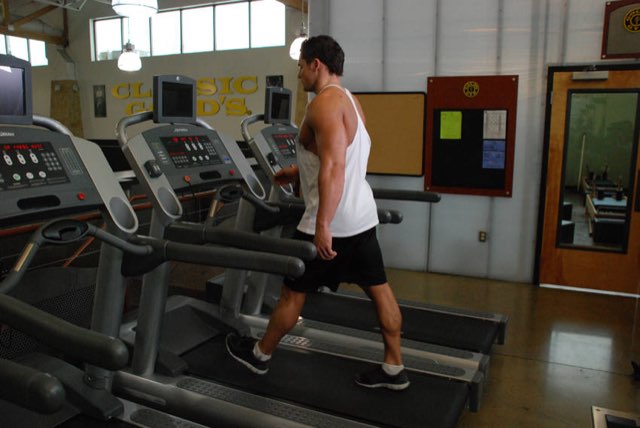
This was a small lab study of six healthy people. They did an Incline Walk on a treadmill at 0%, 12% and 24% slopes, at a speed they picked. Sensors on the skin measured how hard the front and back of their thighs worked. Most of these muscles worked harder as the slope got steeper, and heart rate went up too.
Who took part6 people with an average age of 28.5. The abstract doesn't say if they were men or women or how fit they were.LimitsOnly 6 people took partIt measured how hard muscles worked, not strength or muscle growthA single lab session on a treadmill
Why this bandA one-off lab test of 6 peopleAbout this exercise: it’s in the titleAmong the top 12% most cited papers of its age
- Raise the slope on your Incline Walk if you want the front of your thighs to work harder. In this small study, they worked harder at 24% than on the flat.
- Kind of study
- A lab study
- People
- healthy adults
- What they looked at
- Muscle activity, how you move
Original title: Electromyographic and kinematic analysis of graded treadmill walking and the implications for knee rehabilitation
Lange GW, Hintermeister RA, Schlegel T, Dillman CJ, Steadman JR · The Journal of Orthopaedic and Sports Physical Therapy · Wed May 1 1996 · DOI 10.2519/jospt.1996.23.5.294