

Research on Incline Walk · Every study we found · How we choose studies
Checked automatically against the study
Incline Walk makes your hips, knees and ankles bend more as the slope rises.
Seven uninjured people and seven people with an injury walked at slopes from 0 to 15 degrees; no size of effect was reported
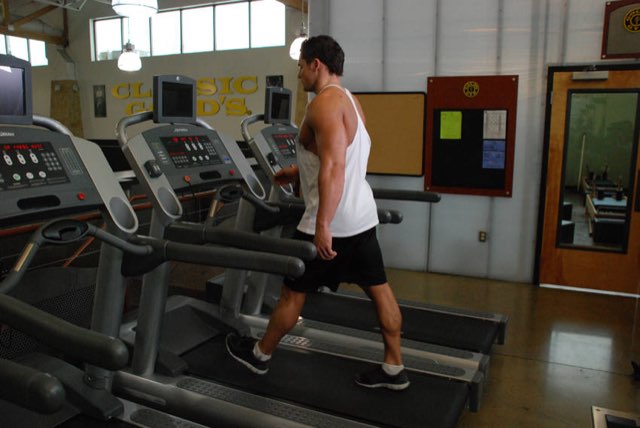
This was a small lab study of Incline Walk on a treadmill at slopes up to 15 degrees. Seven people without injury and seven people with a partial spinal cord injury who could walk took part. Sensors on the skin measured how hard the leg muscles worked, and the team tracked joint angles. In the uninjured group, steeper slopes meant more bend at the hip, knee and ankle, and the thigh and calf muscles worked harder.
Who took part7 people without injury and 7 with a partial spinal cord injury who could walk; the abstract doesn't say their sex, age or trainingLimitsVery small group: 7 people without injury and 7 with an injuryA lab session on a treadmill, not training over weeksSome people had a spinal cord injury, so results may not fit everyone
Why this bandA one-off lab test of 14 peopleAbout this exercise: it’s in the titleAmong the top 7% most cited papers of its age
- Kind of study
- A lab study
- People
- people with and without a spinal cord injury
- What they looked at
- Muscle activity, how you move
Original title: Adaptation of the walking pattern to uphill walking in normal and spinal-cord injured subjects
Leroux A, Fung J, Barbeau H · Experimental Brain Research · Tue Jun 1 1999 · DOI 10.1007/s002210050743