

Research on Cable Curl · Every study we found · How we choose studies
Checked automatically against the study
In one session, dumbbell curls worked the biceps harder than behind-the-body cable curls.
Biceps sensor reading was 111.46% of a max squeeze in dumbbell curls vs 93.39% in Bayesian cable curls.
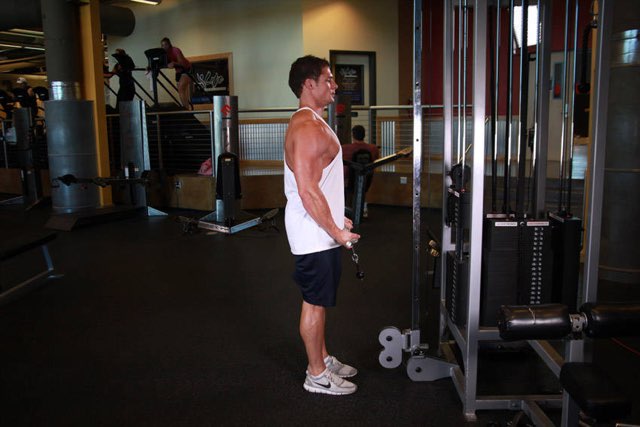
Eleven people did dumbbell curls and Bayesian cable curls (arm behind the body) in one lab session. Each curl used a heavy weight compared with the most they could lift once. Sensors on the skin measured how hard the biceps worked. The biceps worked harder in the dumbbell curl. This was a small study, and it measured effort, not muscle growth.
Who took part11 volunteers, average age 25. The abstract doesn't say if they were men or women, or how trained they were.LimitsVery small group of 11 people.One session only, in a lab.Measured how hard the muscle worked, not muscle growth.
Why this bandA one-off lab test of 11 peopleTests this exerciseIn a recognised free-to-read journal (DOAJ)Published recently, so not yet widely cited
- Add dumbbell curls next to your cable curls if you want some variety. They made the biceps work harder in this one test.
- Remember this study measured one session only. It didn't measure growth over weeks.
- Kind of study
- A lab study
- People
- adult volunteers
- What they looked at
- Muscle activity
Original title: An Exploratory Study of Biceps Brachii Electromyographic Activity During Traditional Dumbbell Versus Bayesian Cable Curls
Parpa K, Vasiliou A, Michaelides M and others · Muscles (Basel, Switzerland) · Mon Oct 13 2025 · DOI 10.3390/muscles4040045