

What research says
3 studies · summaries checked against each study · How we choose studies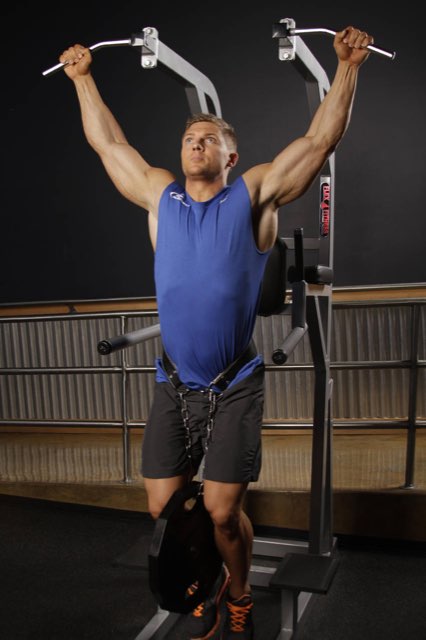
Checked automatically against the study
Stopping sets early gave better pull-up gains than pushing much closer to failure.
No size of effect was reported. Stopping sets at a 25% speed drop beat a 50% drop over 8 weeks (16 sessions).
In this fair test, 29 men who already lift were split into two groups by chance. They did body-weight pull-ups twice a week for 8 weeks. One group stopped each set once rep speed dropped by 25%. The other group kept going until speed dropped by 50%. The group that stopped earlier improved more on almost every test, while the other group barely changed.
Who took part29 strength-trained men, average age about 26.1 years; no womenLimitsA small group of only men.They did body-weight pull-ups, not weighted ones.The training lasted only 8 weeks.
Why this bandA randomised trial of 29 peopleOnly mentions this exercise in passing8 weeks of trainingPeople who already train
- End each set when your reps start to slow down clearly, before you grind out the last few.
- Leave some reps in the tank. In this study, the extra hard reps didn't add gains.
- Kind of study
- A fair test
- People
- strength-trained men
- What they looked at
- Strength, performance
Original title: Effects of Velocity Loss During Body Mass Prone-Grip Pull-up Training on Strength and Endurance Performance
Sánchez-Moreno M, Cornejo-Daza PJ, González-Badillo JJ, Pareja-Blanco F · Journal of Strength and Conditioning Research · Wed Apr 1 2020 · DOI 10.1519/jsc.0000000000003500
Checked automatically against the study
How fast you pull shows how heavy the load is and how many reps remain.
The heaviest single rep moved at about 0.20 metres per second, and this stayed steady after 12 weeks.
This study measured 52 men doing pull-ups. They tested the most each man could lift once and his max reps at body weight. Thirty-nine of them were tested again after 12 weeks of training. Bar speed closely tracked how heavy the load was, and the slowdown during a set showed how many reps were left. These links stayed the same after training.
Who took part52 men, average age about 26.5 years; no women; training experience not statedLimitsOnly men took part.Max reps were tested at body weight, not with added weight.It looked at links between speed and effort, not at which training works best.
Why this bandA study that followed 52 people over timeTests this exerciseAmong the top 3% most cited papers of its age
- Track your rep speed with an app or a bar-speed device. Your first rep can tell you how heavy the load is for you that day.
- Watch how much your reps slow down during a set. The slowdown is a guide to how many reps you could still do.
- Kind of study
- A study over time
- People
- men doing pull-ups
- What they looked at
- Strength, performance
Original title: Movement Velocity as Indicator of Relative Intensity and Level of Effort Attained During the Set in Pull-Up Exercise
Sánchez-Moreno M, Rodríguez-Rosell D, Pareja-Blanco F, Mora-Custodio R, González-Badillo JJ · International Journal of Sports Physiology and Performance · Wed Nov 1 2017 · DOI 10.1123/ijspp.2016-0791
Checked automatically against the study
In Weighted Pull-Up, power peaked on average at 71.0% of the most you can lift once.
Most power at an average of 71.0% of the most each man could lift once (tested from 70% to 100%)
This was a one-session lab test with 82 men who already lift. Each man did Weighted Pull-Up reps with four loads, from 70% to 100% of the most he could lift once. A device on the bar measured how fast he pulled and how much force and power he made. Bar speed tracked load very closely, so speed could be used to estimate each man's best lift.
Who took part82 trained men, average age 26.8; no womenLimitsOnly men who already lift took part, so it may not apply to women or beginners.It measured one session in a lab, not changes over weeks of training.It needs a device to measure bar speed, which most gyms don't have.
Why this bandA one-off lab test of 82 peopleTests this exercisePeople who already trainAmong the top 5% most cited papers of its age
- If you're a man who already lifts and want the most power from each Weighted Pull-Up rep, try a load of around 71.0% of the most you can lift once. On average, that was the load that gave the most power in this test.
- Kind of study
- A lab study
- People
- men who already lift
- What they looked at
- Performance, strength
Original title: Load-, Force-, and Power-Velocity Relationships in the Prone Pull-Up Exercise
Muñoz-López M, Marchante D, Cano-Ruiz MA, Chicharro JL, Balsalobre-Fernández C · International Journal of Sports Physiology and Performance · Thu Mar 2 2017 · DOI 10.1123/ijspp.2016-0657
How studies shape Body CEO
Every summary here is checked against its study before it appears: the numbers come from the study, with no promises. 316 studies in use, across 97 exercises, and this one was last checked for new research on Fri Nov 13 2026. How we review research
- 1 · FoundOn PubMed, checked for retractions
- 2 · WeighedScored Strong, Moderate or Early
- 3 · ReadPut in plain words, every number checked
- 4 · Shapes your planStrong and Moderate takeaways guide sets, reps and rest
- 5 · Eliza cites itReads our approved studies first, with the study linked