

What research says
3 studies · 1 review · summaries checked against each study · How we choose studies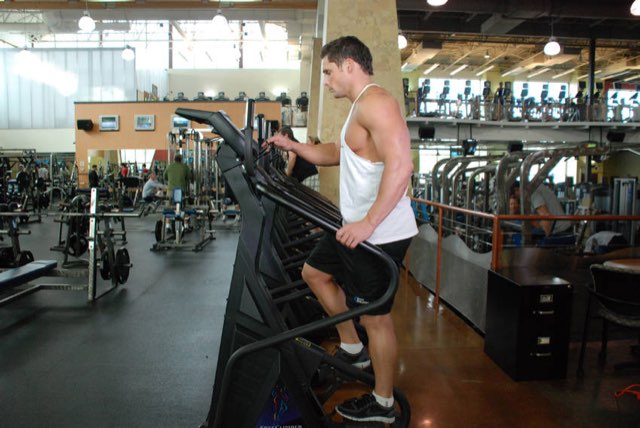
Checked automatically against the study
People who climb stairs tend to have a lower risk of dying from heart disease.
Risk of dying from heart disease was 0.61 times that of people who didn't climb stairs.
This was a review that pooled 9 studies, covering 480,479 people. Most were studies that followed people over time, with some fair tests mixed in. People who climbed stairs had a lower risk of dying from heart disease, and from any cause. This shows a link, not that stairs alone caused the difference.
Who took part480,479 people across 9 studies; the abstract doesn't say their ages or how many were women.LimitsIt mixes studies that followed people with fair tests, so it shows a link, not cause and effect.The abstract doesn't say how much stair climbing people did.It looked at everyday stair climbing, not stair machines.
Why this bandA review that pooled 9 studiesAbout this exercise: it’s in the titlePeople with a health condition, not healthy adultsIts plan was registered before it began (PROSPERO)
- Count stair climbing as everyday movement that is good for your heart, at home, at work or on the machine.
- Use your Stair Climber as an easy way to move more on days you would otherwise sit a lot.
- Kind of study
- A review
- Studies pooled
- 9
Original title: Evaluating the Impact of Stair Climbing on Cardiovascular Risk Reduction: A Systematic Review and Meta-analysis
Paddock S, Veerni R, Bhalraam U and others · American Journal of Cardiovascular Drugs : Drugs, Devices, and Other Interventions · Thu Aug 13 2026 · DOI 10.1007/s40256-026-00811-x
Checked automatically against the study
Regular stair climbing built leg strength in older women with high blood pressure.
Leg strength rose after 12 weeks, compared with no change in the non-climbers; the abstract gives no size of effect.
This was a fair test with women past menopause who had high blood pressure. The climbing group climbed 192 steps 2 to 5 times a day, 4 days a week, for 12 weeks. The other group didn't exercise. The climbers' leg strength went up. Their blood pressure and how stiff their blood vessels were both went down, while the other group didn't change.
Who took part21 climbers and 20 non-exercisers, all women past menopause with high blood pressure; no men.LimitsOnly women past menopause with high blood pressure, so results may differ for others.A fairly small group.It used real stairs, not a machine.
Why this bandA randomised trial of 41 peopleAbout this exercise: it’s in the title12 weeks of trainingAmong the top 5% most cited papers of its age
- Climb on about 4 days a week, and slowly add more climbs per day.
- If you have high blood pressure, check with your doctor before starting a new training plan.
- Kind of study
- A fair test
- People
- women past menopause with high blood pressure
- What they looked at
- Strength
Original title: The effects of stair climbing on arterial stiffness, blood pressure, and leg strength in postmenopausal women with stage 2 hypertension
Wong A, Figueroa A, Son WM, Chernykh O, Park SY · Menopause (New York, N.Y.) · Sun Jul 1 2018 · DOI 10.1097/gme.0000000000001072
Checked automatically against the study
Short stair climbs spread across the day improved fitness in young women.
Good cholesterol (HDL) rose over 7 weeks, compared with no clear change in the non-climbers; the abstract gives no size of effect.
This was a small fair test (people were split into groups by chance) with 22 young women who didn't exercise before. One group climbed a 199-step staircase, building up from one climb a day to six over 7 weeks. The other group kept to their normal life. The climbers' good cholesterol went up, and the same stair test felt easier on their heart and body.
Who took part22 healthy young women, 18 to 22 years, who didn't exercise before; no men.LimitsA small group.Short, at only 7 weeks.Only young women, on a real staircase, not a machine.
Why this bandA randomised trial of 22 peopleAbout this exercise: it’s in the title7 weeks of trainingAmong the top 5% most cited papers of its age
- Start with one climb a day, then add a climb each week as it gets easier.
- Spread short climbs through your day if one long session doesn't fit.
- Kind of study
- A fair test
- People
- young women new to exercise
- What they looked at
- Performance
Original title: Training effects of accumulated daily stair-climbing exercise in previously sedentary young women
Boreham CA, Wallace WF, Nevill A · Preventive Medicine · Sat Apr 1 2000 · DOI 10.1006/pmed.2000.0634
How studies shape Body CEO
Every summary here is checked against its study before it appears: the numbers come from the study, with no promises. 316 studies in use, across 97 exercises, and this one was last checked for new research on Fri Nov 13 2026. How we review research
- 1 · FoundOn PubMed, checked for retractions
- 2 · WeighedScored Strong, Moderate or Early
- 3 · ReadPut in plain words, every number checked
- 4 · Shapes your planStrong and Moderate takeaways guide sets, reps and rest
- 5 · Eliza cites itReads our approved studies first, with the study linked