

What research says
3 studies · 2 reviews · summaries checked against each study · How we choose studiesChecked automatically against the study
Your 2000 m rowing time is closely tied to your fitness and top power.
Oxygen use and top power were linked to 2000 m time at r = 0.83 to 0.99, a very close link; no training effect was tested
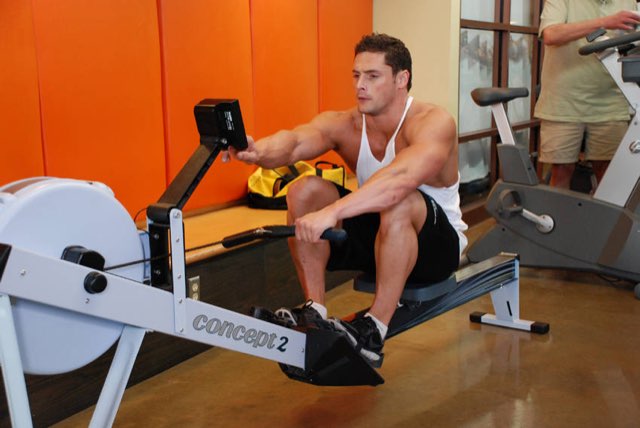
This was a review of 34 studies on rowing machine tests, with 909 rowers from elite to recreational level. The 2000 m row was the most common test, and it mirrors race performance. The rowers who could use the most oxygen and push the most top power tended to have the fastest 2000 m times. Most rowers in these studies were men.
Who took part909 rowers across 34 studies: 657 men and 252 women, elite to recreational; ages not givenLimitsAbout 72% of rowers were men, so the results may fit women less well.It looked at links between test results, not at what training makes you faster.
Why this bandA review that pooled 34 studiesAbout this exercise: it’s in the titleElite athletes onlyIts plan was registered before it began (PROSPERO)
- Use a 2000 m row now and then to check how your fitness is going.
- Work on both your aerobic fitness and your top power, because both were closely linked to faster times.
- Kind of study
- A review
- Studies pooled
- 34
- What they looked at
- Performance
Original title: The Evaluation of Physical Performance in Rowing Ergometer: A Systematic Review
Borges I, Veiga S, González-Frutos P · Journal of Functional Morphology and Kinesiology · Sun Nov 9 2025 · DOI 10.3390/jfmk10040437
Checked automatically against the study
The power you can hold at a hard, steady effort tracks your 2000 m time.
Power at a set blood lactate level was linked to 2000 m time at r = 0.53 to 0.96; no training effect was tested
This was a review of 24 studies with 797 athletes who did blood tests during rowing machine tests. The most common measure was the power you can hold before your blood lactate rises to a set level. This is roughly a hard pace you can keep up for a while. That power was often strongly linked to 2000 m time. The authors say the studies used many different methods, which makes them hard to compare.
Who took part797 athletes across 24 studies: 513 men, 257 women and 27 not stated; ages not givenLimitsThe studies used many different tests and methods, so they are hard to compare.It looked at links between test results, not at what training makes you faster.The studies were not pooled into one result.
Why this bandA review that pooled 24 studiesTests this exercisePeople who already trainIts plan was registered before it began (OSF)
- Include rows at a hard but steady pace you can hold, because this kind of steady power was linked to faster 2000 m times.
- Kind of study
- A review
- Studies pooled
- 24
- What they looked at
- Performance
Original title: Associations Between Lactate Thresholds and 2000 m Rowing Ergometer Performance: Implications for Prediction-A Systematic Review
Kilbey T, Vecchi E, Salbany P and others · Sports Medicine - Open · Fri Feb 28 2025 · DOI 10.1186/s40798-024-00796-4
Checked automatically against the study
Fitness gains from 12 weeks of arm rowing were still there six months later.
Top power rose from 70 W to 81 W six months after the 12-week program; no change in the group that didn't row
This was a small follow-up of 17 wheelchair users with a spinal cord injury. One group did 12 weeks of upper-body rowing and another group didn't. Fourteen people came back six months later. The rowing group's fitness and top power had gone up, and it had held. The other group didn't change, and markers of heart and blood health didn't change in either group.
Who took part17 wheelchair users with a spinal cord injury, 14 at follow-up; men or women and ages not givenLimitsSmall group, and only 14 people came back.Only upper-body rowing in wheelchair users, so it may not apply to a standard rowing machine.Activity outside the study was self-reported.
Why this bandA trial of 17 people, not put into groups by chanceTests this exercise24 weeks of trainingIts plan was registered before it began (ClinicalTrials.gov)
- Commit to a steady block of rowing, about 12 weeks, because the fitness people built lasted for months.
- If you use a wheelchair, talk with your healthcare team about whether arm rowing fits you.
- Kind of study
- A controlled test
- People
- wheelchair users with a spinal cord injury
- What they looked at
- Performance
Original title: Impact of upper-body ergometer rowing exercise on aerobic fitness and cardiometabolic disease risk in individuals with spinal cord injury: A 6-month follow-up study
Hansen RK, Laessoe U, Samani A and others · The Journal of Spinal Cord Medicine · Thu Aug 3 2023 · DOI 10.1080/10790268.2023.2233820
How studies shape Body CEO
Every summary here is checked against its study before it appears: the numbers come from the study, with no promises. 316 studies in use, across 97 exercises, and this one was last checked for new research on Fri Nov 13 2026. How we review research
- 1 · FoundOn PubMed, checked for retractions
- 2 · WeighedScored Strong, Moderate or Early
- 3 · ReadPut in plain words, every number checked
- 4 · Shapes your planStrong and Moderate takeaways guide sets, reps and rest
- 5 · Eliza cites itReads our approved studies first, with the study linked