

What research says
3 studies · summaries checked against each study · How we choose studies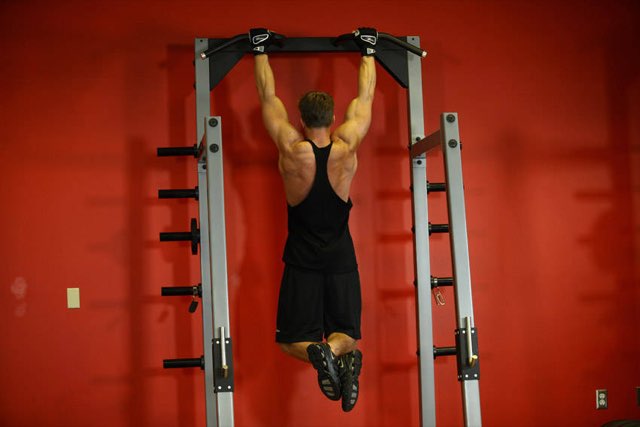
Checked automatically against the study
Stopping pull-up sets before you slow down a lot led to better gains.
Stopping at 25% speed loss beat stopping at 50% over 8 weeks (16 sessions); no size of effect was reported.
This was a fair test (people were split into groups by chance) with 29 men who already lift. For 8 weeks, they did body-weight pull-ups. One group stopped each set once their reps slowed by a quarter. The other group kept going until reps slowed by half. The first group got stronger and faster. The second group didn't change.
Who took part29 strength-trained men, average age 26.1; no women; could already do about 16 pull-upsLimitsSmall group.Only men who already lift took part.It lasted only 8 weeks.
Why this bandA randomised trial of 29 peopleAbout this exercise: it’s in the title8 weeks of trainingPeople who already train
- Stop each set while your reps still move fairly quickly, well before you grind to failure.
- Don't add extra slow reps at the end of a set. They may hold your progress back.
- Kind of study
- A fair test
- People
- strength-trained men
- What they looked at
- Strength, performance
Original title: Effects of Velocity Loss During Body Mass Prone-Grip Pull-up Training on Strength and Endurance Performance
Sánchez-Moreno M, Cornejo-Daza PJ, González-Badillo JJ, Pareja-Blanco F · Journal of Strength and Conditioning Research · Wed Apr 1 2020 · DOI 10.1519/jsc.0000000000003500
Checked automatically against the study
How fast you pull shows how hard a pull-up set is for you.
Your heaviest single pull-up moves at about 0.20 metres per second, and this stayed the same after 12 weeks.
This study followed 52 men. They tested the most they could pull up once, and how many body-weight pull-ups they could do. Thirty-nine came back after 12 weeks of training. Speed on the first rep showed how heavy the load was, and speed lost during a set showed how many reps were left. These links held even after people got stronger.
Who took part52 men, average age 26.5; no women; training experience not statedLimitsOnly men took part.Only 39 of the 52 men were tested again after 12 weeks.The abstract doesn't describe the training they did.
Why this bandA study that followed 52 people over timeAbout this exercise: it’s in the titleAmong the top 3% most cited papers of its age
- Notice when your reps start to slow down. It is a sign of how many reps you have left.
- Think of a slow, grinding rep as being close to your limit for that load.
- Kind of study
- A study over time
- People
- men doing pull-up training
- What they looked at
- Strength, performance
Original title: Movement Velocity as Indicator of Relative Intensity and Level of Effort Attained During the Set in Pull-Up Exercise
Sánchez-Moreno M, Rodríguez-Rosell D, Pareja-Blanco F, Mora-Custodio R, González-Badillo JJ · International Journal of Sports Physiology and Performance · Wed Nov 1 2017 · DOI 10.1123/ijspp.2016-0791
Checked automatically against the study
Women who got their first Pull-Up had more strength for their size.
A 2-factor formula predicted who could do a Pull-Up; no size of effect was reported
College-age women did a training program that mixed strength work and cardio. As a group, they got stronger in their upper body. The women who could do a Pull-Up by the end had more strength for their size. The abstract doesn't say how many women took part.
Who took partCollege-age women, number and training experience not given; no menLimitsOnly young women took part.The abstract doesn't say how many people took part or how long the program lasted.No comparison group is described.
Why this bandA study that followed people over timeAbout this exercise: it’s in the titleAmong the top 12% most cited papers of its age
- If you're a woman working toward your first Pull-Up, build your upper-body strength for your size. That's what set apart the women who could do one.
- Kind of study
- A study over time
- What they looked at
- Strength, performance
Original title: Training college-age women to perform the pull-up exercise
Flanagan SP, Vanderburgh PM, Borchers SG, Kohstall CD · Research Quarterly for Exercise and Sport · Sat Mar 1 2003 · DOI 10.1080/02701367.2003.10609064
How studies shape Body CEO
Every summary here is checked against its study before it appears: the numbers come from the study, with no promises. 316 studies in use, across 97 exercises, and this one was last checked for new research on Fri Nov 13 2026. How we review research
- 1 · FoundOn PubMed, checked for retractions
- 2 · WeighedScored Strong, Moderate or Early
- 3 · ReadPut in plain words, every number checked
- 4 · Shapes your planStrong and Moderate takeaways guide sets, reps and rest
- 5 · Eliza cites itReads our approved studies first, with the study linked