

What research says
2 studies · 1 review · summaries checked against each study · How we choose studiesChecked automatically against the study
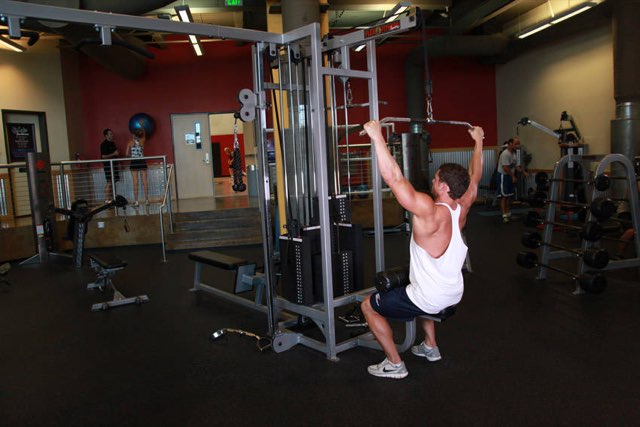
Eight weeks of lat pulldowns improved pull-ups, and an unstable version helped more.
45.5% more pull-up reps than the stable-pulldown group after 8 weeks
This was a fair test in which people were split into groups by chance. It included 34 healthy, fairly active male college students. For 8 weeks, they did lat pulldowns on either a normal stable setup or an unstable setup. Both groups got stronger and could do more pull-ups, but the unstable group did nearly half as many more pull-ups again.
Who took part34 healthy, fairly active male college students; no women; ages not givenLimitsOnly men took part.The group was small and the study lasted 8 weeks.The abstract does not explain how the unstable setup worked.
Why this bandA randomised trial of 34 peopleAbout this exercise: it’s in the title8 weeks of trainingIn a recognised free-to-read journal (DOAJ)
- Keep doing lat pulldowns if you want to build up to more pull-ups.
- Ask a coach whether a less stable version of the pulldown fits your training.
- Kind of study
- A fair test
- People
- active male college students
- What they looked at
- Strength, performance, muscle activity
Original title: Eight-week lat pull-down resistance training with joint instability leads to superior pull-up endurance performance and reduced antagonist coactivation in recreationally active male college students
Li Q, Yan J, Qiao M and others · European Journal of Sport Science · Wed Jan 1 2025 · DOI 10.1002/ejsc.12243
Checked automatically against the study
Pulling the bar down in front of your head made the lats work hardest.
23 studies reviewed. Pulling in front of the head was most often linked to harder lat work, but no size of effect was reported.
This review looked at 23 studies but did not pool their results. The studies used sensors on the skin to measure how hard the lats work during pulling exercises. On the lat pulldown, pulling the bar down in front of the head was most often linked to the lats working harder. Results for grip width were mixed.
Who took partThe abstract doesn't sayLimitsIt measured how hard the muscle works in single sessions, not muscle growth over weeks.It is a review that describes studies without pooling their results.The authors call their conclusions tentative.
Why this bandAn expert’s overview, not a pooled reviewTests this exercisePeople with a health condition, not healthy adultsIn a recognised free-to-read journal (DOAJ)
- Pull the bar down in front of your face toward your upper chest, not behind your neck.
- Choose a grip width that feels comfortable, because the studies did not agree on the best width.
- Kind of study
- A review
- Studies pooled
- 23
- What they looked at
- Muscle activity
Original title: Electromyographic Analysis of Latissimus Dorsi Activation During Common Resistance Training Exercises: A Narrative Review
Di Fonza D, Di Claudio G, Colantuono G and others · Journal of Functional Morphology and Kinesiology · Wed Aug 12 2026 · DOI 10.3390/jfmk11030315
How studies shape Body CEO
Every summary here is checked against its study before it appears: the numbers come from the study, with no promises. 316 studies in use, across 97 exercises, and this one was last checked for new research on Fri Nov 13 2026. How we review research
- 1 · FoundOn PubMed, checked for retractions
- 2 · WeighedScored Strong, Moderate or Early
- 3 · ReadPut in plain words, every number checked
- 4 · Shapes your planStrong and Moderate takeaways guide sets, reps and rest
- 5 · Eliza cites itReads our approved studies first, with the study linked