

What research says
3 studies · 1 review · summaries checked against each study · How we choose studiesWhat this means in the gym
3 takeaways · from the 3 studies belowTreat it as a chest move as well as a back move.
Sensors in one small study showed the chest worked harder than the lats during pullovers.
Based onStudy 1Pick a weight you can control for 10 smooth reps.
The study that measured chest and lat effort used a moderate load of about 30% of body weight for one set of 10.
Study 1Don't rely on pullovers before rows to make your lats work harder.
In beginners, the lats worked about the same in rows with or without pullovers first, but the back of the shoulder tired more.
Study 2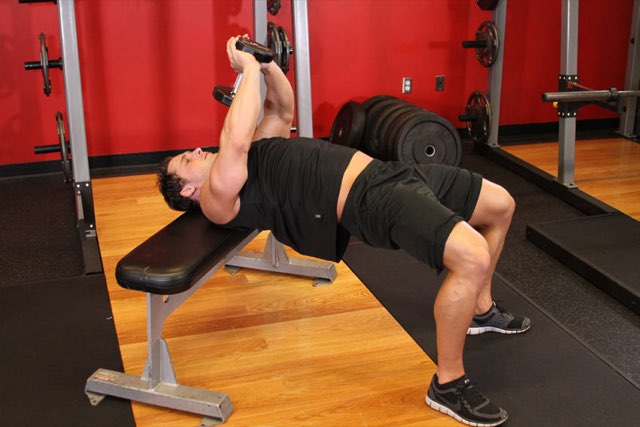
Checked automatically against the study
In the pullover, your chest worked harder than your lats.
Chest worked harder than lats with a load of 30% of body weight; no size of effect was reported
Eight healthy men did one set of 10 barbell pullovers in a lab. Sensors on the skin measured how hard the chest and the lats worked. The chest worked harder than the lats, during both the lifting and the lowering. The authors linked this to how the weight's leverage changes through the movement.
Who took part8 healthy men; the abstract doesn't say their age or training experience; no womenLimitsVery small group, only menUsed a barbell, not a dumbbellOne session measuring muscle effort, not muscle growth
Why this bandA one-off lab test of 8 peopleAbout this exercise: it’s in the titleAmong the top 13% most cited papers of its age
- Count the pullover as a chest exercise as much as a back exercise when you plan your week.
- If you mainly want to train your lats, add other back moves like rows or pulldowns too.
- Kind of study
- A lab study
- People
- healthy men
- What they looked at
- Muscle activity
Original title: Effects of the pullover exercise on the pectoralis major and latissimus dorsi muscles as evaluated by EMG
Marchetti PH, Uchida MC · Journal of Applied Biomechanics · Tue Oct 4 2011 · DOI 10.1123/jab.27.4.380
Checked automatically against the study
Doing pullovers before rows didn't make your lats work harder during the rows.
20 beginners; lat effort in rows was about the same with or without pullovers first, and no size of effect was reported
Twenty adults who were new or nearly new to lifting did seated rows to failure. Sometimes they did a set of pullovers first and sometimes they didn't. Sensors on the skin measured how hard the muscles worked. The lats (the wide muscles down your back) worked about the same either way, but the back of the shoulder got more tired.
Who took part20 adults with little or no lifting experience; the abstract doesn't say their sex or ageLimitsSmall groupPeople new to lifting, so results may differ for experienced liftersMeasured how hard muscles worked in the lab, not muscle growth over weeks
Why this bandA one-off lab test of 20 peopleTests this exerciseAmong the top 11% most cited papers of its age
- Do pullovers for their own sake, not as a trick to make your lats work harder in rows.
- Expect the back of your shoulders to tire sooner if you do pullovers right before rows.
- Kind of study
- A lab study
- People
- adults new to strength training
- What they looked at
- Muscle activity
Original title: The Pre-Exhaustion Method Does Not Increase Muscle Activity in Target Muscle During Strength Training in Untrained Individuals
Fujita RA, Silva NRS, Bedo BLS, Gomes MM · Journal of Human Kinetics · Tue Apr 26 2022 · DOI 10.2478/hukin-2022-0027
Checked automatically against the study
Dumbbell Pullover seems to work your chest more than your lats.
23 studies reviewed; no size of effect was reported for the Dumbbell Pullover.
This was a review of 23 studies that put sensors on the skin to measure how hard a muscle works. It looked at several pulling moves, including the Dumbbell Pullover. In those tests, the Dumbbell Pullover seemed to work the chest muscles more than the lats (the wide muscles down your back). The review measured muscle effort during single sessions, not muscle growth or strength over weeks.
Who took partThe abstract doesn't sayLimitsIt summed up studies in words and did not pool their numbers.It measured how hard muscles work in single sessions, not results over weeks of training.The Dumbbell Pullover was one of several moves, and the abstract gives few details on it.
Why this bandAn expert’s overview, not a pooled reviewTests this exercisePeople with a health condition, not healthy adultsIn a recognised free-to-read journal (DOAJ)
- Expect your Dumbbell Pullover to work your chest hard, not just your lats, based on sensor readings.
- Kind of study
- A review
- Studies pooled
- 23
- What they looked at
- Muscle activity
Original title: Electromyographic Analysis of Latissimus Dorsi Activation During Common Resistance Training Exercises: A Narrative Review
Di Fonza D, Di Claudio G, Colantuono G and others · Journal of Functional Morphology and Kinesiology · Wed Aug 12 2026 · DOI 10.3390/jfmk11030315
How studies shape Body CEO
Every summary here is checked against its study before it appears: the numbers come from the study, with no promises. 316 studies in use, across 97 exercises, and this one was last checked for new research on Fri Nov 13 2026. How we review research
- 1 · FoundOn PubMed, checked for retractions
- 2 · WeighedScored Strong, Moderate or Early
- 3 · ReadPut in plain words, every number checked
- 4 · Shapes your planStrong and Moderate takeaways guide sets, reps and rest
- 5 · Eliza cites itReads our approved studies first, with the study linked