

What research says
3 studies · summaries checked against each study · How we choose studiesChecked automatically against the study
One-arm and two-arm curls built about the same arm muscle in beginners.
Right arm gained 0.75 kg more on the one-arm max with one-arm training than with two-arm training
This was a fair test (people were split into groups by chance) with women who were new to lifting. One group, of 28, did two-arm curls. The other, of 26, did one-arm curls, three times a week for 8 weeks. Muscle size changed about the same in both groups. The one-arm group got a bit stronger at one-arm curls with the right arm, but not the left.
Who took partYoung women new to lifting (28 did two-arm curls, 26 did one-arm curls); no men; exact ages not givenLimitsOnly women who were new to liftingShort, at 8 weeksThe strength edge showed in the right arm only
Why this bandA randomised trial of 54 peopleAbout this exercise: it’s in the title8 weeks of trainingPublished recently, so not yet widely cited
- Pick one-arm or two-arm curls, whichever you enjoy, because muscle growth was about the same.
- Train the exact curl you want to get stronger at, since strength followed the style people practised.
- Kind of study
- A fair test
- People
- young women new to lifting
- What they looked at
- Muscle size, strength
Original title: Small muscle mass exercise enhances muscular adaptations? Effects of unilateral and bilateral biceps curl on maximum strength and muscle size changes
Kassiano W, Tricoli I, Gomes F and others · European Journal of Applied Physiology · Mon Dec 8 2025 · DOI 10.1007/s00421-025-06033-4
Checked automatically against the study
Incline and preacher curls grew different parts of the arm muscle.
Preacher curls added 1.88 kg more to the heaviest preacher curl for 3 reps than incline curls did
This was a fair test (people were split into groups by chance) with 63 young women. Thirty did preacher curls and 33 did incline curls, twice a week for 8 weeks. Incline curls grew the upper part of the arm muscle, near the shoulder, a bit more. Preacher curls grew the lower part, near the elbow, a bit more. Each group got strongest at the curl it practised.
Who took part63 young women; no men; exact ages and training experience not givenLimitsOnly womenShort, at 8 weeksThe growth differences between parts of the muscle were small
Why this bandA randomised trial of 63 peopleTests this exercise8 weeks of trainingPublished recently, so not yet widely cited
- Mix incline and preacher curls to work the whole length of your arm muscle.
- Practise the curl you want to lift heavier in, because strength gains matched the style trained.
- Kind of study
- A fair test
- People
- young women
- What they looked at
- Muscle size, strength
Original title: Distinct muscle growth and strength adaptations after preacher and incline biceps curls
Kassiano W, Costa B, Kunevaliki G and others · International Journal of Sports Medicine · Tue Jan 14 2025 · DOI 10.1055/a-2517-0509
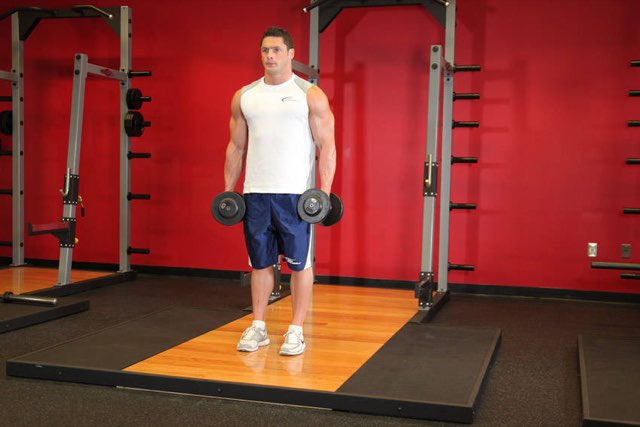
Checked automatically against the study
Curls with blood-flow cuffs felt harder but caused little blood pressure change.
Adjusted cuffs raised the effort score by 0.53 points over the other options, with a similar number of reps to fixed cuffs
This was a fair test where 32 healthy young adults, 11 of them women, tried each option in a random order. They did light curls to failure with cuffs that limit blood flow, with or without the pressure being adjusted, and without cuffs. Blood pressure changes were small in all versions. Adjusting the cuff pressure made curls feel harder and less comfortable, but people did a similar number of reps.
Who took part32 healthy adults, average age 20.8 years; 11 women; training experience not givenLimitsLooked only at what happened right after a session, not weeks of trainingDidn't measure muscle growth or strength gainsOnly healthy young adults
Why this bandA randomised trial of 32 peopleTests this exercisePublished recently, so not yet widely cited
- Expect curls with blood-flow cuffs to feel tougher and allow fewer reps than plain light curls.
- Learn how to use blood-flow cuffs from a qualified coach before you try them.
- Kind of study
- A fair test
- People
- healthy young adults
- What they looked at
- Performance
Original title: Acute impact of autoregulation of applied blood flow restriction pressures on bilateral single-joint upper limb resistance exercise
Rolnick N, De Queiros VS, Moghaddam M and others · Journal of Sports Sciences · Sun Oct 27 2024 · DOI 10.1080/02640414.2024.2416793
How studies shape Body CEO
Every summary here is checked against its study before it appears: the numbers come from the study, with no promises. 316 studies in use, across 97 exercises, and this one was last checked for new research on Fri Nov 13 2026. How we review research
- 1 · FoundOn PubMed, checked for retractions
- 2 · WeighedScored Strong, Moderate or Early
- 3 · ReadPut in plain words, every number checked
- 4 · Shapes your planStrong and Moderate takeaways guide sets, reps and rest
- 5 · Eliza cites itReads our approved studies first, with the study linked