

What research says
2 studies · summaries checked against each study · How we choose studiesChecked automatically against the study
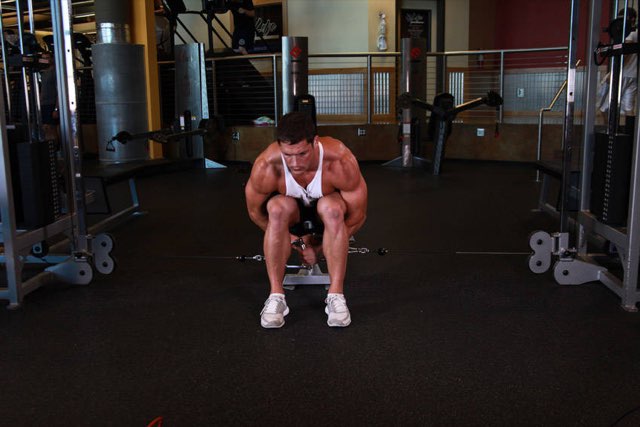
Cable and dumbbell lateral raises grew the side shoulder about the same.
Side shoulder muscle thickness went up 3.3% to 4.6% over the study, about the same for cable and dumbbell.
Twenty-four men and women who already lift trained for several weeks. Each person did cable raises with a chance-picked arm and dumbbell raises with the other. They did 5 sets to failure, twice a week. Both arms' side shoulder muscle grew a little, and by about the same amount.
Who took part24 trained men and women. Their ages and the split of men and women are not given.LimitsIt was a small group.It was a short study.Range of motion was matched, so results may differ from how people usually do each version.
Why this bandA randomised trial of 24 peopleAbout this exercise: it’s in the titlePeople who already trainIn a recognised free-to-read journal (DOAJ)
- Use cables or dumbbells for lateral raises, whichever you enjoy and can stick with.
- Try 5 hard sets taken to the point where you can't do another rep, twice a week.
- Kind of study
- A fair test
- People
- men and women who already lift
- What they looked at
- Muscle size
Original title: Dumbbell versus cable lateral raises for lateral deltoid hypertrophy: an experimental study
Larsen S, Wolf M, Schoenfeld BJ and others · Frontiers in Physiology · Mon Jul 7 2025 · DOI 10.3389/fphys.2025.1611468
Checked automatically against the study
Lateral raises made the upper traps work very hard, even with light weights.
Upper traps worked at 97% of their max effort in lateral raises, close to shrugs at 102%.
Twelve women workers with long-term neck muscle pain did five shoulder exercises in one session. Sensors on the skin measured how hard their upper traps and shoulder muscles worked. Lateral raises made the upper traps work almost as hard as shrugs. They did it with much lighter weights.
Who took part12 women workers aged 30 to 60 with long-term neck muscle pain; no men.LimitsIt was a small group of only women with neck pain.It measured how hard muscles worked in one session, not growth.The abstract doesn't say whether cables were used.
Why this bandA one-off lab test of 12 peopleTests this exerciseAmong the top 12% most cited papers of its age
- Expect your upper traps to help a lot during lateral raises, even when the weight feels light.
- Choose a light weight you can control, since the women here used about 3 to 10 kg.
- Kind of study
- A lab study
- People
- women workers with long-term neck pain
- What they looked at
- Muscle activity
Original title: Muscle activation during selected strength exercises in women with chronic neck muscle pain
Andersen LL, Kjaer M, Andersen CH and others · Physical Therapy · Thu Mar 13 2008 · DOI 10.2522/ptj.20070304
How studies shape Body CEO
Every summary here is checked against its study before it appears: the numbers come from the study, with no promises. 316 studies in use, across 97 exercises, and this one was last checked for new research on Fri Nov 13 2026. How we review research
- 1 · FoundOn PubMed, checked for retractions
- 2 · WeighedScored Strong, Moderate or Early
- 3 · ReadPut in plain words, every number checked
- 4 · Shapes your planStrong and Moderate takeaways guide sets, reps and rest
- 5 · Eliza cites itReads our approved studies first, with the study linked