

What research says
3 studies · summaries checked against each study · How we choose studiesChecked automatically against the study
Holding your knees back during bodyweight squats showed no clear benefit.
After 6 weeks and 720 reps, low-back scores were about the same, with the biggest gap between groups under 3 points.
This was a fair test (people were split into groups by chance) with 60 active young adults. One group let their knees move forward freely, one held their knees back, and one kept to their usual activity. Both squat groups did 18 sessions over six weeks. Low-back scores, balance, jump height and pain sensitivity ended up about the same across groups.
Who took part60 healthy, active young adults (57 finished); men and women split and exact ages not statedLimitsShort, at only six weeksPeople had almost no back trouble at the start, so there was little room to improveThe authors call it exploratory, and it wasn't designed to show the two styles are equal
Why this bandA randomised trial of 60 peopleAbout this exercise: it’s in the titlePublished recently, so not yet widely cited
- Let your knees travel forward naturally when you squat if it feels comfortable, since holding them back gave no clear advantage here.
- Aim for about three bodyweight squat sessions a week, like the people in this study did.
- Kind of study
- A fair test
- People
- healthy, active young adults
- What they looked at
- Performance, how you move
Original title: Unrestricted Versus Restricted Anterior Knee Displacement During Bodyweight Squat Training in Physically Active Young Adults: An Exploratory Three-Arm Randomized Controlled Trial
Movahhedi A, Çalı A, Şevgin Ö · Journal of Clinical Medicine · Tue Sep 15 2026 · DOI 10.3390/jcm15187162
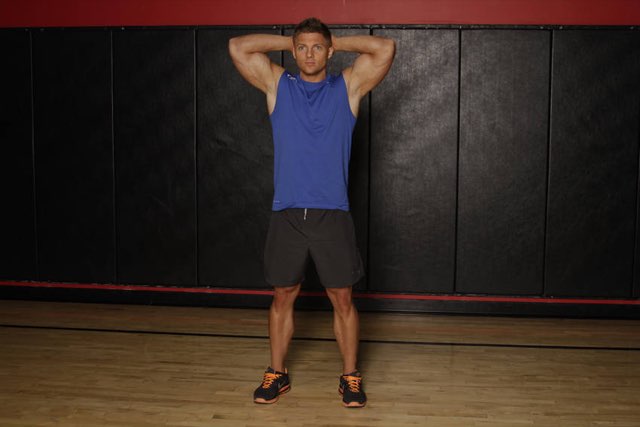
Checked automatically against the study
Bodyweight Squat holds on a vibration plate briefly raised calf force in men.
Calf force up 9.4% right after and 10.4% at 8 minutes, vs no change in the no-vibration group
This was a small fair test (people were split into groups by chance) with 19 college-aged men who trained for fun. Ten held Bodyweight Squat positions on a vibrating plate, and nine did the same holds with no shaking. The vibration group had about 10% more calf force right after, and the boost was seen up to 8 minutes later. Sensors that measure how hard a muscle works showed no change in either group.
Who took part19 recreationally trained college-aged men; no womenLimitsSmall group of 19Only men took partMeasured calf force in single sessions, not over weeks of training
Why this bandA randomised trial of 19 peopleTests this exercisePeople who already trainAmong the top 11% most cited papers of its age
- Kind of study
- A fair test
- People
- college-aged men who train for fun
- What they looked at
- Strength, muscle activity
Original title: Effect of an acute bout of whole body vibration exercise on muscle force output and motor neuron excitability
McBride JM, Nuzzo JL, Dayne AM and others · Journal of Strength and Conditioning Research · Fri Jan 1 2010 · DOI 10.1519/jsc.0b013e31819b79cf
Checked automatically against the study
Jumping squats pushed your heart rate higher than the other bodyweight squat versions.
Jumping squats reached an average heart rate of 165.3 beats a minute, the highest of six squat versions.
Fifteen people who are active for fun each did six bodyweight squat versions for 90 seconds. The versions were deep, jumping, single-leg, uneven, unstable and wall-sit. Jumping squats raised heart rate the most, used more oxygen in the calf muscle, and felt the hardest. Oxygen use in the thigh and recovery time were about the same across versions.
Who took part15 recreationally active people, average age 28.2; sex not statedLimitsSmall groupTested in a single session, so it doesn't show what happens over weeks of trainingEach version lasted just 90 seconds
Why this bandA one-off lab test of 15 peopleAbout this exercise: it’s in the titlePeople who already trainIn a recognised free-to-read journal (DOAJ)
- Add jumping squats when you want to get your heart rate up and make your session feel harder.
- Pick calmer versions like the wall-sit or deep squat when you want a lighter effort.
- Kind of study
- A lab study
- People
- recreationally active adults
- What they looked at
- Muscle activity
Original title: Acute Physiological and Perceptual Responses to Six Body-Weight Squat Exercise Variations
Santarém D, Teixeira A, Amaral A, Sampaio J, Abrantes C · Sensors (Basel, Switzerland) · Sun Mar 23 2025 · DOI 10.3390/s25072018
How studies shape Body CEO
Every summary here is checked against its study before it appears: the numbers come from the study, with no promises. 316 studies in use, across 97 exercises, and this one was last checked for new research on Fri Nov 13 2026. How we review research
- 1 · FoundOn PubMed, checked for retractions
- 2 · WeighedScored Strong, Moderate or Early
- 3 · ReadPut in plain words, every number checked
- 4 · Shapes your planStrong and Moderate takeaways guide sets, reps and rest
- 5 · Eliza cites itReads our approved studies first, with the study linked