

What research says
2 studies · summaries checked against each study · How we choose studies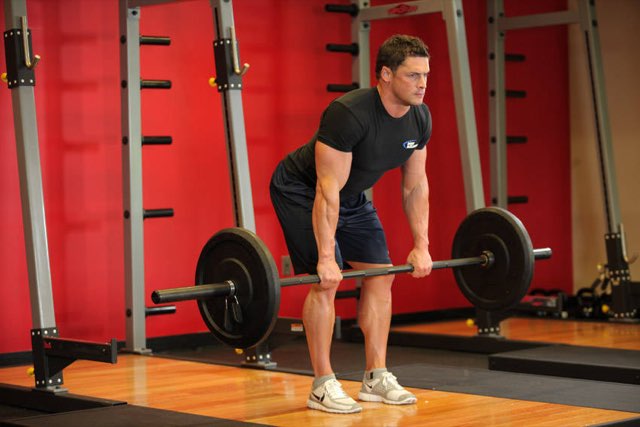
Checked automatically against the study
Bent-over rows gave a short boost to chest throw distance in softball players.
Throw distance went up after 2 sets of 4 rows, a medium boost similar to bench press.
Thirteen national-level women softball players tried a short warm-up in one test session. The warm-up was bench presses, bent-over barbell rows or push-ups. Each one was followed by medicine ball chest throws. Throws went further after rows and push-ups, and the boost was medium-sized. Rows worked about as well as pushing moves.
Who took part13 national-level women softball players, about 22.2 years old on average, with about 7.3 years of softball; no menLimitsSmall group of 13.Only women softball players took part.It looked at a boost right after, not over weeks of training.
Why this bandA one-off lab test of 13 peopleTests this exercisePeople who already trainIn a recognised free-to-read journal (DOAJ)
- Try 2 sets of 4 bent-over rows at a weight near 80% of the most you can lift once before throwing or pushing power work.
- Swap rows and pushing moves for variety, since they gave a similar short boost.
- Kind of study
- A lab study
- People
- national-level women softball players
- What they looked at
- Performance
Original title: Antagonist activation exercises elicit similar post-activation performance enhancement as agonist activities on throwing performance
Pisz A, Blazek D, Jebavy R and others · BMC Sports Science, Medicine & Rehabilitation · Mon Mar 27 2023 · DOI 10.1186/s13102-023-00657-9
Checked automatically against the study
Top-half rows made your lats work a bit harder than full rows.
Lats worked harder in top-half reps than in full reps, a medium difference, using a weight you can lift 10 times.
Sixteen men who already lift did chest-supported barbell rows with a weight they could lift 10 times. They used full reps, top-half reps and bottom-half reps, taking 2 seconds up and 2 seconds down. Sensors on the skin showed the lats worked harder in top-half reps. The difference was medium and not consistent across muscles, so the authors think range has only a small effect.
Who took part16 men who lift; age not given; no womenLimitsSmall group of 16.Only men took part.It measured how hard muscles work during the lift, not growth.
Why this bandA one-off lab test of 16 peopleTests this exercisePeople who already trainPublished recently, so not yet widely cited
- Add some top-half reps if you want a little extra lat work, keeping a steady 2 seconds up and down.
- Keep doing full reps too, since range of motion changed muscle effort only a little.
- Kind of study
- A lab study
- People
- men who lift
- What they looked at
- Muscle activity, how you move
Original title: Impact of different ranges of motion in the prone barbell row on muscle excitation
Fischer J, Burger C, Seguel JM and others · Journal of Electromyography and Kinesiology : Official Journal of the International Society of Electrophysiological Kinesiology · Mon Jun 9 2025 · DOI 10.1016/j.jelekin.2025.103025
How studies shape Body CEO
Every summary here is checked against its study before it appears: the numbers come from the study, with no promises. 316 studies in use, across 97 exercises, and this one was last checked for new research on Fri Nov 13 2026. How we review research
- 1 · FoundOn PubMed, checked for retractions
- 2 · WeighedScored Strong, Moderate or Early
- 3 · ReadPut in plain words, every number checked
- 4 · Shapes your planStrong and Moderate takeaways guide sets, reps and rest
- 5 · Eliza cites itReads our approved studies first, with the study linked